Jensen Huang’s return as Nvidia’s chief executive has brought some relief to Taiwan’s technology industry. His leadership is closely connected to the island’s semiconductor manufacturers, which play a major role in producing the chips and hardware used in artificial intelligence systems around the world.
However, his return does not mean everything is back to normal. The recent controversy has drawn attention to deeper issues involving US export restrictions, China’s access to advanced AI chips and the growing importance of national security in the global technology business.
For Taiwan, the situation is particularly significant. The island is a major centre of semiconductor manufacturing, and many local companies depend on business from Nvidia and other international technology giants. Any change in the company’s operations or international relationships can affect manufacturers, suppliers and investors.
Jensen Huang’s Return Brings Relief to Investors
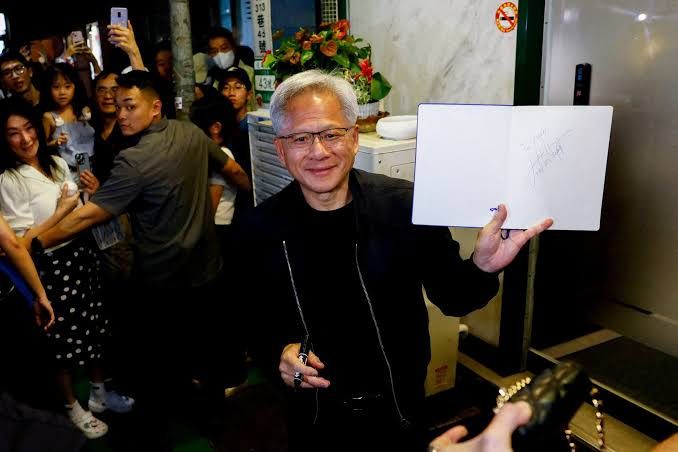
Jensen Huang, the co-founder of Nvidia, returned to his position as chief executive on November 23, following a brief period of uncertainty surrounding his leadership.
His return was welcomed by investors who view him as a central figure in Nvidia’s growth and its position in the artificial intelligence market. The company has become one of the world’s most influential technology businesses because of its powerful processors, which are widely used in AI development and data centres.
Taiwan’s financial markets also responded positively to the news. Nvidia shares and Taiwan’s benchmark stock index initially recorded strong gains, reflecting renewed confidence among investors.
The development was important for Taiwanese manufacturers because many of them are closely connected to Nvidia’s production network. Huang has maintained strong relationships with Taiwan’s technology companies over the years, making his leadership particularly relevant to the island’s business community.
Nevertheless, the initial market optimism does not remove the regulatory and political challenges facing the semiconductor industry.
Why Taiwan Is So Important to Nvidia
Taiwan has an essential position in the global semiconductor supply chain. Its companies manufacture advanced processors and assemble hardware that supports smartphones, computers, servers and artificial intelligence systems.
One of the most important companies in this network is Taiwan Semiconductor Manufacturing Company, commonly known as TSMC. It manufactures advanced chips designed by Nvidia and other major technology companies.
Other Taiwanese manufacturers, including Foxconn, Quanta and Wistron, also contribute to the production of servers and hardware used in AI data centres.
This manufacturing network allows Nvidia to meet growing demand from technology companies investing heavily in artificial intelligence.
Taiwan’s importance is not limited to manufacturing capacity. Its suppliers have developed technical expertise, production facilities and long-standing relationships with international customers. These advantages make the island difficult to replace in the global technology supply chain.
The wider competition for semiconductor leadership is also connected to the growing US-China technology rivalry and artificial intelligence competition, which continues to influence international investment and trade decisions.
US Export Restrictions Create New Pressure
One of the biggest challenges for Nvidia involves US restrictions on advanced semiconductor exports to China.
Washington has introduced controls on certain high-performance chips because of concerns that advanced computing technology could strengthen China’s military and strategic capabilities.
These restrictions have made the international semiconductor business more complicated. Companies must pay close attention to where their products are sold, who purchases them and how the technology is eventually used.
The situation has become more sensitive following allegations involving the movement of restricted Nvidia chips through intermediaries and international distribution networks.
The controversy also involved Alice Huang, a businesswoman suspected by US officials of links to Chinese intelligence. However, the allegations remain matters of investigation and should not be treated as proof of wrongdoing by Jensen Huang.
For Nvidia, the issue is not simply about selling more chips. It must also demonstrate that its products comply with applicable export regulations.
The controversy has increased attention on the company’s relationships, internal controls and responsibility for monitoring the movement of advanced technology.
Nvidia Strengthens Its Compliance Oversight
The growing scrutiny has encouraged Nvidia to strengthen its internal oversight of export controls and national security matters.
The company has announced additional board-level supervision and plans to appoint a chief compliance officer to oversee relevant responsibilities.
These steps are important because semiconductor companies now operate in an environment where commercial decisions can have wider political and security consequences.
For manufacturers and suppliers, checking customers and monitoring product destinations may become a more demanding process.
Companies could face additional documentation requirements, legal reviews and delays when dealing with sensitive technology. This may increase operating costs, particularly for smaller suppliers that do not have large compliance departments.
The issue is part of a wider debate over Nvidia’s China chip exports and political scrutiny, which highlights how closely technology businesses are now connected to international security concerns.
Taiwan’s Technology Suppliers Face a Changing Business Environment
Taiwanese manufacturers have benefited from years of cooperation with global technology companies. However, the current situation could require them to reconsider how they manage international business relationships.
Companies involved in semiconductor production and server assembly may need stronger customer verification systems. They may also have to monitor the final destination of their products more carefully.
For large manufacturers, these requirements may be manageable. Smaller suppliers, however, could find it difficult to handle additional administrative and legal expenses.
There is also a risk that stricter approval procedures could slow production and deliveries. In an industry where customers expect fast manufacturing and reliable supply, delays can affect business relationships.
At the same time, companies that demonstrate strong compliance practices could gain an advantage. International customers may prefer suppliers that can provide greater transparency and meet regulatory requirements.
Taiwan’s manufacturers therefore face the challenge of protecting their existing business while adapting to a more complicated international environment.
US-China Competition Is Reshaping the Semiconductor Industry
The competition between Washington and Beijing has become one of the most important factors affecting the global technology industry.
Advanced chips are essential for artificial intelligence, military applications, scientific research and modern data centres. Both countries recognise that leadership in semiconductor technology can provide significant economic and strategic advantages.
The United States wants to maintain its lead in advanced computing and restrict access to certain technologies. China, meanwhile, is investing heavily in domestic semiconductor development to reduce its reliance on foreign suppliers.
Taiwan occupies a sensitive position in this competition because it manufactures some of the world’s most advanced chips while maintaining strong commercial relationships with American technology companies.
Any change in export regulations or tensions across the Taiwan Strait can therefore affect international investors and manufacturers.
This situation also raises questions about the future of global technology supply chains. Companies may increasingly look for alternative suppliers and manufacturing locations to reduce their exposure to political risks.
Nvidia Must Look Beyond Jensen Huang’s Leadership
Huang’s return has reassured many investors, but Nvidia’s long-term stability cannot depend entirely on one executive.
The company will need effective corporate governance, strong regulatory compliance and reliable relationships with its international suppliers.
Its board must ensure that export-control responsibilities are clearly defined and that concerns involving sensitive technology are handled properly.
Taiwanese manufacturers also have reasons to diversify their customer base. Companies such as Google, Amazon, Microsoft and Meta are investing in artificial intelligence infrastructure and developing their own computing technologies.
These investments could create new opportunities for Taiwan’s semiconductor and hardware manufacturers.
A wider customer network would help suppliers reduce their dependence on individual companies and provide greater protection against unexpected business disruptions.
What Lies Ahead for Taiwan’s Technology Industry?
The future of Taiwan’s semiconductor industry will depend on how successfully companies manage both technological opportunities and geopolitical risks.
Demand for AI processors and data centre equipment remains strong. This provides an important opportunity for Taiwanese manufacturers, which already have established expertise and production facilities.
However, export restrictions, customer verification and international political tensions are likely to remain important issues.
Nvidia will need to maintain investor confidence while demonstrating that it can meet regulatory expectations. Taiwan’s manufacturers, meanwhile, must continue investing in technology, production quality and compliance systems.
Huang’s return may have eased an immediate leadership concern, but the wider business environment has changed considerably.
Conclusion
Jensen Huang’s return to Nvidia has reassured investors and Taiwan’s technology industry, but it has not removed the challenges facing the global semiconductor business.
US export restrictions, China’s growing technological ambitions and national security concerns are changing how advanced chips are manufactured, distributed and sold.
Taiwan remains a crucial part of Nvidia’s supply chain, but its manufacturers will need to adapt to stricter regulations and a more uncertain international environment.
The future of the industry will depend not only on technological innovation but also on responsible business practices, strong compliance and stable international partnerships.
Frequently Asked Questions
1. Why is Jensen Huang’s return important for Nvidia?
Jensen Huang co-founded Nvidia and played a major role in turning it into a global leader in artificial intelligence processors. His return reassured investors and business partners concerned about the company’s leadership during a period of regulatory uncertainty.
2. Why does Taiwan play an important role in Nvidia’s business?
Taiwan is home to major semiconductor manufacturers, including TSMC, which produces advanced chips designed by Nvidia. Other Taiwanese companies also manufacture and assemble hardware used in AI data centres.
3. Why are Nvidia’s chip exports to China controversial?
The United States restricts China’s access to certain advanced processors because of national security concerns. These controls require technology companies to monitor sales and ensure that restricted products do not reach prohibited customers or destinations.