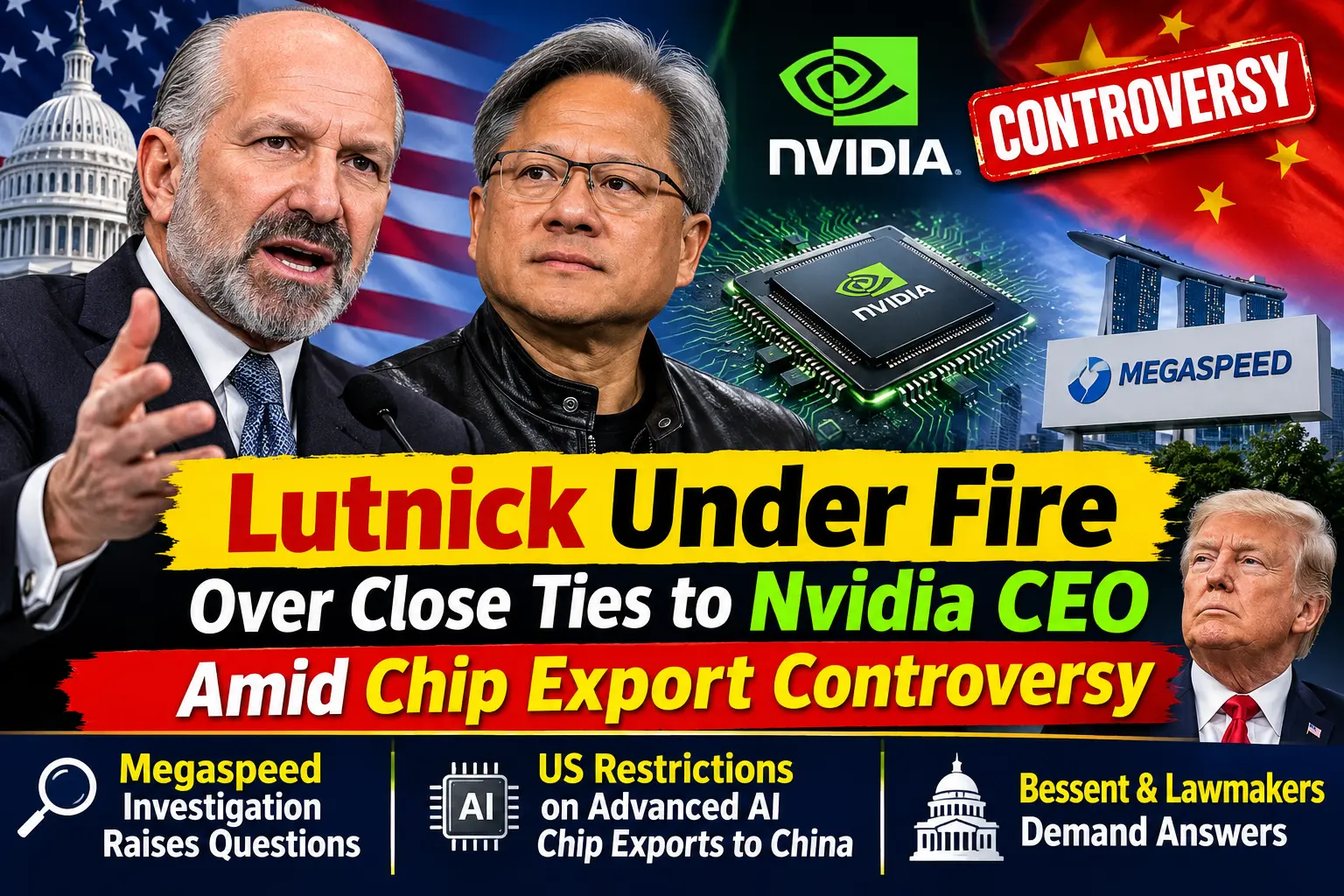
Lutnick Under Fire Over Close Ties to Nvidia CEO Amid Chip Export Controversy
Commerce Secretary Faces Scrutiny Over Megaspeed Investigation and US Restrictions on Advanced AI Chip Exports to China
WASHINGTON: US Commerce Secretary Howard Lutnick is facing growing scrutiny over his close relationship with former Nvidia chief executive Jensen Huang and his department’s handling of efforts to tighten restrictions on advanced artificial intelligence chip exports to China.
The controversy has intensified following reports that Lutnick cultivated a close working relationship with Huang while other US officials raised concerns about the possible diversion of Nvidia chips to Chinese customers through Singapore-based company Megaspeed.
Shortly after Donald Trump began his second presidential term, Lutnick contacted Huang and described Nvidia as a “national treasure,” offering him direct access to the president and administration. Huang later recalled the exchange publicly, saying Lutnick had assured him that he could reach out whenever he wanted to raise concerns.
The relationship developed further through meetings involving Huang, Lutnick and Trump. Huang also advocated for Nvidia’s ability to sell certain chips to Chinese customers. The Trump administration’s decisions on exports, including the H20 chip, became a focus of debate over the balance between commercial interests and national security concerns.
Megaspeed Export Investigation Raises Questions
Criticism of Lutnick has centered on the Commerce Department’s response to concerns surrounding Megaspeed, a Singapore-based Nvidia customer suspected of helping restricted chips reach Chinese entities.
Officials from several US agencies reportedly supported placing the company on the Commerce Department’s Entity List, which can restrict access to US technology. However, the department did not move forward with the proposed action, prompting questions about its decision-making and enforcement of export controls.
The controversy grew after reports linked former Nvidia CEO Jensen Huang to Alice Huang, a former Megaspeed executive whom US intelligence officials reportedly suspect of having connections to Chinese intelligence. The allegations have raised questions about whether sensitive business or national security information could have been exposed.
Megaspeed has denied wrongdoing and said it takes US export-control compliance seriously. The company has also said it cooperated with inspections and commissioned an independent review of its export-control practices. No public finding has established that Megaspeed violated US export rules.
Bessent and Lawmakers Demand Answers
Treasury Secretary Scott Bessent has publicly questioned why Megaspeed was not placed on the export blacklist, saying several government agencies had sought action for months.
Lawmakers from both parties have also raised concerns about the Commerce Department’s handling of the matter and are seeking information about export approvals, internal communications and the administration’s response to intelligence warnings.
The scrutiny has placed Lutnick’s relationship with Huang under renewed examination, particularly as officials debate whether commercial considerations influenced decisions involving advanced semiconductor exports to China.
White House Faces Growing Pressure
The controversy presents a challenge for the Trump administration as it seeks to protect US technological advantages while managing trade and diplomatic relations with China.
Although the White House has continued to express confidence in Lutnick, reports of disagreements among senior officials have highlighted divisions within the administration over how strictly to enforce restrictions on advanced AI chips.
The outcome of congressional inquiries and ongoing investigations could help clarify how decisions concerning Nvidia, Megaspeed and exports to China were made, and whether additional restrictions or oversight measures will follow.