AI cooperation takes center stage in Shenzhen, but semiconductor restrictions and national security concerns strain US-China relations
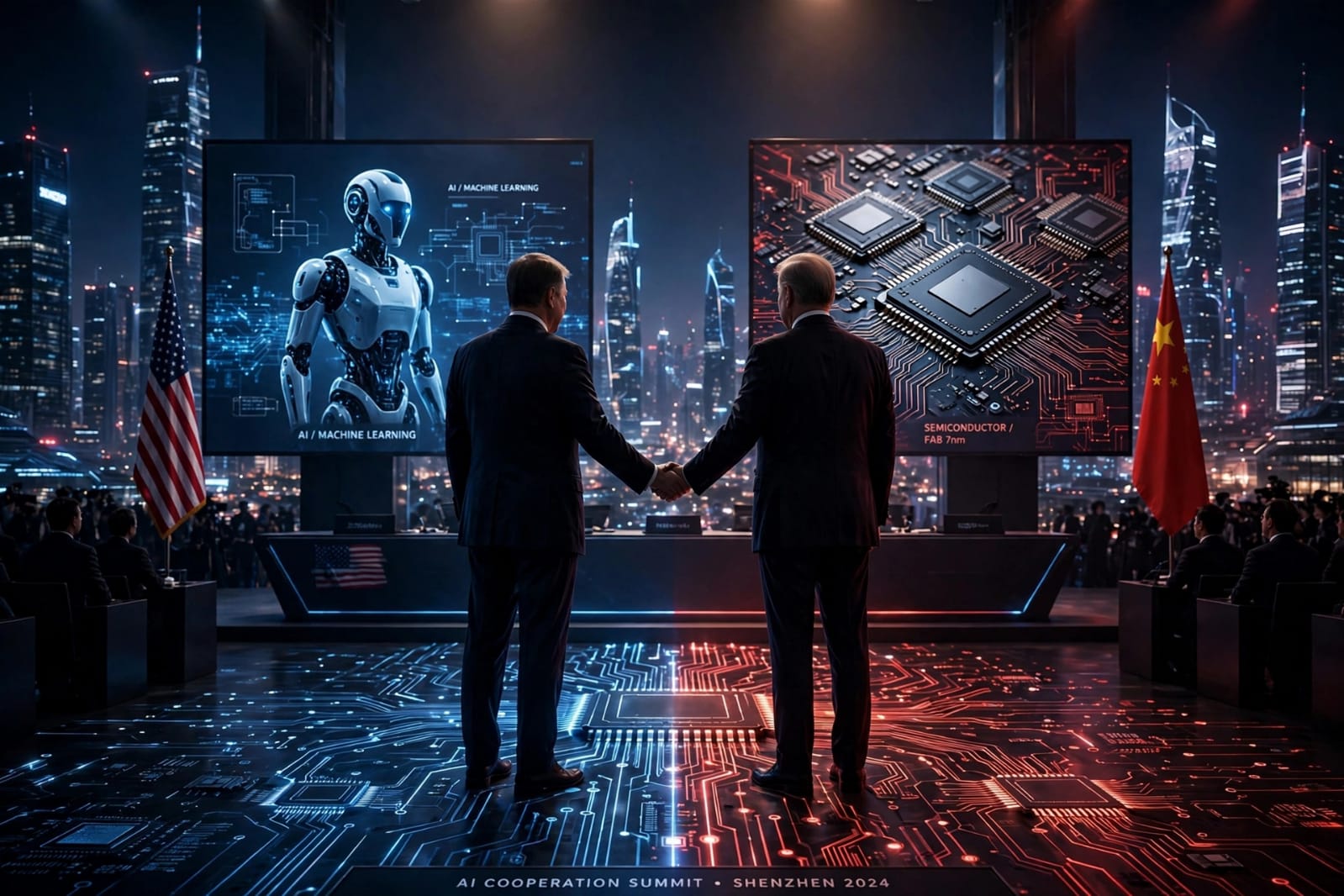
SHENZHEN, CHINA: US President Donald Trump and Chinese President Xi Jinping have emphasized the importance of safe artificial intelligence (AI) development during their meeting in Shenzhen, but growing tensions over advanced technology and semiconductor exports continue to challenge relations between the world’s two largest economies.
The meeting in China’s major technology hub highlighted the contrast between diplomatic efforts to promote cooperation and an increasingly intense competition for technological supremacy.
Just days before the summit, the US Commerce Department introduced new licensing restrictions aimed at further limiting China’s access to advanced American semiconductor technology. The move added another source of tension to already difficult trade and technology negotiations.
US Chip Restrictions Raise Security Concerns
The latest restrictions came amid controversy surrounding Nvidia and allegations involving its former CEO, Jensen Huang. The reported controversy has intensified concerns in Washington about the potential transfer of sensitive American technology to China and other strategic competitors.
Beijing strongly criticized the new export controls, describing them as economic coercion and warning that China would take appropriate countermeasures to protect its national interests.
The dispute reflects Washington’s growing determination to maintain its advantage in advanced semiconductors, artificial intelligence and other strategically important technologies.
Fragile Trade Truce Faces New Challenges
Trade relations between Washington and Beijing remain uncertain despite a temporary understanding extended in September and scheduled to expire in January.
The controversy surrounding Nvidia and the latest semiconductor restrictions have added further complications to negotiations, particularly as both governments continue to raise national security concerns.
Although Trump and Xi discussed AI safety and technological cooperation during the APEC summit and a rare trilateral meeting involving Russian President Vladimir Putin, the discussions produced little concrete progress on broader trade issues or deeper technology cooperation.
China’s Rare-Earth Leverage Adds to Tensions
China retains significant influence over global technology supply chains through its dominant position in the production and processing of rare-earth minerals, which are essential for semiconductors, electric vehicles, advanced electronics and other high-tech industries.
Analysts believe Beijing may carefully calculate its response to Washington’s latest restrictions, particularly ahead of a key Communist Party congress next year. However, the possibility of Chinese retaliation remains a concern for international businesses and technology markets.
Meanwhile, the changing political balance in Washington could increase pressure for additional restrictions on China’s access to advanced technology.
AI Cooperation Remains Uncertain
The Shenzhen meeting provided an opportunity for both leaders to demonstrate diplomatic engagement and express support for the responsible development of artificial intelligence.
However, major disagreements over semiconductor exports, national security, rare-earth supplies and technological competition remain unresolved.
Despite public expressions of cooperation, the underlying struggle between Washington and Beijing for leadership in artificial intelligence and advanced semiconductor technology continues to intensify, leaving the future of bilateral technology relations uncertain.