EU calls final draft greenwashing as fossil-fuel divisions derail the main climate agreement in Antalya
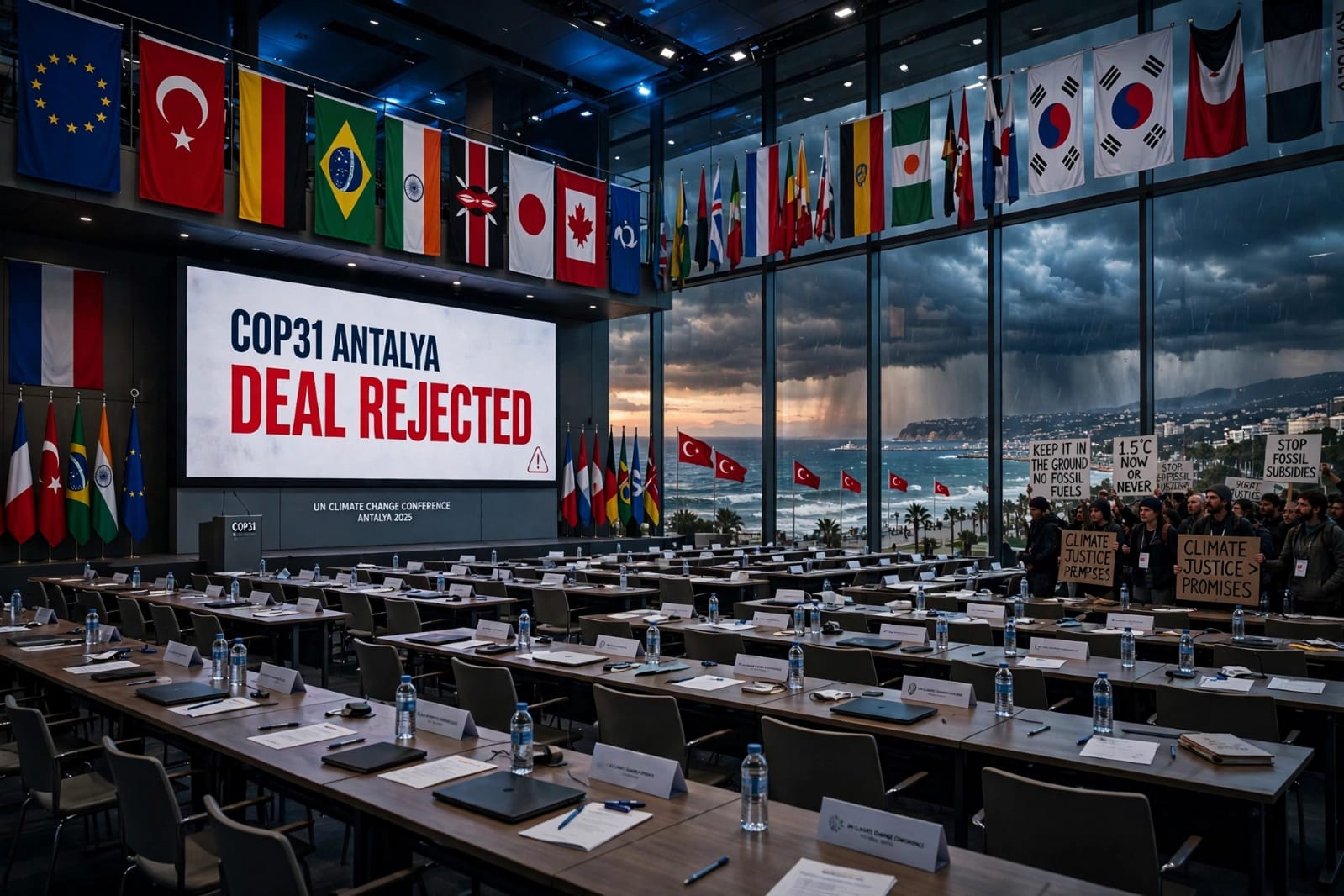
ANTALYA, TURKEY: The United Nations COP31 climate summit ended without agreement on its main proposed climate deal after the European Union (EU) and several other countries rejected the final draft over its failure to address fossil fuels and strengthen climate commitments.
The negotiations in Antalya extended two days beyond their scheduled conclusion, becoming the longest climate summit in COP history. Despite intensive diplomatic efforts and repeated attempts to reach a compromise, participating countries failed to achieve consensus on the main agreement, known as the Antalya Pact.
COP31 President Murat Kurum acknowledged that the proposed agreement had not secured the necessary consensus and confirmed that the main draft decision would not be adopted.
Speaking on behalf of the European Union, Irish Climate Minister Darragh O’Brien strongly criticized the proposed agreement, describing it as inadequate and accusing it of greenwashing.
He said the EU could not endorse an agreement that failed to address the scientific realities of climate change and contained no reference to fossil fuels, including coal, oil and natural gas.
The EU argued that the omission weakened the agreement’s climate ambitions and failed to provide a meaningful pathway toward reducing dependence on fossil fuels.
Panama and Other Nations Join Opposition
Panama also rejected the proposed agreement, emphasizing that scientific evidence should guide international climate policies and that the world could not afford further delays in taking meaningful action.
Several other countries, including the United Kingdom, Norway and the Marshall Islands, also expressed objections to the draft.
The disagreement highlighted divisions between countries seeking stronger commitments to phase out fossil fuels and those opposing explicit language on the issue.
The absence of fossil-fuel commitments became the central obstacle to reaching an agreement. Saudi Arabia and other oil-producing countries opposed including stronger language on transitioning away from fossil fuels.
Saudi delegate Mohammad Ayoub said Arab countries had participated in the negotiations in good faith and pointed out that their combined contribution to historical emissions was less than two percent.
The draft also included proposals to increase electricity’s share of global energy consumption to 35 percent by 2035 and promote carbon-capture technologies.
However, environmental campaigners and several participating countries raised concerns that carbon-capture technology could be used to justify continued reliance on fossil fuels rather than accelerating the transition to cleaner energy.
Paris Agreement’s 1.5°C Target Faces Growing Challenges
The negotiations also highlighted growing concerns over the Paris Agreement’s goal of limiting global warming to 1.5 degrees Celsius above pre-industrial levels.
The proposed draft acknowledged that the world was on course to miss this critical temperature target, underscoring the widening gap between international climate commitments and actual progress.
The failure to approve the Antalya Pact marked a major setback for international climate diplomacy. Although participating countries adopted several other decisions, the summit concluded without agreement on its principal climate document.
Climate activists expressed disappointment over the outcome, arguing that a weak agreement could undermine efforts to address the climate crisis.
Despite the breakdown in negotiations, countries remain committed to the broader international climate framework established under the Paris Agreement.
The COP31 outcome has renewed questions about the ability of nearly 200 countries to reach common ground on fossil fuels, climate finance, emissions reductions and the transition to cleaner energy.