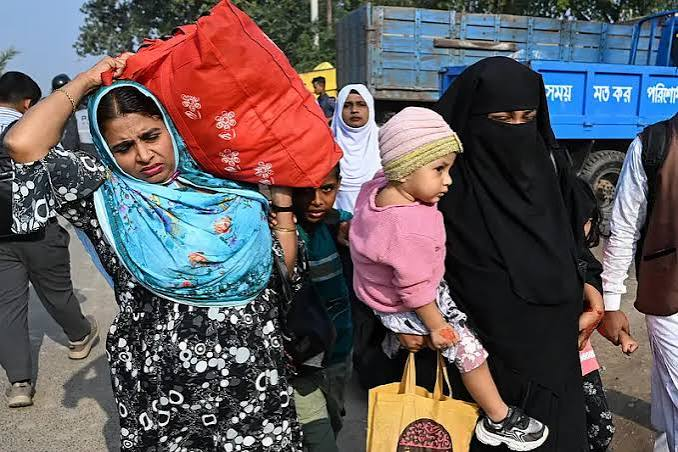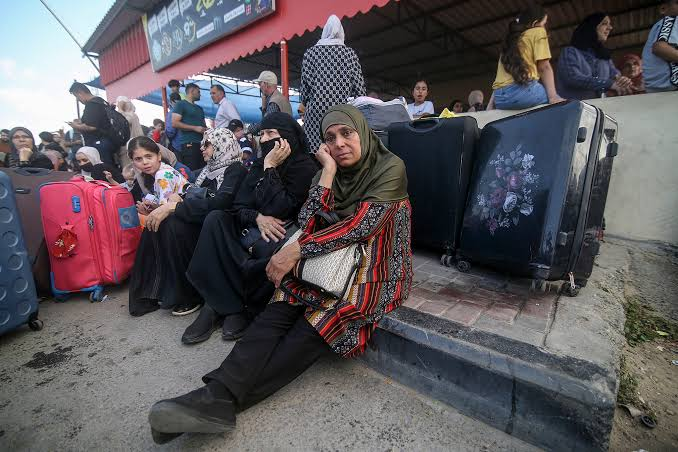
For many Palestinian families living in Egypt, displacement is not simply a memory passed down through family stories. It is a reality that continues to shape their education, employment, healthcare and everyday lives. Generations have grown up outside their ancestral homeland, yet many still face administrative and legal obstacles that prevent them from enjoying the stability they have spent their lives seeking.
In the Egyptian village of Geziret Fadel, in Sharqiya province northeast of Cairo, 90-year-old Shamma Abu Hussein represents a living connection to the Palestinian displacement of 1948. She remembers leaving her home in Beersheba during the conflict surrounding the creation of Israel. Nearly eight decades later, she remains deeply attached to the place she was forced to leave.
Her story, reported by AFP and published by Dawn on November 25, 2026, highlights the difficulties experienced by Palestinian refugees and their descendants in Egypt. It also raises wider questions about displacement, refugee rights and the possibility of returning home.
A Family’s Journey From Palestine to Egypt
Shamma Abu Hussein was among the Palestinians who fled or were expelled from their homes in 1948, an event Palestinians remember as the Nakba, meaning catastrophe.
She recalls a frightening journey during which her family left Beersheba as violence spread. According to her account, elders placed children on camels and led them into the desert. The family travelled for days with little food or water before reaching Egypt. During the journey, Abu Hussein lost her mother.
The experience remained with her throughout her life. Although she eventually built a home and raised a family in Egypt, she never abandoned her connection to Palestine.
Today, Geziret Fadel is home to a community of approximately 4,000 Palestinians. Many residents are descendants of refugees who arrived decades ago. Their children and grandchildren were born in Egypt, but they continue to encounter difficulties linked to their legal status.
For these families, the question is no longer only about remembering the past. It is also about securing a better future for the next generation.
Generations Born in Egypt Still Face Legal Barriers
One of the biggest challenges for Palestinian families in Egypt is the difficulty of accessing services and opportunities available to citizens.
Many residents say that despite being born and raised in the country, they are still treated as foreigners when dealing with official paperwork. Residency renewals, school fees and other administrative requirements can create additional financial pressure.
Selmi Soliman al-Namouli, a 63-year-old agricultural worker and father of ten, explained that he, his father and his children were all born in Egypt. Nevertheless, he continues to face difficulties because of his family’s refugee background.
These barriers can affect major life decisions. Al-Namouli said the costs associated with residency and education prevented him from sending his daughter to university.
His nephew, Farid Khaled al-Namouli, also had to abandon his hopes of continuing his education. He said administrative obstacles interrupted his studies, eventually leading him to work in a clothing shop.
Such experiences demonstrate how displacement can affect people long after the original conflict has ended. Even when families establish permanent communities, uncertainty over documentation and access to public services can limit their opportunities.
The Gaza War Has Increased Fears of Another Nakba
The ongoing war in Gaza has brought renewed attention to the situation of Palestinian refugees across the region.
For older refugees such as Abu Hussein, the destruction and displacement in Gaza are particularly painful because they recall the events of 1948. She fears that calls by some Israeli ministers for Palestinians to leave Gaza could lead to another large-scale displacement.
Her concerns reflect a wider anxiety among Palestinians who believe that displacement has never truly ended.
Lubnah Shomali of the Palestinian refugee rights organisation BADIL described the situation as an ongoing Nakba. She argued that repeated displacement and restrictions on basic rights continue to affect Palestinian communities across different countries.
Researchers estimate that around 50,000 Palestinians displaced by earlier conflicts were living in Egypt before the latest Gaza war. Since the conflict began in October 2023, more than 100,000 additional Palestinians have arrived, according to estimates cited in the report.
The growing number of displaced families has added to the importance of humanitarian assistance, access to essential services and protection from further forced displacement.
Pakistan Chronicle has also examined the long history of displacement in its report on why Palestinian refugee camps still exist.
Why Education Remains a Major Challenge
Education has historically been one of the most important sources of opportunity for Palestinian refugee communities.
In countries such as Jordan, Lebanon and Syria, the United Nations Relief and Works Agency for Palestine Refugees in the Near East, known as UNRWA, provides education and other services to registered refugees.
However, UNRWA has never operated in Egypt. This means Palestinian families there do not benefit from the same agency-supported schooling arrangements available in several neighbouring countries.
Dawn Chatty, an emeritus professor of anthropology and forced migration at the University of Oxford, highlighted the importance of education in helping Palestinian refugees build careers and support their families.
In Egypt, the absence of UNRWA’s educational services, combined with administrative and financial barriers, has made it harder for some young people to continue their studies.
When students leave school because their families cannot manage the costs or documentation requirements, the consequences can continue for years. Limited education may restrict employment opportunities and make it more difficult for younger generations to improve their economic circumstances.
Providing accessible education is therefore essential to helping refugee children and young adults build independent futures.
How Egypt’s Refugee Policies Changed Over Time
Palestinians in Egypt once enjoyed relatively broad access to education and employment under former president Gamal Abdel Nasser.
However, policies became more restrictive following regional political developments. The 1978 peace treaty between Egypt and Israel and the assassination of Egyptian culture minister Yusuf Sibai by members of the Abu Nidal group were among the events associated with subsequent changes in regulations.
Over time, Palestinian families faced greater administrative restrictions and difficulties accessing certain services.
Successive Egyptian governments have rejected granting Palestinians citizenship, arguing that naturalisation could weaken their right to return to their homeland. Egypt has also repeatedly opposed any attempt to permanently displace Palestinians from their land.
Egyptian officials have stated that the country provides medical care and education to Palestinian refugees. Nevertheless, residents’ accounts highlight continuing difficulties in accessing services and securing long-term stability.
The Egyptian foreign ministry did not respond to an AFP request for comment on the specific concerns raised in the report.
The Right of Return Remains Central to Palestinian Identity
For Palestinian refugees, returning to their ancestral homes is not merely a political demand. It is closely connected to family history, identity and the memory of places left behind.
Many refugees who were displaced in 1948 have passed their stories to children and grandchildren. Even when younger generations have never visited Palestine, the connection to their families’ original homes remains important.
Abu Hussein is one example of this enduring attachment. Despite spending most of her life in Egypt, she has not given up hope of returning to Beersheba.
Her position also illustrates the difficult choices faced by refugee families. They want stability, education and employment where they currently live, while continuing to hold on to the possibility of returning home.
The wider Palestinian refugee question remains one of the most difficult issues in efforts to achieve a lasting political settlement. Any meaningful resolution will have to address displacement, security, rights and the future of millions of refugees and their descendants.
The Need for Long-Term Humanitarian Support
The circumstances in Geziret Fadel highlight the importance of policies that protect refugees and allow them to live with dignity.
Access to affordable education, healthcare, employment and reliable residency documentation can make a significant difference to families who have spent generations in uncertainty.
Humanitarian organisations, international institutions and host governments all have a role in supporting displaced communities. Assistance should focus not only on immediate survival but also on long-term opportunities for children and young adults.
The situation in Egypt is part of a wider regional humanitarian challenge involving Palestinian refugees in several neighbouring countries. Pakistan Chronicle has also covered the pressure on displaced communities in its report on Lebanon’s struggle with refugees and humanitarian relief.
Conclusion
The experiences of Palestinian families in Geziret Fadel show how the consequences of displacement can continue across generations. Shamma Abu Hussein’s memories of leaving Beersheba in 1948 remain closely connected to the struggles faced by her children, grandchildren and other refugee families living in Egypt.
For younger generations, the immediate priorities include education, employment, healthcare and secure legal status. At the same time, the hope of returning to their ancestral homeland remains an important part of their identity.
The Palestinian refugee crisis cannot be understood only through the events of the past. It must also be viewed through the lives of people who continue to face uncertainty today. Protecting their rights and providing opportunities for future generations are essential steps towards a more secure and dignified life.
Frequently Asked Questions
1. Who is Shamma Abu Hussein?
Shamma Abu Hussein is a 90-year-old Palestinian refugee living in the Egyptian village of Geziret Fadel. She left Beersheba during the 1948 displacement and has spent most of her life in Egypt. Her story highlights the experiences of Palestinian families who have lived outside their homeland for generations.
2. Where do Palestinian refugees live in Egypt?
One of the communities highlighted in the Dawn report is Geziret Fadel, located in Sharqiya province northeast of Cairo. The village has a Palestinian community of approximately 4,000 people, including refugees and their descendants.
3. Why do Palestinian families in Egypt face difficulties?
Some Palestinian families report administrative barriers involving residency documentation, education, healthcare and employment. Although many residents were born in Egypt, they may still be treated as foreigners when dealing with official procedures.
4. What does the Nakba mean?
The Nakba, an Arabic word meaning catastrophe, refers to the mass displacement of Palestinians during the 1948 war surrounding the creation of Israel. Hundreds of thousands of Palestinians fled or were expelled from their homes, and many were unable to return.
5. Does UNRWA provide education to Palestinian refugees in Egypt?
No. UNRWA provides services to Palestinian refugees in areas including Jordan, Lebanon, Syria, Gaza and the West Bank, but it has never operated in Egypt. This leaves Palestinian families in Egypt without the agency’s direct schooling programmes.
6. Why is the Palestinian right of return important?
The right of return is central to Palestinian refugee identity because it concerns the possibility of returning to homes and communities from which families were displaced. It remains a major issue in discussions about a lasting resolution to the Israeli-Palestinian conflict.