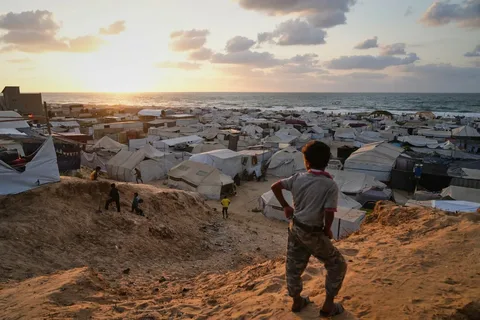
Palestinian refugee camps trace back to 1948, when hundreds of thousands of Palestinians fled or were displaced from their homes during the war surrounding Israel’s creation, an event Palestinians refer to as the Nakba, or “catastrophe.” The United Nations Relief and Works Agency, known as UNRWA, was established in 1949 specifically to provide relief to these refugees and their descendants.
Today, UNRWA reports that roughly 5.9 million Palestinians remain registered as refugees, with the wider global Palestinian population, including many never formally registered, estimated at over 9 million refugees when counting descendants across multiple generations. Refugee status under UNRWA’s mandate passes down through generations rather than expiring, which is a big part of why so many camps are still standing.
Nearly one-third of all registered Palestine refugees, more than 1.5 million people, currently live inside 58 recognized Palestinian refugee camps spread across Jordan, Lebanon, Syria, the Gaza Strip, and the West Bank, including East Jerusalem.
Details
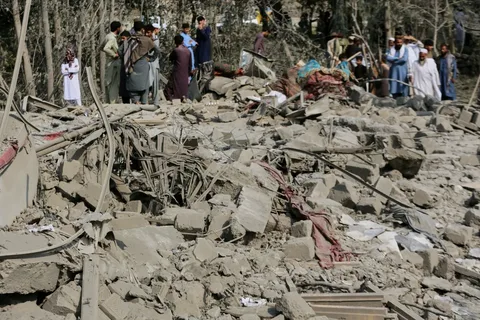
This week’s raid targeted Qalandia refugee camp, located between Jerusalem and Ramallah in the occupied West Bank. Israeli forces moved in before dawn with roughly a dozen armored jeeps and bulldozers, blocking media and residents from entering while searching homes and detaining people described by the army as wanted individuals.
Israel’s Defence Ministry body responsible for civilian affairs in the Palestinian territories, COGAT, said the operation targeted militant infrastructure, weapons trafficking, and what it called terrorist elements inside the camp. Palestinian witnesses and local officials described a different scene: forced evacuations, blocked mosque prayers, and a journalist assaulted while covering the raid.
Understanding the full map of Palestinian refugee camps in Gaza, the West Bank, and neighboring host countries helps explain why incidents like this recur so often. In the West Bank alone, camps such as Qalandia, Jenin, Balata, and Aida have repeatedly been sites of Israeli military operations, particularly amid the sharp rise in West Bank raids since the war in Gaza began in October 2023.
Outside the Palestinian territories, the largest concentrations of refugees live in neighboring Arab states. Jordan hosts the single largest share, with more than 2.3 million registered refugees, many living in camps such as Baqa’a, the largest Palestinian refugee camp in the world by population. Established in 1968 near Amman, Baqa’a camp today houses well over 100,000 residents.
Palestinian refugees in Lebanon number close to 490,000 registered individuals, though UNRWA estimates the actual resident population may be closer to 250,000 due to onward migration. Most Palestinians in Lebanon lack citizenship, face restrictions on property ownership, and are barred from a range of professions, conditions that have kept camps like Ain al-Hilweh and Shatila persistently overcrowded and under-resourced.
Syria’s civil war has also reshaped the picture significantly. Of the 585,610 Palestinian refugees registered there before 2011, an estimated 438,000 remain in the country today, with the rest displaced again, this time into Lebanon, Jordan, or further abroad.
Quotes
An Israeli military official told AFP that security forces were operating in the Qalandia camp area specifically to thwart terror and apprehend wanted individuals, a justification consistent with statements issued during previous West Bank camp operations.
Mohammad Aslan, spokesman for the committee overseeing Qalandia camp’s affairs, told AFP that Israeli forces arrested at least 20 people and took up positions on rooftops throughout the camp during the raid.
Al Jazeera correspondent Nida Ibrahim, reporting from Qalandia, said Israeli forces have been intimidating residents and assaulting people uninvolved in the raid, describing it as part of daily life under occupation in the West Bank.
Impact
The recurring raids on Palestinian refugee camps carry consequences well beyond individual incidents. Rights groups and Palestinian officials say West Bank raids have intensified sharply since late 2023, with official Palestinian figures citing more than 1,180 Palestinians killed and roughly 24,000 arrested across the West Bank during that period, alongside widespread home demolitions and land seizures.
For host countries like Jordan, Lebanon, and Syria, the enduring refugee population represents both a humanitarian obligation and a long-term economic and political strain. UNRWA has repeatedly appealed for hundreds of millions of dollars in emergency funding to sustain healthcare, education, and food assistance for Palestinian refugees across the region, particularly as Syria’s continuing instability adds new pressure to already overstretched camps in Lebanon and Jordan.
The broader question of how many Palestinian refugees there are, and where they might eventually resettle or return, remains central to any future Israeli-Palestinian peace negotiations, since the right of return for refugees has long been one of the most contested issues in the conflict.
Conclusion
With no political resolution in sight and West Bank operations continuing at a rapid pace, Palestinian refugee camps are likely to remain flashpoints for the foreseeable future. For camp residents in Qalandia and beyond, this week’s raid is unlikely to be the last, and the deeper questions about displacement, return, and permanent status that have persisted since 1948 still have no answer in sight.
Frequently Asked Questions
What is the largest refugee camp in Palestine?
Within the Palestinian territories themselves, Jabalia refugee camp in northern Gaza has historically been one of the largest and most densely populated camps, home to hundreds of thousands of registered refugees before the war that began in October 2023 caused widespread destruction and mass displacement across the Gaza Strip. Outside the Palestinian territories, Baqa’a camp in Jordan holds the distinction of being the largest Palestinian refugee camp in the world, with a population exceeding 100,000 people since its establishment in 1968. Both camps illustrate how Palestinian refugee settlements, whether inside the territories or across neighboring host countries, have grown into semi-permanent cities rather than the temporary shelters they were originally designed to be.
Where are the Palestinian refugee camps located?
Palestinian refugee camps are spread across five main areas: the Gaza Strip, the West Bank including East Jerusalem, Jordan, Lebanon, and Syria, together hosting 58 UNRWA-recognized camps. In the West Bank, well-known camps include Qalandia, Jenin, Balata, Aida, and Dheisheh, several of which have seen repeated Israeli military raids in recent years. In Jordan, Lebanon, and Syria, camps such as Baqa’a, Ain al-Hilweh, Shatila, and Yarmouk have existed for decades and, in some cases, evolved into densely populated urban neighborhoods that are difficult to distinguish from the surrounding cities they sit within.
Why are Palestinians in refugee camps?
Palestinians ended up in refugee camps primarily due to displacement during the 1948 war surrounding Israel’s creation, when hundreds of thousands fled or were forced from their homes and were never permitted to return, a event known as the Nakba. Subsequent conflicts, including the 1967 war and repeated escalations in Gaza and the West Bank, created additional waves of displacement that pushed more Palestinians into existing or newly established camps. Because refugee status under UNRWA’s mandate is passed down to descendants, and because host countries like Lebanon have historically restricted Palestinians from gaining citizenship or full civil rights, many families have now lived in these camps for three or four generations without ever formally resettling elsewhere.