If you have been searching for the Turkish parliament members list, the Turkey parliament name, or simply trying to understand how the Grand National Assembly of Turkey operates, this explainer covers everything you need to know from its location in Ankara to how its 600 members are elected and what real power they hold.
What Is the Turkey Parliament Name?
The Grand National Assembly of Turkey
The official Turkey parliament name is the Grand National Assembly of Turkey called in Turkish Türkiye Büyük Millet Meclisi, often abbreviated as TBMM. It is Turkey’s sole legislative body and the only institution granted full law-making authority under the Turkish Constitution.
The Grand National Assembly of Turkey was established on 23 April 1920 in Ankara by Mustafa Kemal Atatürk during the Turkish War of Independence. That date is still celebrated today as National Sovereignty and Children’s Day, a public holiday across Turkey. The assembly pre-dates the Republic of Turkey itself, which was formally declared in 1923.
Turkey Parliament Location and Building
Where Is the Turkey Parliament Located?
The Turkey parliament location is in Ankara, the capital city of Turkey. More specifically, the Grand National Assembly building is situated in the Çankaya district of Ankara, on a prominent hill in the city’s administrative center.
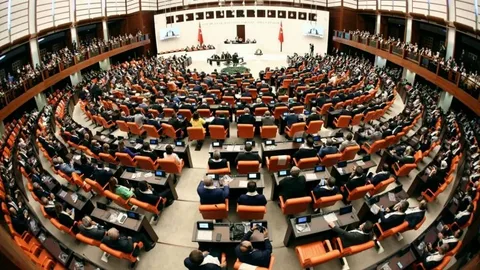
The Turkey parliament building is one of Ankara’s most recognizable landmarks. The current building a large, modernist structure completed in 1961 replaced the original assembly hall from the 1920s. It houses the main chamber where plenary sessions take place, committee rooms, offices for Turkish grand national assembly members and their staff, a press center, and various administrative departments.
Can You Visit the Turkey Parliament Building?
The Grand National Assembly of Turkey does allow guided public visits on specific days, though access to active sessions and secure areas is restricted. The Turkey parliament building features a museum documenting the history of Turkish democracy and the founding of the Republic. Visitors from abroad often combine a trip to the parliament with visits to Atatürk’s mausoleum, Anıtkabir, which is also located in Ankara.
The Turkish Parliament Members List Who Are the 600 Deputies?
Total Number of Turkish Parliament Members
The Grand National Assembly of Turkey has 600 seats, filled by deputies elected across 87 electoral districts. These Turkish grand national assembly members represent all 81 provinces of the country, with larger cities given more seats to reflect their populations. Istanbul is divided into three electoral districts and sends the largest single group of deputies to parliament. Ankara is also divided into three districts, while Izmir and Bursa each have two.
Which Parties Hold Seats?
The 2023 Turkish parliamentary election resulted in seven parties entering the Grand National Assembly, a record in Turkish political history. The Turkish parliament members list by party currently includes:
- AKP (Justice and Development Party) — Erdogan’s ruling party, the largest single group
- CHP (Republican People’s Party) — the main opposition
- DEM Party (Peoples’ Equality and Democracy Party) — the pro-Kurdish party
- MHP (Nationalist Movement Party) — Erdogan’s nationalist coalition partner
- IYI Party (Good Party) — a nationalist opposition party
- YRP (New Welfare Party) — a religiously conservative group
- HÜDA-PAR (Free Cause Party) — a smaller conservative party
The ruling People’s Alliance formed by AKP and MHP together holds a combined majority of 319 seats out of 600 in the Grand National Assembly of Turkey.
How Are Turkish Parliament Members Elected?
Turkish grand national assembly members are elected through party-list proportional representation using the D’Hondt method. To enter parliament, a party must cross a 7 percent electoral threshold at the national level one of the highest such thresholds among democratic countries. Independent candidates are exempt from this threshold.
Elections for all 600 seats take place every five years. Voters select a party rather than an individual candidate, and seats are allocated based on each party’s share of the national vote. The most recent elections were held on 14 May 2023.
What Powers Does the Grand National Assembly Actually Hold?
Legislative Authority
The Grand National Assembly of Turkey holds the constitutional authority to pass all legislation in Turkey. No law can be enacted without its approval. Turkish parliament members debate, amend, and vote on bills in both committee sessions and full plenary sessions in the main chamber of the Turkey parliament building.
The assembly also has the power to ratify international treaties, approve the national budget, declare war, authorize the deployment of Turkish military forces abroad, and call referendums on constitutional amendments.
How Has Presidential Power Changed Things?
Since the 2017 constitutional reform approved by referendum and implemented after the 2018 elections the balance of power in Turkey shifted significantly. The position of Prime Minister was abolished. The President of Turkey now holds most executive authority directly, including the power to appoint and dismiss ministers without parliamentary confirmation.
This means that while the Grand National Assembly of Turkey retains formal legislative powers, the executive branch led by the President now operates with considerably more independence from parliamentary oversight than under the previous system. Many opposition Turkish grand national assembly members and international democracy organizations have raised concerns about the reduced role of the legislature in checking executive power.
A Quick Note on Turkish Parliament Cigarettes
The Brand Behind the Name
Some searches for “Turkish Parliament cigarettes” are not about the legislature at all they refer to the Parliament brand of cigarettes, which has historically been associated with Turkish-style tobacco blends and premium positioning in various markets. The cigarette brand and the Grand National Assembly of Turkey are entirely unrelated. The Turkey parliament name in a political context refers solely to the legislative body in Ankara. The Parliament cigarette brand is owned by Philip Morris International and is marketed globally, with its name deriving from its early positioning as a prestige product rather than any connection to Turkey’s legislative history.
The Grand National Assembly of Turkey’s Official Website
The official online presence of the Grand National Assembly of Turkey is accessible at, where the Turkish grand national assembly members list, session records, committee information, legislative history, and live broadcast schedules for parliament sessions are published. The site is available in both Turkish and English, making it accessible to international researchers, journalists, and members of the public seeking verified information about Turkey’s legislative process and its current members.
Conclusion
The Grand National Assembly of Turkey is one of the oldest continuously operating legislative assemblies in the region, a 600-member body that sits in Ankara and shapes the laws governing a nation of 85 million people. Understanding the Turkish parliament members list, how the Turkey parliament building functions, and what power Turkish grand national assembly members actually hold is essential context for following any major political development out of Ankara including the landmark PKK peace bill that arrived before the assembly this week.
The Turkey parliament name may be formal and unfamiliar to many international readers, but the decisions made inside that building in Ankara carry consequences that extend far beyond Turkey’s borders.
FAQs
How many MPs are in Turkey?
The Grand National Assembly of Turkey has exactly 600 members of parliament, called deputies. The Turkish parliament members list is filled through elections held every five years across 87 electoral districts spread across all 81 of Turkey’s provinces. A ruling majority requires a party or coalition to hold at least 301 seats. The current parliament, elected in May 2023, is the 28th Parliament of Turkey and includes representatives from seven political parties the most parties ever to enter the Grand National Assembly of Turkey in a single election. Turkish grand national assembly members serve five-year terms and may stand for re-election. The next parliamentary elections are scheduled for no later than May 2028, though early elections triggered by the president remain constitutionally possible at any time.
Is Erdogan left or right?
President Recep Tayyip Erdogan and his Justice and Development Party known as AKP are clearly positioned on the political right. The AKP describes itself as a conservative democratic party with roots in Turkish-Islamic traditions, and political analysts classify it as right-wing populist with elements of national conservatism and social conservatism. Erdogan’s governing coalition also includes the MHP, which is further right and holds ultranationalist positions. Internationally, the AKP was briefly affiliated with the European People’s Party as an observer member, but that relationship ended in 2013. In the Turkish parliament members list context, Erdogan’s AKP currently holds 275 seats in the Grand National Assembly of Turkey, making it the largest single party but requiring coalition support to maintain a governing majority. Left-wing parties have little representation in Turkey’s current parliament.
Who has more power, PM or president in Turkey?
Turkey abolished the position of Prime Minister entirely in 2018 following the constitutional reforms approved by referendum in 2017. Since then, all executive power in Turkey rests with the President. The Turkish president appoints cabinet ministers, issues presidential decrees, serves as commander-in-chief of the armed forces, and can dissolve the Grand National Assembly of Turkey under certain conditions and call new elections. In the current political structure, there is no Prime Minister to speak of the role has been replaced by a Vice President and a council of ministers directly responsible to the President. The Grand National Assembly of Turkey still passes legislation and controls the national budget, but the executive branch’s dominance has been significantly expanded compared to the parliamentary system that existed before 2018. Most international observers and Turkish opposition members describe the current system as one that co