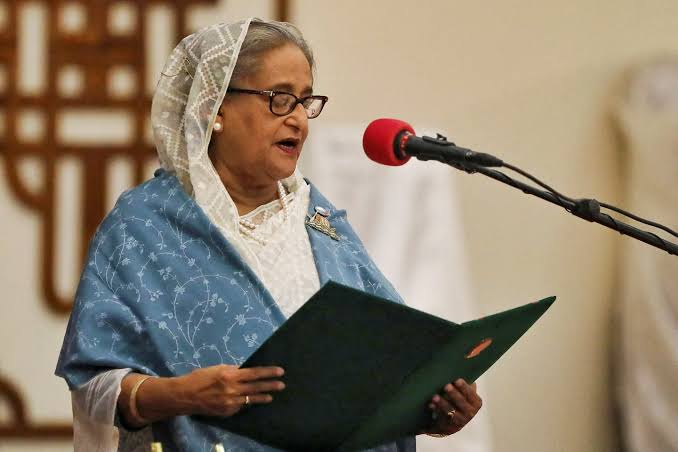
Former Bangladesh Prime Minister Sheikh Hasina is seeking to return to Bangladesh on December 16, 2026, after spending more than two years in India. Her spokesperson has asked the Bangladeshi government to arrange her journey from Delhi to Dhaka aboard the country’s national airline, Biman Bangladesh Airlines.
The proposed return has created fresh political and diplomatic tensions between Bangladesh and India. However, the current government in Dhaka has rejected the request for a special flight, insisting that Hasina must return through the formal extradition process. Her announcement comes at a sensitive time as Bangladesh continues to deal with political divisions and legal questions surrounding her departure from power.
Background: Why Sheikh Hasina Left Bangladesh
Sheikh Hasina left Bangladesh on August 5, 2024, following weeks of student-led protests that eventually ended her 15-year consecutive tenure as prime minister.
The demonstrations initially focused on government job quotas but quickly developed into a wider movement against her administration. Violent clashes between protesters and security forces resulted in a serious political and humanitarian crisis.
Following her departure, Hasina travelled to India, where she has remained since August 2024. An interim government led by Nobel Peace Prize laureate Muhammad Yunus took responsibility for running the country.
Bangladesh later held national elections in February 2026, bringing the Bangladesh Nationalist Party (BNP), led by Tarique Rahman, to power.
Since then, the country’s political environment has remained complicated, particularly because of disagreements over the Awami League’s political future and legal proceedings against its former leader.
Sheikh Hasina Requests Return on Victory Day
According to her spokesperson, Syed Mozammel Ali, Hasina wants to return to Bangladesh on December 16, a date that holds considerable national importance.
Bangladesh celebrates Victory Day on December 16 every year to mark the country’s victory in the 1971 Liberation War.
Speaking about the proposed journey, her spokesperson said the former prime minister wanted the government to arrange transportation from Delhi to Dhaka using Biman Bangladesh Airlines.
He argued that Hasina had travelled to India aboard a Bangladeshi aircraft when she left the country in August 2024. Therefore, he believes the government should help arrange her return.
However, this request has not received approval from the current administration. Government officials have maintained that her return must follow the country’s legal procedures.
Bangladesh Government Rejects Special Flight Request
The Bangladeshi government has made its position clear regarding Hasina’s proposed journey.
State Minister for Foreign Affairs Humaiun Kobir said that the former prime minister could return only through the extradition process established under the agreement between Bangladesh and India.
He also rejected the suggestion that the government should arrange a special flight for her.
The government’s position is closely connected to the legal case against Hasina. In November 2025, Bangladesh’s International Crimes Tribunal sentenced her to death in absentia over her alleged responsibility for the deadly crackdown during the 2024 uprising.
Hasina has rejected the accusations and questioned the legitimacy of the proceedings.
Bangladeshi officials have also indicated that she would face arrest if she returned to the country.
India’s Position Adds Diplomatic Pressure
India is playing an important role in the situation because Hasina has remained in the country since leaving Bangladesh.
Dhaka has previously requested her extradition under the bilateral agreement between the two countries. Indian authorities acknowledged receiving the request and indicated that it was being examined.
However, New Delhi has not publicly confirmed whether it will approve the extradition request or facilitate Hasina’s proposed return.
The situation presents a diplomatic challenge for both governments. Bangladesh wants its judicial decisions to be respected, while India must consider its legal obligations and its broader relationship with its neighbouring country.
The disagreement has also raised concerns about the future of India-Bangladesh relations.
Readers can explore more regional developments in our report on India’s possible extradition of Sheikh Hasina.
Legal Challenges Could Complicate Her Return
The legal proceedings against Sheikh Hasina remain one of the biggest obstacles to her return.
Bangladesh’s International Crimes Tribunal convicted her in absentia in November 2025 and imposed a death sentence over her alleged role in the violence surrounding the 2024 protests.
The former prime minister has denied the allegations.
Her possible return would therefore involve important legal questions, including arrest procedures, judicial proceedings and the handling of her conviction.
The situation has also attracted attention beyond Bangladesh because it raises questions about political accountability, fair trial standards and the independence of judicial institutions.
Any further developments will depend on decisions by Bangladeshi authorities and the diplomatic response from India.
Awami League Supporters Continue to Demand Her Return
Despite the legal challenges, Sheikh Hasina continues to have supporters within Bangladesh.
Members of the Awami League have called for her return and criticised restrictions placed on the party’s political activities.
Demonstrations have taken place in different parts of the country, with some protests resulting in violence and clashes with security forces.
Gopalganj, Hasina’s ancestral district, has been particularly sensitive during periods of political unrest.
The current administration, meanwhile, maintains that legal proceedings must be respected and that public order remains a priority.
These disagreements have made political reconciliation more difficult, particularly as Bangladesh attempts to establish stability following the 2024 uprising.
Pakistan Chronicle has also covered the unrest in its report on Bangladesh shutdown and Awami League protests.
What Her Return Could Mean for Bangladesh’s Politics
Hasina’s proposed return could have wider consequences for Bangladesh’s political environment.
The Awami League remains an important political force despite restrictions on its activities. Her return could therefore bring renewed attention to the party’s future and the question of whether it will eventually be allowed to participate in mainstream politics.
For Prime Minister Tarique Rahman’s government, managing the situation could become another major political challenge.
The administration must balance the enforcement of judicial decisions with public security and the need to prevent further political violence.
Bangladesh also faces economic challenges, including employment concerns, pressure on the garment industry and the need to attract investment.
Political uncertainty could make these problems more difficult to address if it leads to prolonged demonstrations or instability.
Impact on India-Bangladesh Relations
The dispute over Hasina’s future has become an important issue in relations between India and Bangladesh.
Both countries share economic, geographical and security interests. They cooperate in areas such as trade, transportation, energy and regional connectivity.
However, disagreements over Hasina’s presence in India and Bangladesh’s extradition request have created diplomatic difficulties.
A decision regarding her return could influence future discussions between the two governments.
Even if the extradition issue is resolved, both countries will still need to address wider concerns involving border management, regional security and economic cooperation.
Maintaining stable relations will be important for both countries and the wider South Asian region.
What Happens Next?
December 16, 2026, will be an important date to watch because Hasina has identified it as her intended return date.
However, several questions remain unanswered. The Bangladeshi government has not approved her request for a special flight, and India has not confirmed any new arrangement.
The legal status of the former prime minister and the extradition process will remain central to any possible return.
If she arrives in Bangladesh, officials have indicated that she will face arrest and legal proceedings.
For now, attention remains focused on the diplomatic discussions and political developments that could determine whether her proposed journey becomes possible.
Conclusion
Sheikh Hasina’s plan to return to Bangladesh on December 16 has brought fresh attention to the country’s continuing political and legal crisis. Her request to travel aboard Biman Bangladesh Airlines has been rejected by officials who insist that she must follow the formal extradition process.
The issue goes beyond the return of a former prime minister. It involves judicial accountability, political participation, diplomatic relations and Bangladesh’s future stability.
As Victory Day approaches, both Dhaka and New Delhi will face important decisions. Whether Hasina can return on her proposed date remains uncertain, but the developments are likely to remain a major subject of political discussion in South Asia.
Frequently Asked Questions
1. When does Sheikh Hasina plan to return to Bangladesh?
Sheikh Hasina has expressed her intention to return to Bangladesh on December 16, 2026. Her spokesperson announced the proposed date on November 24, explaining that she wants to travel from Delhi to Dhaka aboard Biman Bangladesh Airlines. The date is significant because Bangladesh celebrates Victory Day on December 16. However, the government has not approved the proposed journey.
2. Why does Sheikh Hasina want to return using Biman Bangladesh Airlines?
Her spokesperson says Hasina originally travelled to India aboard a Bangladeshi aircraft on August 5, 2024. Based on this, he has requested that the government arrange her return using the country’s national airline. The request is intended to facilitate her journey back to Dhaka on an important national occasion.
3. Why is the Bangladesh government opposing her proposed return?
The government says Hasina must return through the formal extradition process because she has been convicted in a case involving the 2024 crackdown. The International Crimes Tribunal sentenced her to death in absentia in November 2025. Hasina has rejected the allegations, while government officials have indicated that she would be arrested if she returned.