

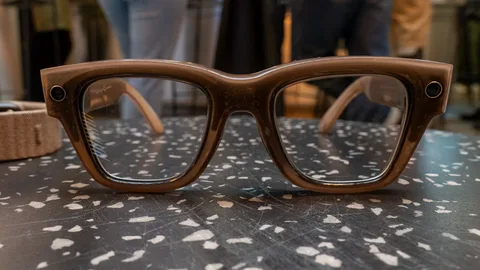

Ray-Ban Meta smart glasses have become the most talked-about wearable technology in the world right now. EssilorLuxottica tripled Ray-Ban Meta sales to over 7 million pairs in 2025, making them a dominant force in the global smart glasses market. From price and features to sales in the USA, Kenya, and Amazon, here is a complete breakdown of everything happening with Meta’s groundbreaking eyewear.
Background: How Ray-Ban Meta Smart Glasses Took Over the Market
Meta partnered with EssilorLuxottica, the parent company of Ray-Ban, to create a line of smart glasses that actually look like regular eyewear. The idea was simple but powerful build AI-powered technology into frames people already wanted to wear.
The EssilorLuxottica partnership tapped deep design expertise to make these glasses look normal, with dozens of variations. Other tech brands simply cannot offer this variety or leverage in-person glasses stores for fittings. That combination of fashion and function changed everything. The product went from niche tech accessory to mainstream eyewear sensation in just two years.
Shares in EssilorLuxottica surged 14 percent on the back of its latest financial results, driving total market value to a record high of almost $20 billion. The success of Ray-Ban Meta smart glasses played a central role in that milestone. It was a sign that the market had genuinely arrived.
Ray-Ban Meta Smart Glasses Price What Do They Cost in 2026?
The Ray-Ban smart glasses price varies depending on the model and generation. The lineup now covers several price points to attract different types of buyers.
The second generation of the Ray-Ban Meta Wayfarer went on sale in September 2025 and sells for $379, while the first-generation version has dropped to around $224, making it a strong case for budget-conscious buyers who want smart glasses without paying the full premium. That price gap of over $150 between generations gives consumers a real choice.
The Ray-Ban Meta Gen 2 Wayfarer model starts at $379 and can increase to $459 depending on the frame finish. Prescription lenses and premium finishes push the price higher. For most buyers, the standard Wayfarer at $379 is the sweet spot.
Meta Ray-Ban Display The Premium Model at $799
For those who want something more advanced, Meta launched a higher-end product that takes smart glasses to the next level. The Meta Ray-Ban Display is the company’s first glasses to include an actual heads-up display screen.
The Meta Ray-Ban Display starts at $799, which includes both the glasses and the Meta Neural Band. It features a 600×600 full-colour display built into the right lens, up to 6 hours of continuous mixed-use battery life, and up to 30 total hours with the fully charged case. It also supports Bluetooth speakers, a camera, microphones, and advanced voice commands powered by Meta AI.
The Meta Ray-Ban Display launched September 30 at limited brick-and-mortar retailers in the US, including Best Buy, LensCrafters, Sunglass Hut, and Ray-Ban stores. Expansion to Canada, France, Italy, and the UK was planned for early 2026. However, that international rollout faced delays due to extraordinary demand in the United States.
Ray-Ban Meta Glasses Gen 2 What’s New?
The Ray-Ban Meta glasses Gen 2 brought meaningful upgrades over the original. The most important upgrade is longer battery life the old version had a 4-hour maximum, but the Gen 2 doubles that capacity without the glasses getting noticeably heavier. That change alone addressed the single biggest complaint from Gen 1 owners.
The Gen 2 uses a Qualcomm Snapdragon AR1 Gen 1 processor, a 12MP camera upgrade, improved audio, livestreaming to Facebook and Instagram, and Meta AI integration. The five-microphone system also ensures cleaner calls and better voice command recognition in noisy environments.
The Ray-Ban Meta Gen 2 are available in several styles including the Wayfarer, Blayzer, and Scriber. The functionality remains the same across all styles, and the Wayfarer remains the default choice for those who want to blend in most naturally. Style diversity is one of the strongest selling points of the entire lineup.
Ray-Ban Meta Wayfarer The Iconic Frame That Started It All
The Ray-Ban Meta Wayfarer is the heart of the smart glasses collection. It borrows the iconic boxy silhouette that has made Ray-Ban one of the most recognized eyewear brands in the world. The Wayfarer design ensures the smart glasses look like a fashion accessory, not a gadget.
The Ray-Ban Meta Wayfarer combines iconic design with cutting-edge technology offering a 12MP camera, five-mic system, livestreaming capability, hands-free calls, and built-in speakers. Lens options include sun, polarized, and Transitions lenses, all offering 100% UVA and UVB protection.
The Wayfarer remains the most popular frame in the entire lineup. Reviewers consistently recommend it as the best entry point into the Ray-Ban Meta ecosystem. Its classic shape means it suits almost every face type and lifestyle.
Meta Ray-Ban Smart Glasses Sales in the USA
The United States is by far the strongest market for Ray-Ban Meta smart glasses. Sales figures have exceeded every industry forecast and caught even Meta’s own leadership by surprise.
Meta said in January 2026 it would push back the international launch of the Ray-Ban Display glasses, originally planned for early 2026, due to unprecedented demand in the US. The product was simply selling faster than it could be manufactured and distributed.
Bloomberg reported that Meta and EssilorLuxottica were discussing doubling production to at least 20 million units by the end of 2026 to meet growing demand. That would represent a dramatic leap in manufacturing scale. It signals that both companies believe the Ray-Ban Meta smart glasses are entering a true mass-market phase.
Meta Ray-Ban Smart Glasses Sales on Amazon
For consumers in the US and many other countries, Amazon is one of the easiest ways to buy Ray-Ban Meta smart glasses. The platform stocks multiple generations and styles, often with competitive pricing.
The first-gen Ray-Ban Meta glasses dropped to an all-time low of $224.25 at Amazon and Best Buy, making it $15 cheaper than Black Friday pricing. The first-gen model offers the same 12MP camera and AI features and will receive Gen 2 software updates the only missing feature is the 8-hour battery life.
Amazon availability has played a key role in driving mainstream adoption. Buyers who might not visit a Ray-Ban store or Best Buy can easily discover, compare, and purchase the glasses online. The platform’s review ecosystem also helps new buyers make informed decisions about which model suits them best.
Meta Ray-Ban Smart Glasses Sales in Kenya
Interest in Ray-Ban Meta smart glasses is growing in Africa, and Kenya is leading the charge. Several Kenyan retailers have begun stocking or importing the product to meet rising local demand.
The Ray-Ban Meta Wayfarer AI glasses are available in Kenya at around KSH 47,299 from online retailers like Avechi. Other platforms such as Phoneplace Kenya and Gadgets Leo also list the glasses as available on import order. Delivery within Nairobi is available within hours from select retailers.
Kenya has also been at the center of global discussions about the glasses, as workers there were reportedly tasked with reviewing videos made through Meta’s glasses to create AI training data. That controversy has drawn significant media attention and raised important questions about data ethics and labor standards in Meta’s supply chain.
Privacy Controversy The Dark Side of Ray-Ban Smart Glasses
The enormous success of Ray-Ban Meta smart glasses has not come without controversy. Privacy concerns have grown louder as more units enter public spaces around the world.
The nature of the camera in Meta’s glasses can be so unobtrusive that even their own wearers have been caught off guard by what and when they are recording. The small white LED light that activates when the glasses are recording appears dim in daylight and often goes unnoticed.
In January 2026, BBC News reported on cases where individuals used Ray-Ban Meta glasses to film people without their knowledge, obtain personal information such as phone numbers or workplaces, and upload those videos to platforms like TikTok without redacting private information resulting in harassment and stalking of victims. These incidents have intensified calls for stronger regulation of always-on wearable cameras in public spaces.
Expert Quote What Industry Voices Are Saying
Mark Smith, a partner at advisory firm ISG who focuses on enterprise software, wears his Meta Ray-Bans every day. He says the basic features are great he uses them while washing dishes because they make it easy to listen to music or a podcast without blocking out other noise. Taking phone calls through the glasses is also a breeze, and when travelling it removes the need to constantly pull out his phone to snap a photo or video.
Reviewers note that, provided you can get past the privacy concerns, the Ray-Ban Meta Gen 2 are the best smart glasses for most people who want to try out the latest trend in wearable tech. The consensus from the tech press is largely positive on features, with privacy being the primary reservation.
Global Impact What the Ray-Ban Meta Success Means for Tech
Meta’s glasses are currently the most popular on the market, estimated to make up more than 80% of all AI or smart glasses sales, as the company was the first major tech player to launch such a product in recent years. That market dominance is extraordinary for any consumer tech product.
Every competitor is now scrambling to respond. Gucci and Google signed a luxury partnership putting Android XR on a fashion runway. XREAL knocked its AR glasses down to $449. Apple stopped being a rumor and started being a roadmap. The Ray-Ban Meta success has redefined what the entire wearable tech industry believes is possible.
Meta and EssilorLuxottica appear to be preparing two new Ray-Ban smart glasses for launch, with FCC filings revealing model numbers RW7001 and RW7002 higher than available models, which range between RW4002 and RW4014, potentially denoting a major hardware upgrade. The next generation is already in development, and the pace of innovation shows no signs of slowing.
Conclusion What Comes Next for Ray-Ban Meta?
Ray-Ban Meta smart glasses have permanently changed the wearable technology landscape. They proved that AI-powered eyewear can succeed commercially when it prioritizes style alongside functionality. The partners sold more than 7 million Ray-Ban and Oakley AI frames in 2025 a pace that accelerated with new models introduced in the second half of the year.
The road ahead involves navigating growing privacy regulation, expanding into new markets like Kenya and the broader African continent, and managing a production pipeline that is struggling to keep up with demand. For consumers, the Ray-Ban smart glasses price range from $224 for Gen 1 to $799 for the Display model now offers an entry point for nearly every budget.
This is no longer a niche tech product. It is a mainstream consumer category, and Ray-Ban Meta is leading it by a wide margin.
FAQs
Are the Ray-Ban Meta glasses successful?
Yes, by almost every measure they are a major commercial success. EssilorLuxottica tripled Ray-Ban Meta sales to over 7 million pairs in 2025 alone, and production is being scaled to potentially 20 million units in 2026. They dominate the smart glasses market and have driven EssilorLuxottica’s market value to record highs.
Who owns 80% of the eyeglass market?
EssilorLuxottica, the French-Italian company that manufactures Ray-Ban, Oakley, and dozens of other eyewear brands, is widely reported to control a dominant share of the global eyewear market. The company produces frames for many competing brands and owns a large portion of the retail distribution network as well. Its partnership with Meta on the Ray-Ban Meta smart glasses has further strengthened its position in the premium and tech eyewear segment.
Why are Ray-Ban Meta glasses sold out?
Meta itself acknowledged “unprecedented” demand in the US, which led the company to push back the planned international launch of the Ray-Ban Display glasses. The Gen 2 models and the Display version both sell faster than current production can supply. Meta and EssilorLuxottica are actively working to scale manufacturing to meet the surging global demand for the product.