Pakistan formally took charge of the presidency of the UN Conference on Disarmament this week, with Ambassador Tahir Hussain Andrabi representing the country in Geneva. This comes as Pakistan continues to serve its eighth term as a non-permanent member of the UN Security Council for 2025-2026, alongside decades of continuous involvement in UN peacekeeping missions around the globe. Officials in Islamabad have described the appointment as a reflection of growing international confidence in Pakistan’s diplomatic leadership, particularly in the sensitive arena of global arms control and disarmament diplomacy.
Background
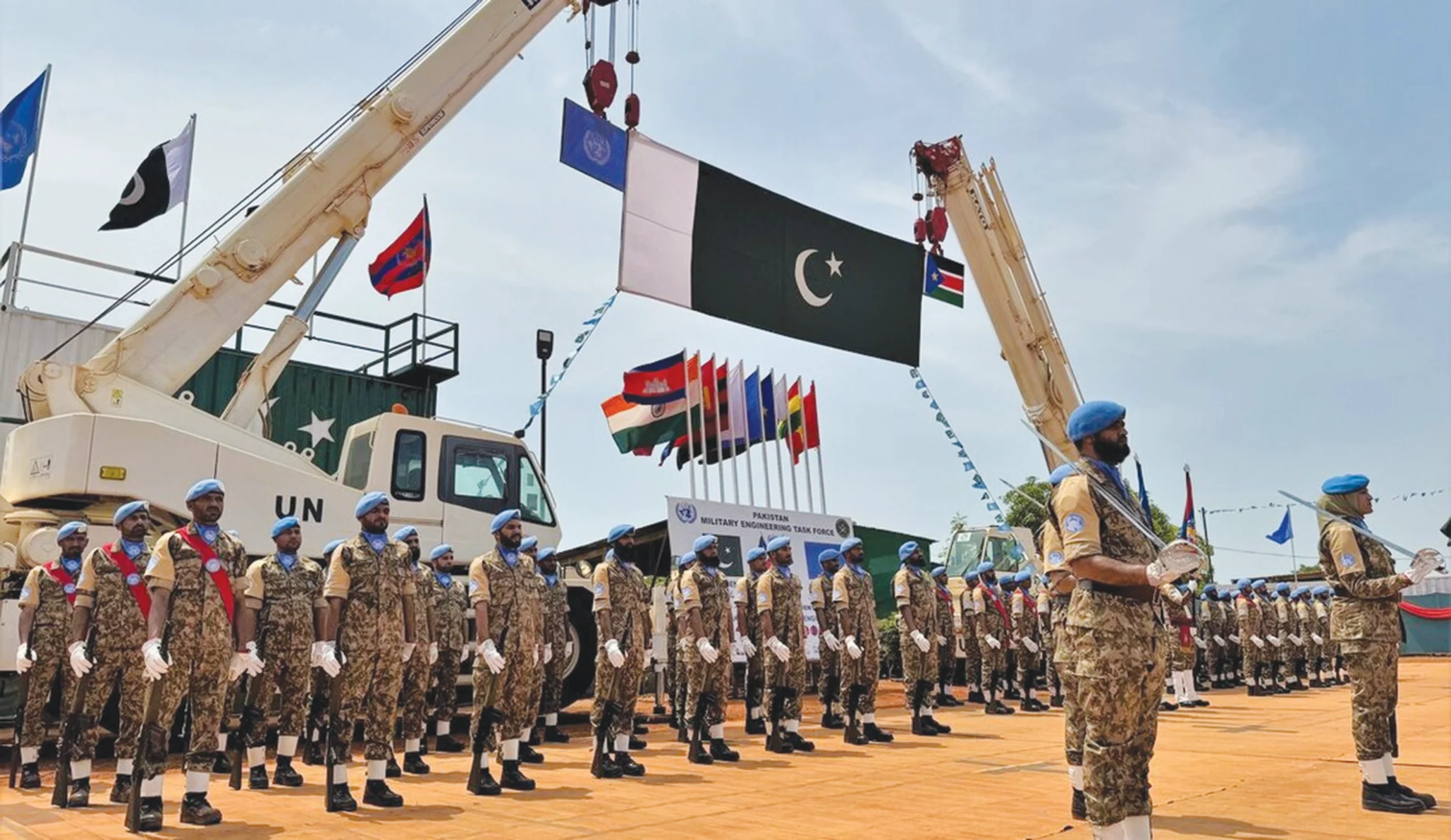
Pakistan and the United Nations for CSS aspirants and general readers alike is best understood through history. Pakistan joined UN in 1947, becoming a member state on September 30, just weeks after gaining independence. This marked the beginning of nearly eight decades of continuous engagement with the world body, spanning peacekeeping deployments, Security Council terms, and leadership roles across various UN agencies and committees. Pakistan’s role in UN peacekeeping mission operations has been particularly notable. Over the decades, Pakistan has contributed troops to a total of 46 UN missions around the globe, including deployments in West New Guinea, the Democratic Republic of the Congo, Sudan’s Darfur region, the Central African Republic, Liberia, and Côte d’Ivoire. This consistent troop contribution has made Pakistan one of the most reliable partners in the UN’s global peace and security architecture, a fact often cited by diplomats and analysts when discussing how many times Pakistan became member of UN Security Council and why its peacekeeping legacy carries weight in Security Council elections. On the Security Council front, Pakistan and United Nations relations reached another milestone in 2024 when Islamabad secured a seat for the 2025-2026 term. Pakistan was elected for the eighth time as a non-permanent member of the United Nations Security Council by the General Assembly for 2025-2026, on June 4, 2024, with the last such term having been served in 2012-2013. The country received an overwhelming show of support during the vote, and its current tenure runs through the end of December 2026, according to official UN Security Council records.
Details
The Conference on Disarmament presidency represents a distinct and highly technical form of diplomatic responsibility, separate from Security Council membership. Pakistan assumed the presidency of the United Nations Conference on Disarmament in Geneva on Monday, with Ambassador Tahir Hussain Andrabi presiding over the conference’s meetings on Pakistan’s behalf. Andrabi currently serves as Additional Secretary for Arms Control and Disarmament and as Foreign Office spokesperson for Pakistan. Pakistan holds the final presidency of the conference’s 2026 session and will therefore oversee the conclusion of its proceedings for the year. During this period, Pakistan will steer negotiations on the Conference’s Annual Report and the corresponding resolution in the First Committee of the UN General Assembly. The Conference on Disarmament itself occupies a unique place in international diplomacy. It is the world’s single multilateral forum for negotiating disarmament and arms control treaties, based at the UN office in Geneva, and it brings together 65 member states, including all states possessing nuclear weapons. Its agenda covers key issues such as the cessation of the nuclear arms race, the prevention of nuclear war, and the prevention of the weaponisation of outer space, among other matters. This body has historically produced some of the most consequential global security agreements. The Conference and its predecessor bodies have negotiated major international security instruments, including the Biological Weapons Convention, Chemical Weapons Convention, and Comprehensive Nuclear-Test-Ban Treaty. Diplomatic observers note that Pakistan’s presidency arrives during a particularly difficult period for the forum. Pakistan assumed the final presidency of the 2026 session at a particularly difficult time for the 65-member conference, which remains the world’s sole permanent multilateral negotiating forum for disarmament treaties but has been unable for more than two decades to agree on a substantive programme of work because of the requirement for consensus in decision-making. Despite this, Ambassador Andrabi has indicated that meaningful discussions continued throughout the year across the conference’s full agenda. Beyond the disarmament forum, Pakistan’s broader diplomatic footprint at the UN currently centers around Ambassador Asim Iftikhar Ahmad, who has served as Pakistan’s Permanent Representative to the United Nations since April 2025. He has represented Pakistan during its tenure on the United Nations Security Council, including serving as the Council’s President in July 2025. Under the Security Council’s alphabetical rotation system, Pakistan holds the presidency for one month during its two-year term.
Quotes
Speaking to Dawn about the nature of Pakistan’s disarmament conference presidency, Ambassador Andrabi drew a careful distinction between his role as chair and the country’s own national positions on arms control matters. He explained that Islamabad’s responsibility as the final chair of the 2026 session was to ensure that the body’s annual report “reflects the discussions that took place, faithfully and in a balanced way,” even on issues where Pakistan has strong and clearly articulated positions of its own. Pakistan’s Foreign Office has also framed the appointment as recognition of the country’s broader multilateral standing. According to officials in Islamabad, the presidency reflects the confidence the international community places in Pakistan’s diplomatic leadership and its constructive engagement in arms control and disarmament diplomacy more generally. When Pakistan first took its Security Council seat for the current term, former Permanent Representative Munir Akram addressed the geopolitical backdrop directly, describing an era of heightened global tension. He noted that Pakistan was entering the council at a time of considerable geopolitical turbulence, with intense competition between major powers, ongoing wars in multiple regions, and an escalating arms race, and pledged that Pakistan would play an active and constructive role in accordance with the UN Charter.
Impact
Pakistan’s simultaneous roles at the UN, holding a Security Council seat while also chairing the Conference on Disarmament, place the country in a rare diplomatic position this year. Few nations manage overlapping leadership responsibilities across both the political and technical arms of the UN system at once, and Pakistan’s ability to do so signals sustained investment in its foreign service and multilateral diplomacy apparatus. Regionally, the presidency carries added weight given ongoing global discussions around nuclear arms control, artificial intelligence in military contexts, and the prevention of an arms race in outer space. Diplomatic sources suggest Pakistan will need to navigate sharp divisions between major powers on several of these issues during its tenure, particularly given differing positions held by the United States, European countries, China, and Russia on space security matters. How Pakistan manages this balancing act could shape perceptions of its diplomatic capability well beyond this single assignment. For Pakistan’s long-term global standing, both the disarmament presidency and its ongoing Security Council term reinforce a narrative the Foreign Office has consistently promoted: that Pakistan despite regional and economic challenges, remains a serious and engaged actor in global governance, peacekeeping, and multilateral negotiation.
Conclusion
As Pakistan continues steering the Conference on Disarmament’s 2026 session toward its conclusion, attention will now turn to whether Ambassador Andrabi and his team can help the forum produce a balanced annual report despite the consensus deadlock that has gripped the body for more than two decades. The coming weeks will be a genuine test of Pakistan’s diplomatic skill, since the presidency requires Islamabad to set aside its own national positions on contentious arms control issues and instead act as a neutral broker capable of reflecting the views of all 65 member states fairly. How Pakistan navigates the ongoing divide between the United States, European nations, China, and Russia on subjects like the weaponisation of outer space and the military use of artificial intelligence will likely shape how this presidency is remembered internationally. At the same time, Pakistan’s broader UN diplomatic role is far from limited to Geneva. Islamabad’s Security Council term runs through the end of December 2026, which means Pakistani diplomats under Ambassador Asim Iftikhar Ahmad will remain heavily engaged across multiple Council briefings, resolutions, and committee assignments well into the year ahead, including Pakistan’s seat on the ISIS and Al-Qaeda Sanctions Committee. This overlapping responsibility across both the Security Council in New York and the Conference on Disarmament in Geneva places unusual demands on Pakistan’s foreign service, but it also offers a rare opportunity to demonstrate sustained diplomatic capacity on two of the UN’s most sensitive platforms simultaneously. Looking further ahead, observers expect Pakistan to continue leveraging its extensive peacekeeping legacy, spanning 46 missions across multiple continents, along with its long institutional memory of Security Council service, as it pursues future leadership roles within the UN system. Pakistan’s UN diplomatic role has historically been built on consistency rather than singular breakthroughs, and this latest presidency fits that same pattern. Whether it is peacekeeping deployments, Security Council terms, or chairing technical negotiating bodies like the Conference on Disarmament, Pakistan’s approach has generally been to accumulate credibility over decades rather than seek short-term recognition. For CSS students, researchers, and general readers tracking Pakistan and United Nations relations, this latest development offers a clear, current example of how that long-term diplomatic strategy continues to play out on the world stage, and it will likely serve as a reference point for future discussions about Pakistan’s evolving global standing well beyond 2026.
Frequently Asked Questions
How much does a Pakistani diplomat earn?
Compensation for Pakistani diplomats varies significantly depending on rank, posting location, and years of service. Officers in the Foreign Service of Pakistan typically begin their careers as Third Secretaries and progress through ranks including Second Secretary, First Secretary, Counsellor, Minister, and eventually Ambassador or High Commissioner. Salaries are structured according to Pakistan’s civil service pay scales, with additional foreign allowances tied to the cost of living in the host country, since postings in cities like New York, Geneva, Washington, or London carry different living expenses than postings in other regions. Senior diplomats such as Ambassadors and Permanent Representatives typically receive housing allowances, representation grants, and other benefits on top of their base salary, though exact figures are not always publicly disclosed and can change with periodic government pay revisions.
Who is Pakistan’s current ambassador to the UN?
Pakistan’s current Permanent Representative to the United Nations is Ambassador Asim Iftikhar Ahmad, who has served in this role since April 1, 2025. He is a career diplomat who previously served as Pakistan’s Ambassador to France and Monaco, as well as Ambassador to Thailand, and has held several senior positions within the Ministry of Foreign Affairs, including as its official spokesperson. During his tenure at the UN, Ambassador Ahmad has represented Pakistan throughout its current Security Council term, including presiding over the Council during Pakistan’s presidency month in July 2025.
Who is the UN Head of Pakistan?
If this question refers to Pakistan’s top representative at the United Nations, that role belongs to Ambassador Asim Iftikhar Ahmad, the Permanent Representative of Pakistan to the UN in New York, who leads the Permanent Mission of Pakistan to the United Nations. He is supported by a Deputy Permanent Representative, currently Ambassador Usman Jadoon, along with a team of counsellors and secretaries handling different portfolios such as political affairs, economic diplomacy, and administrative matters. Separately, Pakistan also maintains a distinct mission at the United Nations Office in Geneva, which handles matters such as the Conference on Disarmament and other Geneva-based UN bodies, currently represented in the disarmament context by Ambassador Tahir Hussain Andrabi.