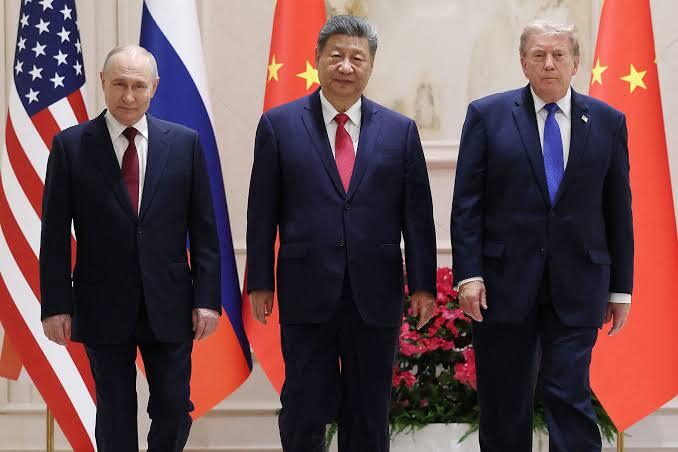
The Shenzhen Summit has become the most closely watched diplomatic event of the year. US President Donald Trump, Russian President Vladimir Putin and Chinese President Xi Jinping are meeting in the southern Chinese city on the sidelines of the Asia Pacific Economic Cooperation gathering. It is the first time the three leaders have sat down together, and the talks are expected to run on Thursday, November 19.
Beijing confirmed the trilateral meeting earlier this week, with Xi acting as host. The agenda is expected to touch on nuclear arms control, artificial intelligence, trade and the war involving Iran. Ukraine is widely expected to stay off the formal agenda, which has already drawn concern in Europe.
Background: Why Shenzhen Matters
Shenzhen is home to some of China’s biggest technology companies, and Beijing chose it to showcase its economic reach as APEC host. The city gives Xi a stage to present China as a convener of major powers rather than a participant in someone else’s order. That symbolism is central to how the meeting is being read around the world.
The leaders have met in various combinations before. Trump and Putin last held a summit in Anchorage, Alaska, in August 2025, while Trump and Xi have held several meetings since a trade truce was reached in October 2025. Putin is reportedly attending an APEC leaders’ meeting in person for the first time since 2017. Bringing all three together, however, is new.
The comparison that has dominated headlines is with the Yalta Conference of February 1945. At Yalta, the American, British and Soviet leaders discussed the shape of postwar Europe, and critics later argued the understandings gave the Soviet Union a free hand over Poland and its neighbours. Commentators have started calling this meeting “Yalta 2.0,” a label that officials in Beijing clearly want to avoid.
Details: What the Three Leaders Are Expected to Discuss
Arms control is expected to be one of the most sensitive topics. The major US and Russian nuclear agreements have expired, and China, which has the fastest growing arsenal among the major powers, has said it will not join such arrangements until it reaches parity. Analysts therefore see little room for a breakthrough, even if all three leaders speak in favour of limiting the spread of nuclear weapons.
Artificial intelligence is the second major theme. Former US diplomat Richard Haass has argued that the most realistic outcome is a basic agreement to warn one another if AI systems escape their controlled testing environments. Anything broader looks unlikely because each country sees AI as central to its economic and military strength.
The war involving Iran is the third issue. The leaders may call for a ceasefire, but their interests are not identical. China is a large energy importer and would prefer that oil fields and export infrastructure remain intact, while Russia, as an energy exporter, benefits from higher prices. Trade will also feature, particularly in the Trump and Xi bilateral talks, which are focused on keeping the existing truce on track.
A further Trump and Xi encounter is expected at the G20 summit in Miami in December, which suggests the Shenzhen talks are one stop in a longer process rather than a final settlement.
Quotes: What Leaders and Experts Are Saying
Ukrainian President Volodymyr Zelensky has warned that the meeting could resemble a Yalta style “redistribution of spheres of influence.” His concern reflects a wider fear in Europe that decisions affecting smaller countries could be shaped without their participation.
China’s foreign ministry has taken the opposite view, describing the talks as an “event of breakthrough significance.” Chinese commentators have also argued that the meeting is about crisis management and limited cooperation, not about dividing the world. Beijing has an extra reason to stress this point, since China was not part of the 1945 conference at all.
Haass has urged caution about expectations. He noted that none of the three leaders arrives from a position of obvious strength, citing the recent US midterm results, Russia’s difficulties on the battlefield and economic pressure inside China. In his view, a photo opportunity would be better than a bad deal, because “sometimes less is more.”
Impact: Regional and Global Consequences
The most immediate impact may be diplomatic perception. Even a meeting with no signed agreement sends a message that the three most powerful governments are willing to talk directly. Allies in Europe and Asia will watch closely for any sign that their security interests are being discussed without them, especially on Ukraine and Taiwan.
Energy and financial markets could also react. Any signal on the Iran war, oil supply or the US China trade truce can move prices quickly. Countries that depend on imported fuel, including those in South Asia, tend to feel these shifts through inflation and currency pressure, even when they are not part of the talks. Readers following Pakistan Chronicle will recognise how closely global energy decisions are linked to local economic stability.
For Pakistan and the wider region, the effects are likely to be indirect but real. China is a close partner of Islamabad, and any shift in Beijing’s relationship with Washington or Moscow can influence trade, investment and security planning. For more regional coverage, see the world news section and our latest political analysis on Pakistan Chronicle.
Conclusion: What Comes Next
The Shenzhen Summit is unlikely to produce a sweeping settlement, and most analysts are not expecting one. The more realistic outcomes are limited statements on stability, possible technical understandings on AI and nuclear risks, and a clearer picture of how the three powers see one another.
What happens after the meeting will matter more than the photographs. Watch for follow up talks, the December G20 meeting, and any change in the war in Ukraine or the conflict involving Iran. If the leaders keep expectations modest and avoid secret bargains, the summit may be remembered as a useful conversation rather than a new Yalta.
FAQs
What is the Shenzhen Summit?
The Shenzhen Summit refers to the trilateral meeting between Donald Trump, Xi Jinping and Vladimir Putin held on the sidelines of the Asia Pacific Economic Cooperation gathering in Shenzhen, China. It is the first time the three leaders have met together. China is hosting, and the talks are expected to cover arms control, AI, trade and the war involving Iran.
Why is the meeting being compared to the Yalta Conference?
The 1945 Yalta Conference brought together the leaders of the United States, Britain and the Soviet Union to discuss the postwar order, and critics say it left smaller nations with little say. Commentators use the comparison because three major powers are again meeting at the top level. Beijing rejects the label and points out that China was not part of the original conference.
Will Ukraine be discussed at the Shenzhen Summit?
Reports suggest Ukraine is unlikely to be a formal agenda item, based on signals from Chinese officials relayed by European leaders. This has worried Kyiv and its allies, who fear that decisions about the war could be influenced without Ukrainian participation. The leaders may still address the conflict informally, but no major announcement is expected.
What could the summit mean for Pakistan and South Asia?
The effects are expected to be mostly indirect. Changes in US China or Russia China relations can affect oil prices, trade routes and regional security calculations. Because China is a major partner of Pakistan, any shift in Beijing’s wider diplomacy may influence investment and economic planning in the region over time.
Is a major agreement likely to come out of the meeting?
Most analysts expect limited results. The leaders may agree on broad language about stability, nuclear risks or AI safety, but deep disagreements remain on arms control, Iran and Ukraine. A symbolic outcome and a commitment to keep talking is seen as more likely than any binding deal.