Pakistan Greets North Korea on 78th Founding Anniversary
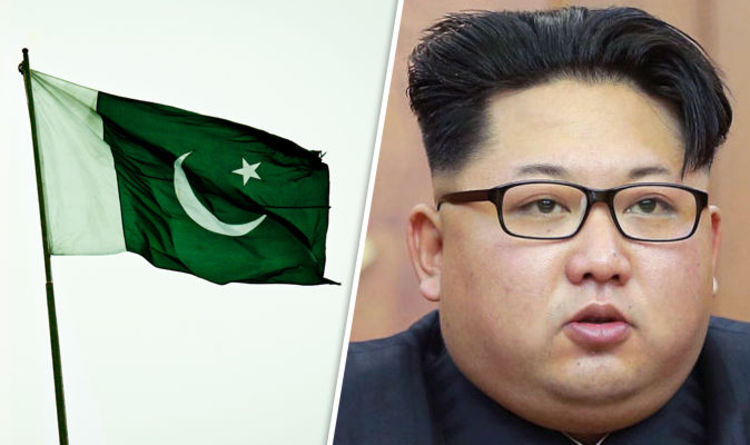
Pakistan made a rare public diplomatic move this week when President Asif Ali Zardari and the Foreign Office sent greetings to Pyongyang. The message marked the 78th anniversary of North Korea’s founding, an occasion most countries with formal ties to Pyongyang mark quietly through diplomatic channels rather than public statements. Islamabad’s decision to do so openly has drawn attention precisely because Pakistan North Korea relations have stayed muted for years.
Background: A Relationship That Rarely Makes Headlines
Pakistan and North Korea have held formal diplomatic relations since the 1970s, but the relationship has never been close in the way Pakistan’s ties with China or Gulf states are. For much of the past two decades, exchanges between Islamabad and Pyongyang have been infrequent and largely out of public view. Pakistan’s diplomatic mission in Pyongyang is currently listed as closed on the Foreign Office’s own website, a detail that underlines just how limited on-the-ground engagement between the two countries has become.
The relationship also carries a difficult history. Reports and investigations from the early 2000s linked elements of Pakistan’s nuclear program to unauthorized technology transfers involving North Korea, a controversy that strained Islamabad’s standing with Western partners for years afterward. That legacy, combined with Pakistan’s close security relationship with the United States and the international sanctions regime on North Korea, has kept the two countries at arm’s length diplomatically even though formal relations were never severed.
Details: What Was Said, and How
According to a letter addressed to DPRK President Kim Jong Un, President Zardari referenced the “cordial relations based on mutual trust and goodwill” between the two nations. He expressed hope that bilateral ties would keep growing in a way that benefits both countries. The Pakistan Foreign Office followed up with its own public post on X, offering its “warmest felicitations” to North Korea and tagging Pakistan’s mission in Pyongyang, even though that mission is not currently operational.
The timing lines up with North Korea’s founding day, observed every September 9 to commemorate the establishment of the Democratic People’s Republic of Korea in 1948. Other countries with close ties to Pyongyang, notably China and Russia, routinely send similar messages on this date. What made Pakistan’s gesture stand out is simply that it doesn’t happen often, and this time it was made public rather than handled quietly through diplomatic notes.
Quotes: Foreign Office Downplays the Significance
Asked about the exchange, Foreign Office spokesman Sajjad Haider Khan pushed back on the idea that anything unusual was happening. He told Dawn that “exchange of felicitation messages are a common practice,” framing the gesture as routine diplomatic courtesy rather than a signal of any shift in policy. Officials have not offered further comment beyond that statement, and neither side has indicated any plan for expanded engagement following the exchange.
Impact: What This Means Regionally and Globally
On its own, a congratulatory letter changes little. North Korea remains under heavy international sanctions, and Pakistan has given no indication of altering its cautious approach to Pyongyang. Still, the gesture is being read by some observers as a small but notable data point, since public exchanges of this kind have been rare enough in recent years that even a routine letter draws scrutiny.
For Pakistan, the episode is unlikely to affect its relationships with Washington, Beijing, or Seoul, all of which take a close interest in how countries in the region handle North Korea. For North Korea, any public acknowledgment from a country like Pakistan, which maintains working relationships across South Asia and the Gulf, offers a small reminder that Pyongyang still has formal diplomatic partners beyond its usual circle of China and Russia.
Conclusion: A Small Gesture Worth Watching
Whether this greeting leads to anything more than a one-off exchange remains to be seen. The Foreign Office’s insistence that this is standard practice suggests Islamabad wants to avoid reading too much into a single letter. Even so, given how quiet Pakistan North Korea relations have been for most of the past decade, this kind of public exchange is worth tracking for signs of any broader shift in how the two countries choose to engage going forward.
Frequently Asked Questions
Does Pakistan have relations with North Korea?
Yes, Pakistan and North Korea have maintained formal diplomatic relations since the 1970s, and this status has never been formally revoked by either side. In practice, however, the relationship has stayed limited for years, with infrequent public contact and a Pakistani mission in Pyongyang that is currently listed as closed. Most engagement, when it happens, tends to take the form of occasional letters or messages around events like national anniversaries, rather than active trade, cultural exchange, or high-level visits. The recent greeting from President Zardari and the Foreign Office is one of the more visible instances of contact between the two countries in recent memory, though officials have described it as routine diplomatic courtesy rather than a sign of deepening ties.
Can Pakistanis visit North Korea?
Travel between Pakistan and North Korea is not straightforward. North Korea has historically kept tight control over foreign visitors, and access for most nationalities, including Pakistanis, typically requires a government-approved tour rather than independent travel. There is no functioning Pakistani embassy in Pyongyang at present, which means Pakistani citizens would have limited consular support if they did travel there. Combined with international sanctions on North Korea and the country’s periodic closures to foreign visitors, travel from Pakistan to North Korea remains rare and is not something most travelers or tour operators facilitate as a routine option.
How many Pakistanis live in North Korea?
There is no publicly available or reliable data indicating any significant Pakistani community residing in North Korea. Given the absence of an active Pakistani diplomatic mission in Pyongyang, restricted travel access, and North Korea’s broader policy of limiting foreign residency to a small number of diplomats, aid workers, and business representatives from a handful of countries, it is unlikely that any meaningful Pakistani population exists there. Anyone seeking accurate, current figures should treat this as an open question rather than a settled fact, since neither government publishes detailed statistics on this.