Summary
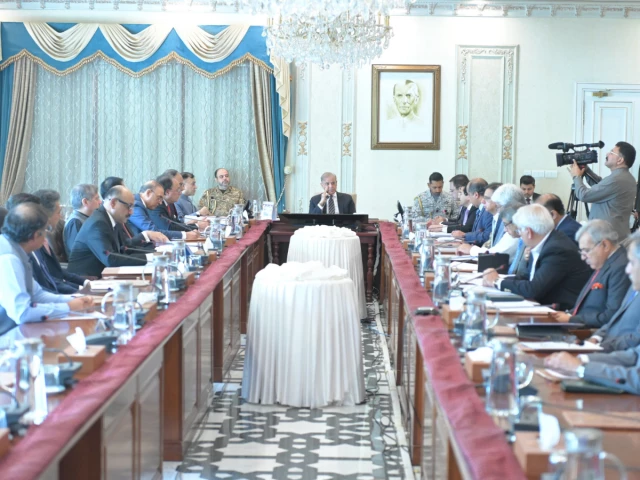
Policy implementation in Pakistan is once again under scrutiny after a fresh round of government engagement with the business community. The prime minister has kept up periodic contact with private-sector representatives, and officials point to the withdrawal of the super tax and Rs800 billion recovered through stronger enforcement as early wins. Whether these gestures turn into lasting policy follow-through is still an open question.
Background
Economic policymaking in Pakistan has long struggled with a basic problem. Governments rarely consult the private sector unless pushed from the top, and even when they do, recommendations tend to get shelved. Business groups have voiced this complaint for years, often without much changing on the ground.
Against that backdrop, the current administration’s decision to keep a standing dialogue with business leaders stands out. It is not the first such effort in Pakistan’s political history, and past consultations have frequently ended in disappointment. That history is part of why this round is being watched so closely.
Details
The government has withdrawn the super tax, a levy that had drawn sharp criticism from industry. Some other business costs have also come down, according to recent reporting. Officials say Rs800 billion was recovered over the past year through stronger tax enforcement, and they note this was done without piling new taxes onto businesses that were already compliant.
These are concrete, measurable steps, which sets this round of engagement apart from past cycles of promises without action. Still, the pace of change has been slow, and the bigger structural questions facing Pakistani businesses, things like regulatory unpredictability, energy costs and the ease of doing business, remain largely untouched.
Political accountability is the piece that will determine whether this dialogue amounts to anything. A single meeting or a tax withdrawal does not fix a business environment. What matters is whether the channel keeps producing results after the initial headlines fade.
Quotes
Dawn’s editorial board, commenting on the prime minister’s engagement with business leaders, credited the government for keeping up periodic contact with the business community. The same editorial argued that the purpose of these consultations needs to shift from reassurance toward reforms that change the operating environment itself.
That framing captures the core tension here. Meeting with businesspeople and listening to complaints is a low bar. Fixing the conditions those complaints describe is a much higher one, and it is the one that actually counts for Pakistan’s political developments on the economic front.
Impact
For Pakistan’s business community, the near-term impact is limited but real. Removing the super tax lowers costs for firms that were carrying that burden, and stronger enforcement without new taxes on compliant businesses suggests the government is trying to widen the tax net rather than squeeze existing taxpayers harder.
Regionally, how Pakistan handles this test matters for its standing with investors who compare regulatory environments across South Asia. A government that can show consistent policy follow-through, rather than one-off gestures, has an easier time attracting long-term capital.
Domestically, this is also a test of government commitments more broadly. If the dialogue channel keeps producing incremental fixes to individual grievances but stalls on bigger reforms, public and business trust in the process will likely erode again, much as it has in past cycles.
Conclusion
The next few months will show whether this round of engagement breaks the old pattern. Keeping the dialogue channel open is a reasonable start, but Pakistan’s track record on policy implementation means skepticism is warranted until reforms actually reshape how businesses operate day to day.
Future developments worth watching include whether new legislation follows from these consultations, whether the Rs800 billion enforcement figure holds up under scrutiny, and whether business groups themselves report meaningful changes in the next reporting cycle.
Frequently Asked Questions
What are the 7Cs of policy implementation?
The 7Cs framework, developed by researchers at the Overseas Development Institute, breaks policy implementation down into seven interconnected factors: Content (what the policy actually says), Context (the political and institutional environment it lands in), Commitment (whether political leaders genuinely back it), Capacity (whether the state has the resources and skills to carry it out), Clients and Coalitions (who benefits and who might block it), Communication (how clearly it is explained to those affected), and Coordination (how well different agencies work together to deliver it). The framework is often used to explain why policies that look fine on paper still fail once implementation begins, which is a recurring theme in discussions of policy implementation Pakistan has seen across different governments.
What are the 5 stages of the policy process?
Most political science textbooks describe the policy process in five broad stages: agenda setting, where an issue gets enough attention to be considered for government action; policy formulation, where options are drafted and debated; decision-making or legitimation, where a specific option is formally adopted; implementation, where the policy is actually carried out by agencies and officials; and evaluation, where the results are assessed to see whether the policy achieved its goals. In practice these stages overlap and loop back on each other rather than running in a strict straight line, and implementation is usually where the biggest gap between intention and outcome shows up.
Why does policy implementation stall so often in Pakistan?
Analysts point to a mix of factors: weak coordination between federal and provincial institutions, limited technical capacity within implementing agencies, resistance from groups who benefit from the status quo, and a political culture where announcing a policy is treated as an achievement in itself rather than the starting point. Consultations with stakeholders like the business community are meant to address some of this, but only if the feedback gathered actually feeds into binding reforms rather than one-off fixes to individual complaints.