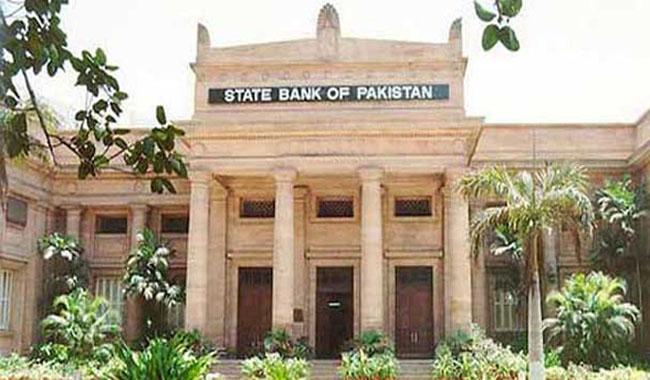
Pakistan has given the State Bank of Pakistan formal legal cover to set up a centralised digital store of banking data. The change comes through an amendment to the Income Tax Ordinance 2001, and it hands SBP the ability to hold records that were previously locked behind bank confidentiality rules.
Background
Banking data in Pakistan has long been protected under laws like the Banking Companies Ordinance 1962 and the State Bank of Pakistan Act 1956. Those laws made it hard for any single authority to pull transaction records together in one place, even for tax enforcement purposes.
That changed with the Finance Act 2026. Lawmakers inserted a new section, 165AB, into the Income Tax Ordinance, and it opened the door for a level of SBP bank data access that did not exist before. The provision took effect from July 1, 2026, alongside wider tax compliance measures.
Details
Under Section 165AB, every banking company and every electronic money institution operating in Pakistan must electronically upload specified transaction data to a Central Data Hub. This applies to account holders whose deposits or withdrawals cross Rs100 million within a single reporting period.
What the banks must report
The information includes opening and closing balances, deposit and withdrawal details, and peak credit figures across all accounts held by a person. Banks must submit this regardless of what other banking secrecy law might otherwise apply, since the new section overrides those protections for this specific purpose.
How the matching process works
Once uploaded, the data goes through algorithmic cross-matching against tax records. The process is automated, and the law says the raw banking information stays hidden from income tax officers while the matching happens. Only when the system flags a serious mismatch does a case move to the Federal Board of Revenue’s Compliance Risk Management system, where the National Faceless Centre takes it from there.
SBP’s role in the repository
Separately, the amendment allows the State Bank of Pakistan to build, run, and maintain its own centralised virtual repository of banking records, organised around unique identifiers. This repository sits alongside the reporting requirement and is meant to give SBP a consolidated view of banking activity for regulatory purposes.
Quotes
The Finance Act’s language is explicit that the shared data cannot be viewed by tax officials during the cross-matching stage, and that only confirmed mismatches are passed on for further review. Parliamentary review of the measure was not a rubber stamp either. When a related proposal reached the National Assembly’s Standing Committee on Finance and Revenue, members pushed back on a broader plan to let the FBR share full tax declarations with SBP for cross-referencing, and that wider provision was rejected. The narrower repository power for SBP was allowed to stand.
Impact
For account holders below the Rs100 million threshold, daily banking should look unchanged. The measure is aimed squarely at high-value transactions, not routine salary deposits or small business banking.
For large depositors, businesses, and anyone moving significant sums through the banking system, the practical effect is closer scrutiny. Tax authorities now have an automated way to check declared income against actual banking activity, without needing to request records case by case.
The move also raises questions that Pakistani lawmakers themselves flagged during debate: how tightly the data will actually be guarded, and whether confidentiality safeguards written into the law will hold up once the Central Data Hub is fully operational.
Conclusion
The legal groundwork for SBP bank data access is now in place, and banks are already required to report qualifying transactions. What happens next depends on implementation. Watch for FBR guidance on reporting formats, any legal challenges over confidentiality, and how the Compliance Risk Management system handles its first batch of flagged cases.
Frequently Asked Questions
How do you remove your name from eCIB?
The Electronic Credit Information Bureau, or eCIB, is SBP’s credit reporting system, and it records your actual borrowing history rather than something you can simply ask to erase. If your name appears with information you believe is wrong, such as a loan that was already settled or a default that does not belong to you, the correct route is to raise a formal dispute with the bank or lender that reported it, since they are the ones who submit the data to SBP. You will usually need supporting documents, such as payment receipts or settlement letters, to back up your claim. If the bank does not resolve the issue, you can escalate the complaint through SBP’s own complaint channels. Names are not removed on request; they are corrected or updated only when an error is confirmed.
Where can I find the State Bank of Pakistan dataset?
SBP publishes its statistical and economic data through the Economic Data section of its official website, sbp.org.pk, which covers monetary statistics, balance of payments figures, foreign exchange reserves, banking sector data, and more. Much of this is also available through SBP’s EasyData portal, which allows more detailed, time-series downloads for researchers and analysts. For banking supervision data specifically, SBP also issues periodic publications and annual reports that break down figures by bank and by sector.
How much money does the State Bank of Pakistan have?
This figure moves weekly, so it is worth checking SBP’s own reserves statement for the latest number rather than relying on an older figure. As of the week ending August 28, 2026, SBP held foreign exchange reserves of roughly $17.12 billion, while Pakistan’s total liquid foreign exchange reserves, including commercial banks’ holdings, stood at about $22.53 billion. These numbers do not include the rupee assets and other holdings SBP manages as part of its broader balance sheet.