America’s 2026 Midterm Elections: A Defining Test of Trump’s Presidency and the Future of Congress
By Unzila Sheikh
Political Analysis and Current Affairs
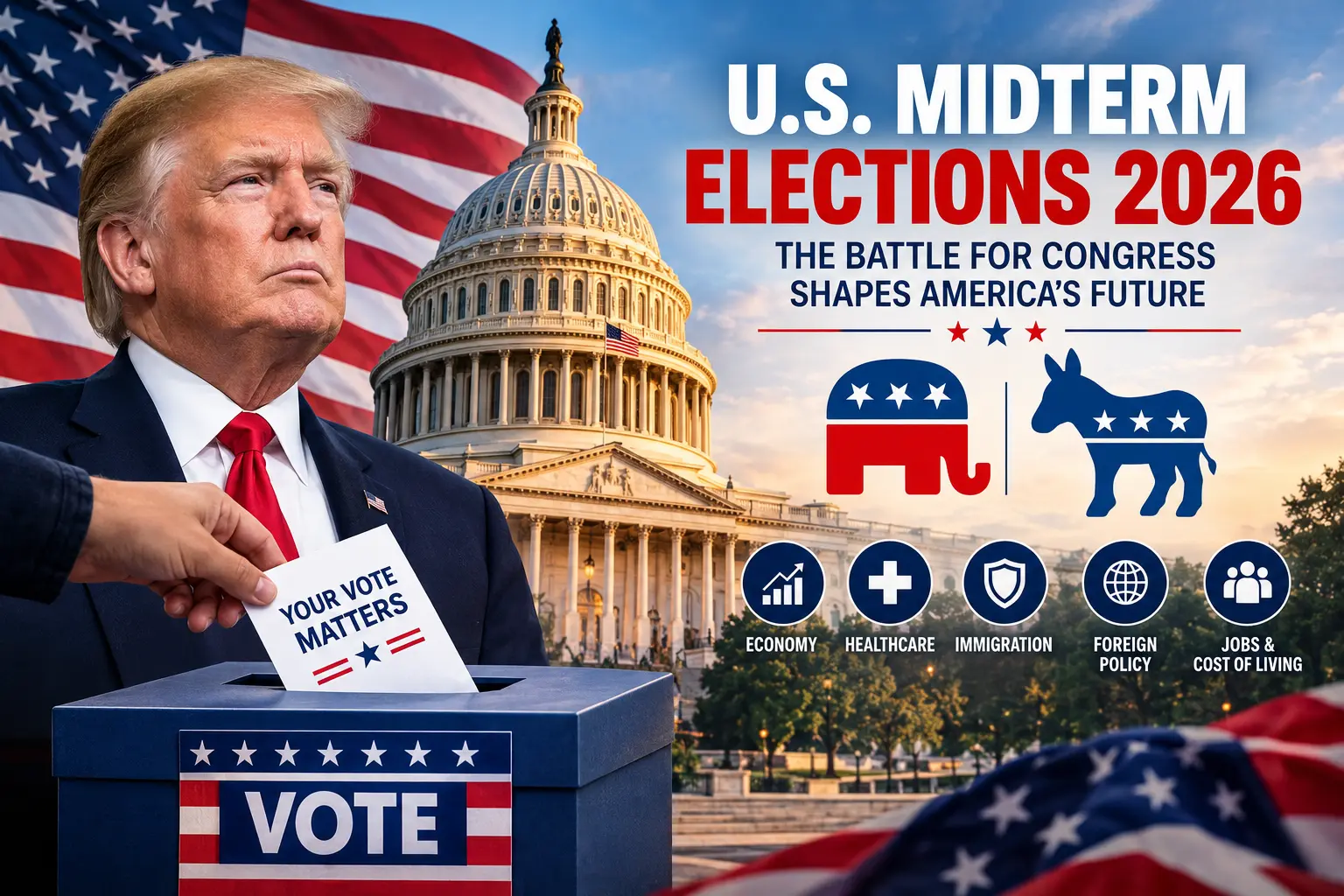
As the United States approaches its November 3, 2026 midterm elections, the country enters a critical juncture in its political trajectory. Although these elections do not determine who occupies the White House, they will decide the balance of power in Congress and define the institutional landscape in which President Donald Trump governs during the remaining two years of his term.
The midterms are far more than a standard contest between Republicans and Democrats. They offer American voters a direct opportunity to express their stance on the economy, immigration, healthcare, national security, and the broader direction of the federal government. The outcome will shape not only domestic policy but also the administration’s ability to advance its legislative priorities and manage congressional oversight.
What Are the Midterm Elections?
The United States holds congressional elections every two years. Midterm elections take place at the midpoint of a president’s four-year term, serving as a key barometer of public sentiment regarding the administration and the political establishment.
On November 3, voters will elect all 435 voting members of the House of Representatives alongside 35 Senate seats (comprising regular terms and special elections). The results will determine the composition of both chambers, which hold exclusive authority to enact legislation, authorize federal spending, perform oversight, and guide national policy.
Per standard constitutional practice, every House seat is contested every two years, whereas senators serve staggered six-year terms.
For President Trump, the stakes are particularly high. Republicans hold narrow majorities in both chambers heading into the vote. Preserving these majorities will allow the administration to continue pushing its policy agenda, whereas a shift in control would create a far more challenging legislative environment.
The Battle for Control of Congress
The central question of the 2026 midterms is whether Republicans can hold their majorities or whether Democrats will flip one or both chambers.
Republicans enter the campaign’s final stretch defending a razor-thin margin in the House (219–214 with two vacancies) and a 53–47 majority in the Senate. To secure a Senate majority, Democrats would need a net gain of four seats, as Vice President JD Vance breaks tie votes in favor of Republicans. In the House, Democrats need a net gain of just a few seats to regain leadership.
| Chamber | Current Composition |
| U.S. House of Representatives | 219 GOP / 214 DEM (2 Vacancies) |
| U.S. Senate | 53 GOP / 47 DEM |
Control of Congress carries far-reaching procedural and policy consequences. The majority party decides which bills reach the floor, leads congressional committees, and controls investigative agendas.
- If Republicans retain control: President Trump will maintain a supportive legislative environment for his agenda.
- If Democrats win either chamber: They gain significant authority to scrutinize executive decisions, block judicial or cabinet appointments (if taking the Senate), and stall legislative proposals.
- A Divided Government: Would likely necessitate bipartisan negotiations on federal spending and major policies, significantly narrowing the administration’s unilateral legislative room.
The Economy and the Cost of Living
Economic conditions remain a primary factor driving voter sentiment. Questions surrounding the cost of groceries, housing, healthcare, energy, and transportation directly inform how citizens view the federal government’s performance.
Voters tend to evaluate the economy through personal, everyday expenses rather than macroeconomic indicators alone. Even during periods of headline growth, persistent pressure on household budgets can fuel public dissatisfaction.
| Key Economic Takeaway: Republicans are tasked with defending the real-world impact of their tax, spending, and energy policies. Conversely, Democrats are emphasizing housing and energy affordability to hold the governing party accountable. |
Healthcare also remains a prominent issue. Concerns surrounding insurance premiums, medical access, and federal healthcare funding affect millions of families, making healthcare reform a key campaign messaging point for both parties.
Immigration: A Central Political Divide
Immigration continues to be one of the most polarizing issues on the national ballot.
The Trump administration has prioritized strict border enforcement and policy measures as core elements of its national security and governance platform.
- Republican Argument: Stronger border security, policy enforcement, and restrictive regulations are necessary to protect national security, stabilize labor markets, and maintain the rule of law.
- Democratic Argument: Opposition focuses on the humanitarian implications of enforcement strategies, advocating instead for a balance between managed border security, legal pathways, and protections for long-term residents and vulnerable groups.
This topic encompasses broader debates on labor dynamics, municipal funding, civil rights, and economic policy. The midterms will highlight how voters weigh executive immigration policies against their local community concerns.
Donald Trump’s Presidency Under Scrutiny
Although President Trump is not on the ballot himself, the midterm elections serve as a national referendum on his second term.
Midterm results historically function as a grade on the sitting president’s record. Trump remains a central figure in Republican campaigning, while Democrats actively tie local Republican candidates to administration policies.
His leadership offers both opportunities and risks for the party:
- Mobilization: His support energizes the party’s base and raises significant campaign funding.
- Pushback: Opposition to key executive orders or legislative policies can turn out voters seeking an institutional check on presidential authority.
While national narratives dominate headlines, individual candidate strength, district demographics, and local economic conditions will ultimately dictate outcomes in competitive toss-up races.
Global Implications Beyond the United States
The outcome of the U.S. midterms resonates internationally. As a leading economic and military power, domestic decisions made by Congress directly impact global trade regulations, defense spending, foreign aid, and diplomatic strategies.
For regions like South Asia—including Pakistan—developments in Washington influence bilateral trade, regional security frameworks, and diplomatic relations. While foreign policy is primarily directed by the executive branch, Congress retains substantial power through budget approvals, legislative oversight, and treaty ratifications.
International markets, investors, and foreign governments are closely monitoring the elections for indications of future U.S. policy regarding trade tariffs, corporate taxation, energy regulation, and global commitments.
Voter Turnout and Democratic Participation
Voter turnout will be a deciding factor in tight races across the country. Midterm elections traditionally see lower turnout compared to presidential election years, making voter mobilization a priority for both party organizations.
The 2026 midterms reinforce key mechanics of democratic accountability:
- Citizens evaluate legislative records and vote to keep or replace incumbent officials.
- Campaign messaging requires voters to separate rhetoric from realistic policy capabilities.
- Public trust relies on transparent election administration and clear communication of policy goals.
What Happens After November 3?
The post-election landscape will define the final two years of the administration’s term:
- Unified Republican Governance: Keeps legislative momentum intact, though internal policy divisions within the party may still require compromise.
- Democratic Control of the House or Senate: Triggers heightened oversight, subpoena power, and potential legislative gridlock.
- Divided Government: Forces both political parties toward compromise on mandatory spending measures and critical national budget negotiations.
The full impact will unfold as vote counting concludes, official certification occurs, and the 120th U.S. Congress convenes in January 2027.
Conclusion: Defining the Limits of Presidential Power
The 2026 U.S. midterm elections represent a critical test of public confidence in the nation’s political leadership.
Key questions will be answered at the ballot box: Will Republicans maintain their hold on Congress? Can Democrats turn economic and policy concerns into congressional victories? How significantly will cost-of-living concerns and immigration dictate voter decisions?
Ultimately, the midterms will determine the balance of power in Washington, setting the parameters of presidential authority for the remainder of Trump’s term and shaping America’s domestic and international path.