The Latino Vote: Profiling America’s Changing Electorate
First in a Series Ahead of the 2026 Midterms
American Community Media National News Briefing | Friday, 28 August 2026
A First Look Ahead of the 2026 Midterms
American Community Media convened a national news briefing on 28 August 2026, the first in a series profiling the country’s changing electorate ahead of the 2026 midterm elections. Titled “The Latino Vote: Profiling America’s Changing Electorate,” the session gathered four leading voices on Hispanic political behaviour: Republican strategist Mike Madrid, Equis Research’s Maria Isabel Di Franco Quinonez, Virginia Union University’s Eli Valentin, and UnidosUS Vice President Clarissa Martinez De Castro. The panel examined whether the “historic realignment” many predicted after the 2024 election has actually taken hold.
Trump’s Approval Slide Among Latino Voters
The numbers presented painted a complicated picture. Panellists noted that President Trump’s approval rating among Latino and Hispanic voters had fallen sharply within just over a year, a decline participants linked to mounting frustration over the cost of living, broader economic pressure, and what several speakers termed the excesses of immigration enforcement. Journalist Nestor Fantini of HispanicLA.com raised this directly during the discussion, asking whether such a steep drop signalled a lasting shift back toward the Democratic Party or merely a temporary economic backlash that could reverse before November.
Economic Concerns Top the Priority List
Martinez De Castro, whose UnidosUS Latino Vote Initiative maintains the Hispanic Electorate Data Hub, offered a grounding data point: pocketbook concerns continue to dominate Hispanic voter priorities, with four of the community’s top five issues tied directly to economic conditions. That framing recurred throughout the hour, with panellists cautioning against treating Latino voters as a single issue bloc on immigration alone, even as enforcement anxieties clearly weighed on sentiment. One figure shared during the session found that roughly three in ten Hispanic voters believed immigration enforcement was actively hurting their local economy, a number panellists suggested likely outpaces concern among the broader electorate.
A Targeting Gap Between the Parties
Much of the conversation returned to a theme raised early by Peter Schurmann of American Community Media: whether Republicans have simply out messaged Democrats among Latino voters by tailoring outreach to specific national origin communities, such as Cubans or Venezuelans, rather than treating Hispanics as interchangeable. Panellists agreed this micro targeting had given the GOP a real advantage in 2016 and again in 2024, and questioned whether Democratic campaigns have adapted since. Martinez De Castro pointed to anecdotal evidence from South Texas, where lifelong Democratic voters recalled receiving door knocks from Republican canvassers and little more than a robocall from their own party.
Where Democratic Socialism Fits
The briefing also tackled the question of ideological drift within the community. Journalist Jaya Padmanabhan cited June Pew Research findings that put Latino support for Democratic Socialist candidates at just twenty per cent, the lowest of any group measured and well below the roughly forty per cent recorded among white voters, a data point that complicates the narrative around left populist momentum inside the party. Panellists suggested the appeal of figures such as New York’s Zohran Mamdani lies less in ideological labelling and more in a direct, plain spoken focus on economic pain, a style Martinez De Castro compared to Senator Ruben Gallego’s approach in Arizona.
Testing the Message: “Back to Basics” vs “Abolish ICE”
On rhetoric, researcher Maria Isabel Di Franco Quinonez shared Equis polling suggesting that a “back to basics” message, emphasising opportunity, community safety, and enforcement targeted narrowly at violent offenders, tested considerably better with Latino voters than the phrase “Abolish ICE.” Speakers agreed that word choice around immigration continues to carry outsized weight in a community that is simultaneously anxious about enforcement overreach and supportive of orderly, security focused policy.
Turnout: The Real Wildcard
Speakers closed by flagging turnout as the wildcard heading into the midterms. Carlos Roa of Te Lo Cuento News asked what is driving the persistently high share of eligible Latino citizens who do not vote, while Martinez De Castro urged continued vigilance around tactics that could suppress participation. With panellists broadly agreeing that neither party can assume Latino loyalty in November, American Community Media plans further instalments in the series profiling other segments of America’s changing electorate.
Ballot Access and Enforcement Views
Access to the ballot box featured prominently as well. Nestor Fantini asked whether a recent Supreme Court ruling on mail voting could affect Latino turnout, a question that dovetailed with concerns Martinez De Castro raised later about tactics aimed at suppressing participation among infrequent voters. Henrietta J. Burroughs pressed panellists on a related point, asking directly whether Latino voters support construction of a border wall, underscoring how views on enforcement do not divide neatly along partisan lines within the community.
The End of Inherited Party Loyalty
Panellists also revisited the assumption, once treated as near gospel in American politics, that party affiliation passes down through families much like religious identity. Speakers agreed that inheritance model no longer describes Latino voting behaviour with any reliability, if it ever fully did, leaving both parties to compete for persuadable voters each cycle rather than counting on generational loyalty. That shifting baseline, panellists concluded, is precisely why American Community Media chose the Latino electorate as the opening subject in its midterm briefing series, with additional sessions planned to profile other communities shaping the 2026 vote.
About the Speakers
 |
Mike Madrid
Republican political strategist and nationally recognised expert on Latino voting trends, with two decades of work shaping election outcomes and campaigns across the U.S. A graduate of Georgetown University, Madrid built his career in strategic Latino communications and outreach in California, Texas, Florida and nationwide, holding roles with the California Republican party, the League of California Cities and the California Redevelopment Association. In 2020 he co-founded the Lincoln Project, a Republican anti-Trump organisation. He was an adjunct lecturer on Race, Class and Partisanship at the University of Southern California and is currently a Senior Fellow at UC Irvine School of Social Ecology. Madrid is the author of The Latino Century (Simon and Schuster, 2024) and founder of The Latino Working Class Project. |
 |
Maria Isabel Di Franco Quinonez
Senior Research Director at Equis, where she leads projects aimed at understanding and engaging Latino voters nationwide. She runs Equis’ flagship electoral research project, the Equis State Series, and contributes to wider research helping elected officials, partners and campaign practitioners better engage Latino communities. Before joining Equis in 2021, she served as a field director for a local race in New York City and as a field organiser for the Democratic Party of Georgia and the Arizona Democratic Party’s Latino organising programme. Originally from Venezuela, she is a graduate of the University of California, Berkeley. |
 |
Eli Valentin
Assistant Dean of Graduate and Leadership Studies and Executive Director of Latino Initiatives at Virginia Union University’s Graduate Center in Harlem. For over sixteen years, Valentin has served as a political advisor to numerous elected officials across the nation. He is the author of Politicking in the Barrio: Essays on Latino Politics in New York, with a second book under contract with Palgrave Macmillan. He writes regular columns for City Limits and has contributed to City and State New York, Gotham Gazette and El Diario/La Prensa, and is a frequent guest political analyst at Univision NY. He has twice been named by City and State among the top 100 Latinos in New York politics and policy. |
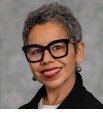 |
Clarissa Martinez De Castro
Vice President of the Latino Vote Initiative at UnidosUS, the largest national Latino civil rights and advocacy organisation in the U.S., where she leads efforts to advance accurate understanding of Hispanic voters and to expand campaign and civic engagement approaches that increase Latino electoral participation. Her work has produced the Hispanic Electorate Data Hub, a public resource tracking the Latino electorate, and has supported the registration of over one million voters in each of the last two cycles. A graduate of Occidental College and Harvard’s Kennedy School of Government, she is a naturalised U.S. citizen who came to the country as a teenager. |