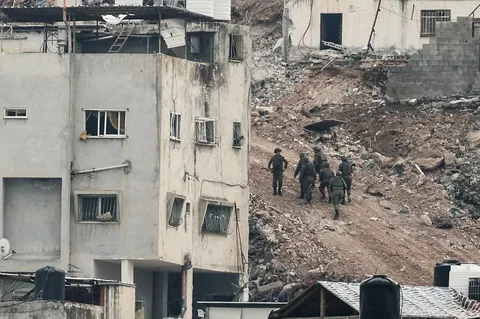
Four Palestinians were killed this week as Israeli forces and settlers carried out raids across several towns in the occupied West Bank, the latest flashpoint in a conflict whose roots stretch back more than a century. The violence underscores how, even amid international attention on Gaza, the Israel-Palestine conflict today continues to play out in the West Bank almost daily.
Background
Understanding the Israel-Palestine conflict history requires looking well beyond this week’s headlines. The land at the center of the dispute, referred to by Jews as the historic land of Israel and by Palestinians as Palestine, has been home to Jewish, Muslim, and Christian communities for thousands of years, with control passing through Ottoman, then British, hands over the centuries before the current conflict took shape.
Who owned the land first, Israel or Palestine, remains one of the most disputed questions tied to the conflict, and it doesn’t have a single, universally accepted answer. Jewish groups point to a continuous historical and religious connection to the land dating back to biblical times, while Palestinian Arabs point to their own centuries-long presence and majority population in the territory prior to large-scale Jewish immigration in the early 20th century. Both narratives are deeply held, and each side generally rejects the other’s framing of exclusive historical ownership.
Most historians place the Israel-Palestine conflict start date in the late 19th and early 20th centuries, when the Zionist movement began organizing Jewish immigration to the region, then part of the Ottoman Empire, in response to rising antisemitism in Europe. Others argue the more direct roots of today’s conflict lie in 1917’s Balfour Declaration, in which Britain expressed support for a Jewish homeland in Palestine, and the subsequent British Mandate period that followed the Ottoman Empire’s collapse after World War One.
Details
The Israel-Palestine conflict timeline reached a major turning point in 1947, when the United Nations proposed partitioning the British Mandate territory into separate Jewish and Arab states. Jewish leaders accepted the plan; Arab leaders and neighboring states rejected it, and war broke out following Israel’s declaration of independence in May 1948. That war resulted in Israel’s establishment and the displacement of hundreds of thousands of Palestinians, an event Palestinians refer to as the Nakba, or “catastrophe.”
Subsequent wars in 1967 and 1973 reshaped the territorial map further, with Israel gaining control of the West Bank, Gaza Strip, East Jerusalem, and the Golan Heights following the 1967 war. Decades of on-and-off negotiations, including the 1993 Oslo Accords, established limited Palestinian self-governance in parts of the West Bank and Gaza but never resulted in a final, comprehensive peace agreement.
This week’s news fits into a much longer and increasingly violent chapter that opened after Hamas’s October 2023 attack on Israel and the subsequent war in Gaza. According to the Palestinian Authority’s Colonization and Wall Resistance Commission, at least 50 Palestinians have been killed by Israeli settlers in the West Bank since October 2023, including around 15 so far this year, as settler violence has intensified alongside the broader conflict.
The most recent incident occurred in the town of Deir Jarir, east of Ramallah, where Israeli settlers, operating under the protection of Israeli forces, raided a home in the old quarter and seized livestock. When residents confronted the settlers, Israeli soldiers opened fire, killing two men identified by the Palestinian Health Ministry as 53-year-old Odeh Abdul Rahim Odeh Farakhneh and 26-year-old Ahmad Adel Abu Mukho. Separately, Israeli forces killed two more Palestinians, including a minor, near Nablus and Jenin this week after settlers set fire to Palestinian farmland.
Quotes
Deir Jarir village council head Eid Hammad told reporters that settlers entered the town’s old quarter, stormed a Palestinian home, and marked sheep for confiscation before residents intervened, triggering the confrontation that led to the shootings.
The Israeli military said its forces were deployed to the area to “prevent friction” during the settler raid, and stated that soldiers opened fire after being confronted with thrown stones, a characterization Palestinian officials and residents dispute.
Palestinian Vice President Hussein al-Sheikh, responding to an earlier but similar incident this year, condemned what he called a brutal attack on innocent citizens, calling for stronger international pressure on Israel to rein in settler violence in the occupied territory.
Impact
The regional and global impact of this ongoing violence extends well beyond the West Bank itself. International bodies, including United Nations agencies and human rights organizations, have repeatedly called on Israel to curb settler violence and hold perpetrators accountable, though prosecutions of settlers involved in fatal attacks remain rare according to rights monitors.
For Palestinian communities, the near-daily pattern of raids has disrupted agricultural livelihoods, displaced families, and deepened economic hardship in a territory already grappling with restricted movement and limited self-governance. Local officials say fires deliberately set on farmland during recent raids have destroyed crops and damaged property across multiple villages.
Diplomatically, the escalation complicates already difficult efforts to revive broader Israeli-Palestinian negotiations, with critics arguing that expanding settlements and rising settler violence undermine the territorial basis for any future two-state solution. Israeli officials, for their part, maintain that security operations in the West Bank are necessary responses to threats against Israeli civilians and soldiers in the area.
Conclusion
With settler attacks continuing on a near-daily basis and formal peace talks largely stalled, there is little indication the underlying dynamics driving the Israel-Palestine conflict today will shift soon. Much may depend on how the situation in Gaza develops and whether renewed international pressure translates into concrete steps to address West Bank violence specifically.
For now, both Palestinian officials and international monitors keep documenting each new incident, while Israeli authorities maintain that ongoing military operations are aimed at maintaining order rather than facilitating settler expansion. That basic disagreement over intent is likely to stay central to how the conflict gets discussed and debated, including in ongoing Israel-Palestine conflict Reddit threads and other public forums, in the months ahead.
Frequently Asked Questions
What exactly does Palestine want?
Palestinian political goals have varied across different factions and time periods, but the most widely cited demand, reflected in official Palestinian Authority policy and most international diplomatic frameworks, is the establishment of an independent Palestinian state in the West Bank, Gaza Strip, and East Jerusalem, based roughly on pre-1967 borders. This position is generally paired with calls for the right of return for Palestinian refugees displaced since 1948, an end to Israeli settlement expansion, and full sovereignty over Palestinian territory. Other groups, including Hamas, have historically taken more maximalist positions regarding the future of Israel itself, though Hamas has at various points also indicated conditional acceptance of a Palestinian state along 1967 lines, illustrating how goals differ significantly depending on which Palestinian political faction is being discussed.
Are females allowed to go to school in Palestine?
Yes, girls and women in the Palestinian territories have long had access to education, and school attendance rates for girls in the West Bank and Gaza have generally been comparable to, and in some measures higher than, boys’ attendance rates, according to data from UNESCO and Palestinian education authorities. Palestinian society places significant cultural value on education for both genders, and women make up a substantial share of university graduates in the territories. That said, ongoing conflict, particularly the war in Gaza, has severely disrupted schooling for children of both genders in recent years, with widespread damage to educational infrastructure significantly reducing access to consistent schooling in affected areas.
What countries support Israel?
Israel’s most prominent international supporter is the United States, which provides significant military and diplomatic backing, though the relationship has faced growing scrutiny amid the war in Gaza. Other countries maintaining strong diplomatic and security ties with Israel include Germany, the United Kingdom, and several countries that normalized relations with Israel through the 2020 Abraham Accords, including the United Arab Emirates and Bahrain. Support varies significantly by issue and government; some countries maintain strong government-level ties to Israel while facing domestic public pressure over its conduct in Gaza and the West Bank, meaning official government support doesn’t always reflect broader public opinion within those same countries.