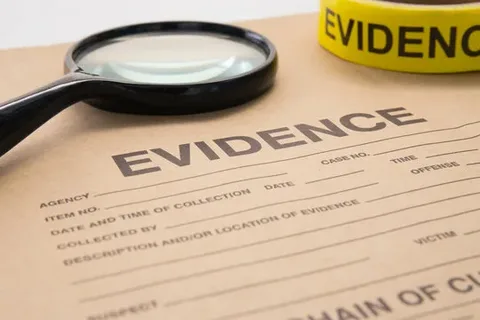
Human error in forensic science has cost innocent people their freedom and allowed guilty ones to walk free. From fingerprint mix-ups to contaminated DNA samples, failures by CSI personnel have repeatedly led to evidence being declared inadmissible in court sometimes with devastating consequences for justice.
When Science Gets It Wrong
Forensic science is often presented as an almost infallible tool of justice. Courtrooms treat DNA results, fingerprint matches, and crime scene reports as hard truth. Juries trust them. Prosecutors build their entire cases around them.
But the reality is more complicated. Human error in forensic science is not rare it is documented, studied, and regularly exposed in court. When CSI personnel make mistakes in evidence collection, handling, analysis, or reporting, the consequences ripple outward through the entire justice system.
Evidence declared inadmissible can collapse a prosecution entirely. It can free a guilty suspect, leave victims without justice, and in some cases, keep an innocent person locked up for years while the real criminal remains unknown. Understanding how these failures happen — and the cases that exposed them is essential for anyone who wants to understand how justice truly works.
The Brandon Mayfield Case Fingerprint Analysis Gone Wrong
In March 2004, a terrorist bombing ripped through Madrid’s rail network, killing 193 people and injuring more than 2,000 others. Spanish investigators found a partial fingerprint on a bag of detonators near the bombing site and shared the image with international agencies.
The FBI’s Automated Fingerprint Identification System flagged Brandon Mayfield, an attorney from Portland, Oregon, as one of the top potential matches. Three FBI examiners independently confirmed the match. An outside expert brought in to review also agreed. Mayfield was arrested and held in federal custody for two weeks as a material witness.
There was just one major problem: the fingerprint did not belong to him.
Spanish forensic experts had already raised doubts about the FBI’s analysis. When they identified the real suspect an Algerian national named Ouhnane Daoud the error became impossible to deny. The FBI was forced to acknowledge that its fingerprint examiners had made a fundamental mistake, one that had resulted in the wrongful detention of an innocent man.
The fingerprint evidence was declared inadmissible and Mayfield was released. The FBI later apologized and paid him a $2 million settlement. The case became one of the most studied examples of human error in forensic science, specifically the kind that occurs when examiners unconsciously seek confirmation of a conclusion they have already reached a cognitive bias known as confirmation bias.
The Justice Department’s own review found that the examiners had allowed “circular reasoning” to influence their analysis. They had concluded Mayfield was the match and then interpreted ambiguous details of the print to support that conclusion rather than evaluating the print on its own merits. It was a textbook example of how human error in forensic science can bypass even experienced professionals.
The O.J. Simpson Trial Contaminated DNA and a Collapsed Case
Few criminal cases in modern history have exposed the vulnerabilities of crime scene investigation as dramatically as the 1995 murder trial of O.J. Simpson. The case had an extraordinary amount of physical evidence: 61 drops of blood, hair follicles, clothing fibers, and DNA results cross-referenced across three separate laboratories.
And yet Simpson was acquitted largely because his defense team was able to demonstrate that the evidence collection process had been riddled with errors made by LAPD CSI personnel.
The problems began at the crime scene itself. Evidence was photographed without being properly labeled or logged, making it difficult to track specific items back to specific locations. Separate pieces of evidence were packaged together in the same bags, causing cross-contamination. Wet blood samples including those critical to the prosecution’s case were sealed into plastic bags before being allowed to dry, a basic error that accelerates degradation and introduces the risk of contamination. Investigators even used a blanket from inside the victim’s home to cover her body at the scene, contaminating the area around it.
Inside the LAPD laboratory, the problems continued. Criminalist Collin Yamauchi admitted in court that he had spilled some of Simpson’s blood from a reference vial while working in the evidence processing room. Shortly afterward, he handled the Rockingham glove and the blood swatches from the crime scene without changing his gloves. The defense argued that Simpson’s blood had been inadvertently transferred onto crime scene evidence as a direct result of this human error.
Defense attorney Johnnie Cochran summarized the situation bluntly in his opening statement, describing the evidence as “contaminated, compromised, and corrupted.” The jury agreed that the errors were serious enough to raise reasonable doubt. Simpson was found not guilty on 3 October 1995.
In a subsequent civil trial in 1997, where the evidence contamination arguments were restricted by the judge, Simpson was found liable for the deaths and ordered to pay $33.5 million in damages. The gulf between the two verdicts illustrated precisely how much weight CSI errors had carried in the criminal proceeding.
The West Memphis Three Mishandled Evidence and a Wrongful Conviction
In May 1993, the naked bodies of three eight-year-old boys Stevie Branch, Michael Moore, and Christopher Byers were found in a drainage ditch in West Memphis, Arkansas. The crime was brutal and the community demanded answers.
Police arrested three teenagers: Damien Echols, Jason Baldwin, and Jessie Misskelley Jr. They were convicted in 1994, largely on the basis of a confession from Misskelley obtained after hours of interrogation, and on forensic testimony that experts would later describe as deeply flawed and unreliable.
The forensic evidence presented against them was later exposed as a series of errors and misrepresentations. The prosecution’s theory that knife wounds on the victims indicated a satanic ritual was challenged by leading pathologists who concluded the injuries were more consistent with animal bites than knife marks. No DNA evidence ever connected any of the three young men to the crime scene. The physical evidence that was collected from the scene had been mishandled in ways that compromised its reliability entirely.
What Makes Forensic Evidence Inadmissible?
For evidence to be admitted in court, it generally has to meet specific legal standards. In the United States, federal courts apply the Daubert standard, which requires that scientific evidence be based on a methodology that is testable, has been peer-reviewed, has a known or acceptable error rate, and is generally accepted within the relevant scientific community.
When CSI personnel make errors in evidence collection and handling, those errors can strip evidence of the legal foundation it needs to be admitted. The most common sources of human error in forensic science that lead to evidence being thrown out include:
Improper collection procedures Failing to use gloves, leaving the crime scene unsecured, or mixing items from different locations compromises the integrity of every piece of evidence collected.
Cross-contamination Handling multiple items without changing protective equipment, or storing evidence together before analysis, can transfer biological material between samples and make results meaningless.
Chain of custody failures Every person who handles a piece of evidence must be documented. A gap in the chain of custody creates grounds for a defense challenge that can make evidence inadmissible regardless of how scientifically valid the analysis itself was.
Incorrect storage DNA and biological evidence degrades quickly in heat or moisture. Sealing wet blood into plastic bags and leaving samples in an uncooled vehicle, as happened in the Simpson case, destroys the scientific validity of subsequent analysis.
Cognitive bias in analysis The Mayfield case demonstrated that even experienced, credentialed forensic examiners can reach incorrect conclusions when they approach an analysis with expectations already in place. Confirmation bias is now recognized as a significant source of human error in forensic science.
Overstated or fabricated testimony The Innocence Project has documented numerous cases where forensic analysts provided testimony that exaggerated the strength of their findings, described coincidental evidence with false certainty, or in some cases outright fabricated results to support a prosecution.
The Expert View on Forensic Reliability
The scientific and legal community has been increasingly vocal about the limitations of forensic methods that were once treated as unquestionable.
Professor Barbara O’Brien of Michigan State University Law School, who contributed to the National Registry of Exonerations’ 2018 report on wrongful convictions, has written that a significant part of the problem lies in how forensic testimony is presented. A hair sample that merely resembles a suspect’s hair, she noted, “gets dressed up with this scientific certainty that isn’t justified,” and juries are rarely equipped to challenge it.
The National Academy of Sciences released a landmark 2009 report recommending sweeping reforms to forensic science practice in the United States. The report found that most forensic disciplines including bite-mark analysis, hair comparison, and handwriting analysis — lacked the rigorous scientific validation required to support the certainty with which their results were typically presented in court.
The Innocence Project, which has helped exonerate more than 230 wrongfully convicted people in the United States through DNA testing, cites the misapplication of forensic science as a contributing factor in approximately half of those wrongful convictions.
As forensic analyst Gerald Ledford, who works as an autopsy technician and is known for publicly educating people about forensic procedures, has put it: the gap between what people see on television and what actually happens in a forensic investigation is enormous. On television, results are instant and certain. In reality, they are slow, complex, and subject to human judgment at every stage.
Impact on the Justice System
The consequences of human error in forensic science extend well beyond the individual cases where evidence is thrown out. Every time a court declares evidence inadmissible due to CSI personnel mistakes, public trust in the forensic system takes a hit. Defense attorneys become more aggressive in challenging all forensic evidence. Prosecutors lose confidence in the material they are presenting. And juries already uncertain about what science they can trust become more skeptical.
This effect was quantified by researchers who studied what became known as the “CSI Effect” the tendency of juries, conditioned by decades of crime television, to expect definitive forensic proof in every case. The Brandon Mayfield fingerprint failure, the Simpson DNA contamination scandal, and the West Memphis Three case all fed into a growing public awareness that forensic science is not nearly as reliable as it has been presented.
Courts in the United States have begun to respond by requiring more stringent validation of forensic methods before they can be admitted as evidence. Several states have passed legislation mandating independent oversight of crime laboratories. The Innocence Project continues to push for national accreditation standards for forensic laboratories and mandatory disclosure of laboratory error rates.
Nolan Wells and the Current Debate Around Forensic Evidence
The case of Nolan Wells, an 18-year-old whose body was found on 6 July 2026 near Horn Island off the coast of Mississippi two days after he disappeared during a Fourth of July boat trip has reignited public debate about forensic procedures and what happens when they fall short.
An independent autopsy commissioned by Wells’ family, announced at the 117th NAACP National Convention in Chicago on 22 July 2026 by attorney Ben Crump, found that the cause and manner of death were “undetermined pending investigation.” The independent pathologist noted that parts of Wells’ throat were missing from his body when it was received for the second examination having been retained from the initial state autopsy, which is described as a common forensic practice. However, because those tissues were not available, the independent pathologist stated that he could not rule out injury to the neck as a contributor to or cause of death.
The official state autopsy, conducted by the Mississippi State Medical Examiner’s office, was completed in late July 2026. Its results have not been made public and will be presented to a grand jury, which will determine whether a crime occurred.
The case has drawn widespread attention, both for questions about what happened to Wells and for the broader issues it has raised about forensic transparency, procedural gaps, and public accountability in death investigations.
Conclusion
Human error in forensic science is not a rare failure it is a documented and ongoing challenge. The Brandon Mayfield case showed that even experienced federal examiners can be led astray by cognitive bias. The O.J. Simpson trial exposed how failures in basic evidence collection and handling can destroy an entire prosecution. The West Memphis Three case demonstrated how flawed forensic testimony can put innocent people behind bars for decades.
Each of these cases where evidence was thrown out or declared inadmissible represents not just a legal outcome but a systemic failure with real human cost. The lesson is not that forensic science is worthless it remains one of the most powerful tools available to investigators and courts. The lesson is that it must be applied with discipline, transparency, and an honest acknowledgment of its limitations.
FAQs
What religion declined autopsy?
No single religion categorically forbids autopsies in all circumstances, but several faiths have traditional objections that can lead families to decline consent for the procedure. Orthodox Judaism has one of the strongest traditional positions against autopsy, based on the principle that the human body belongs to God and must not be violated or delayed in burial. Jewish law generally requires rapid burial and opposes any mutilation of the body after death, though most rabbinical authorities permit autopsies when required by civil law, when the cause of death could help save other lives, or when necessary to rule out foul play. Traditional Islam also objects to autopsy under normal circumstances, partly because of the requirement to bury the deceased within 24 hours and partly because some texts suggest the body continues to experience sensitivity after death. Islamic scholars generally permit autopsies when required by law, when foul play is suspected, or when the findings could save other lives. The Old Order Amish, some Hmong communities, certain Native American groups, and some Christian Scientist families have also been documented as raising objections to autopsy in various jurisdictions. Legal authorities in most countries note that when a death is suspicious, unnatural, or involves potential crime, the state’s interest in determining cause of death can override personal or religious objections, and a forensic autopsy can proceed even without family consent.
What was the result of Nolan Wells’ autopsy?
Nolan Wells, an 18-year-old Black student from Mississippi, disappeared on 4 July 2026 during a boat trip to Horn Island, a barrier island off the coast of Ocean Springs. His body was found two days later by a U.S. park ranger, floating face-down near the island’s shoreline. The official state autopsy, conducted by the Mississippi State Medical Examiner’s office on 7 July 2026, has been completed but its results have not been made public. Authorities have said the report will be withheld until it is presented to a grand jury, which will determine whether a crime was committed. A separate independent autopsy, commissioned by the Wells family and conducted by private forensic pathologist Dr. Mitchell on 10 July 2026, found the cause and manner of death to be “undetermined pending investigation.” The independent report noted multiple barriers to reaching a definitive conclusion, including significant decomposition of the body, which had been in warm water for two days.
Why is the tongue removed during autopsy?
The removal of the tongue during autopsy is a procedure that surprises many people unfamiliar with forensic pathology, but it serves several clear and legitimate clinical purposes. The tongue is part of a group of structures including the larynx, throat, and hyoid bone that pathologists typically remove together as a block, particularly in cases where the cause of death involves possible asphyxia, strangulation, drowning, or airway obstruction. Removing the tongue allows the pathologist to fully examine the entire oral cavity and throat region without obstruction, and to inspect deeper structures such as the epiglottis, trachea, and hypopharynx that cannot be adequately visualized while the tongue remains in place. In suspected strangulation cases, the removal of these neck structures together is essential for identifying hemorrhages, fractures of the hyoid bone, or other injuries that can be invisible from the outside of the body.