


Alphabet has overtaken Saudi Aramco to become the world’s most profitable company, according to the newly released 2026 Fortune Global 500 rankings, while a separate wave of economic data shows corporate profits climbing to record highs even as workers’ share of national income continues to shrink.
Background
Understanding record profits meaning starts with a simple distinction: profit is what remains after a company or economy subtracts its costs from its revenue. When economists say corporate profits have hit a record, they typically mean either total dollar profits or profits as a share of GDP have reached their highest point on record, not necessarily that every company or worker is benefiting equally.
The Fortune Global 500 list, unveiled July 28, showed Amazon claiming the top revenue spot for the first time with $716.9 billion, ending Walmart’s 12-year run at number one. On profitability specifically, Alphabet took the crown from Saudi Aramco with $132.17 billion in net profit, a milestone that reflects how thoroughly technology companies now dominate the list of companies with highest profit margin and total earnings worldwide.
This shift matters because it fits into a broader pattern visible across corporate profits by year: since the mid-2010s, technology firms have steadily displaced energy and industrial giants at the top of global profitability rankings, driven by software economics, cloud computing, and more recently, artificial intelligence infrastructure spending.
Details
As of mid-2026, Alphabet led the most profitable companies in the world with roughly $160 billion in trailing-12-month net income, followed by NVIDIA and Microsoft. Apple, Meta Platforms, and Taiwan Semiconductor Manufacturing Company rounded out the top tier, with AI infrastructure spending, cloud demand, and digital advertising cited as the biggest drivers behind this year’s numbers.
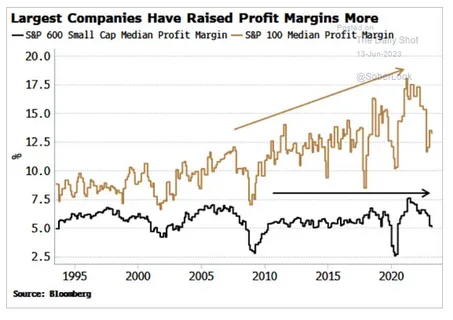
Looking specifically at companies with highest profit margin as a percentage of revenue rather than raw dollar profit, the picture shifts. NVIDIA currently posts an operating margin of roughly 60 percent, ahead of every major software company despite selling physical hardware. Visa reported close to a 46 percent net income margin and a 64 percent EBIT margin in its most recent quarter, while payment processors and asset managers generally post some of the highest margins of any sector, thanks to low incremental costs per transaction.
Among the most profitable companies in history, Saudi Aramco still holds a notable distinction: its 2024 profit of roughly $121 billion made it the most profitable company on the Fortune Global 500 for a third consecutive year before Alphabet overtook it. Beyond the top 30, the top 100 most profitable companies in the world span technology, finance, energy, healthcare, and retail, though 16 of the top 30 alone are headquartered in the United States, with West Coast tech firms accounting for four of the top five spots.
While corporate earnings have surged, a separate but related storyline has drawn growing attention: the corporate profits vs wages graph tracked by the Federal Reserve and Bureau of Labor Statistics. Recent data from the Bureau of Labor Statistics showed labor’s share of national income falling to roughly 51 percent, its lowest recorded level, while corporate profits climbed to about 12.1 percent of national income, their highest share since 1950.
A separate Federal Reserve Bank of New York analysis found the labor share, the portion of economic output paid to workers as wages, reaching an all-time low in 2026 in records dating back to 1947. Meanwhile, corporate profits as a share of GDP have climbed to nearly 16 percent, up from around 8 percent in 1982, even as employee compensation’s share of GDP fell over the same period.
Quotes
Bank of America Securities described the current environment as a “K-shaped economy,” noting that higher profits relative to wages are becoming yet another driver of unequal outcomes, since higher-income consumers tend to be more exposed to asset-price gains than wage growth.
An economist cited by Fortune described the widening gap between corporate profits and worker pay as carrying an “undercurrent of betrayal,” pointing to the risk that a persistent divide between shareholder returns and wage growth could eventually fuel broader social and economic instability.
Analysts covering the shift in global rankings noted that Alphabet’s rise to the top of the world’s most profitable companies “represents another historic leap” for the technology sector’s overall influence over the global economy, following years in which energy giants like Saudi Aramco had dominated the list.
Impact
The concentration of profit among a small group of technology firms carries implications well beyond corporate balance sheets. As companies with highest profit margin increasingly cluster in software, semiconductors, and financial services, sectors that require relatively fewer workers per dollar of revenue, some economists argue this dynamic helps explain why rising corporate profits haven’t consistently translated into stronger wage growth.
For workers, the data paints a more complicated picture than headline profit figures suggest. Even as corporate earnings hit new records, inflation-adjusted wage growth has remained comparatively modest, and some sectors have seen real wage growth essentially flatten once price increases are factored in.
Globally, the reshuffling among the most profitable companies in history also signals where economic power is consolidating. With AI infrastructure spending now a major profit driver, the gap between the highest-margin technology firms and traditional industrial or energy companies could continue widening in the years ahead.
Conclusion
Going into the rest of the 2026 fiscal year, analysts expect the ranking of the world’s most profitable companies to stay dominated by technology firms riding the AI infrastructure boom, though quarterly shifts remain common given how quickly profits can move between companies like NVIDIA, Alphabet, and Apple. Whether the broader gap between corporate profits and wages narrows will likely depend on productivity trends, labor market conditions, and how policymakers respond to growing public attention on the issue.
Frequently Asked Questions
Is it true that companies are making record profits?
Yes, multiple independent data sources confirm this. The Federal Reserve Bank of New York found that labor’s share of national income reached an all-time low in 2026 based on records dating back to 1947, while corporate profits as a share of GDP climbed to roughly 15.85 percent, up sharply from about 8 percent in 1982. Separately, Fortune 500 companies posted a combined record profit of $1.87 trillion in 2024, and the newly released 2026 Fortune Global 500 rankings show Alphabet alone generating over $130 billion in annual net profit. These figures come from government statistical agencies and independently audited corporate filings, making the trend well-documented rather than a matter of dispute.
How to find corporate profits?
Corporate profit data is publicly available through several reliable sources. In the United States, the Bureau of Economic Analysis publishes quarterly corporate profits figures as part of its National Income and Product Accounts, while the Federal Reserve Bank of St. Louis maintains historical data series tracking corporate profits as a share of GDP over time. For individual companies, profit figures can be found in quarterly and annual filings submitted to the Securities and Exchange Commission, typically in the form of 10-K and 10-Q reports, which detail net income, operating margins, and other profitability metrics. Financial data platforms and business publications like Fortune’s Global 500 also compile and rank company-level profit data annually for easier comparison.
What drives corporate profits?
Corporate profits are shaped by a mix of factors, including revenue growth, cost control, pricing power, and broader economic conditions like interest rates and consumer demand. In recent years, several specific drivers have pushed profits to record highs: rising labor productivity that has outpaced wage growth, allowing companies to capture more value per unit of output; heavy investment in artificial intelligence infrastructure, which has boosted earnings for chipmakers and cloud providers; and continued pricing power in sectors like software, semiconductors, and financial services, where companies can generate additional revenue without proportionally increasing costs. Some economists also point to reduced labor bargaining power and shifts in market competition as longer-term structural factors contributing to the growing gap between corporate profits and wage growth.