

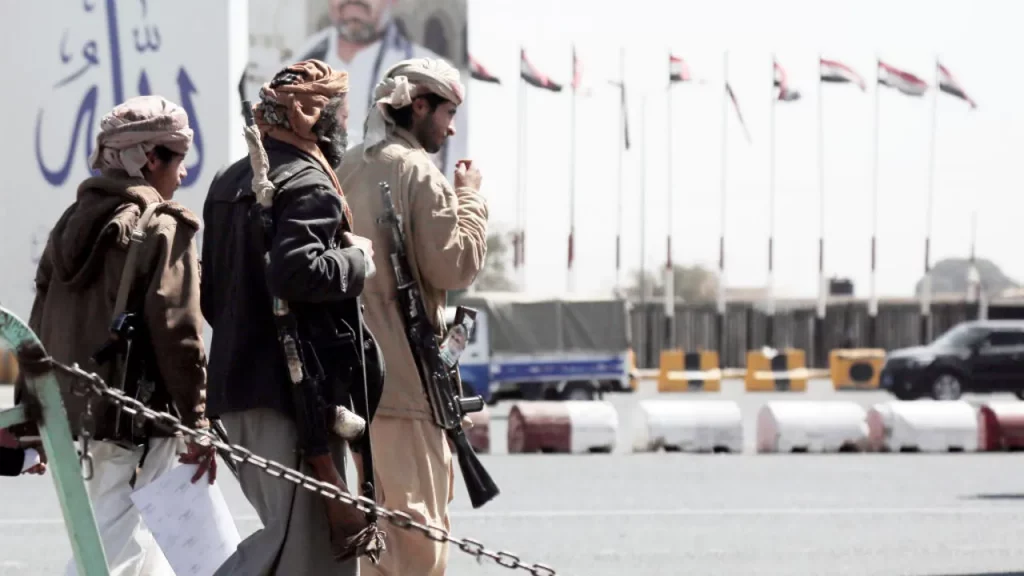

Tensions between Houthis and Saudi Arabia have escalated sharply this week after Yemen’s Iran-aligned group announced a naval blockade targeting Saudi shipping in the Red Sea. Riyadh, along with Pakistan, the UAE, and several European governments, has condemned the move as a dangerous attempt to widen the ongoing Middle East conflict.
Background
The Houthis blockade Saudi Arabia announcement comes amid the wider war between Iran and a US-Israeli coalition, now well into its fourth month. Saudi Arabia had been routing millions of barrels of oil per day through pipelines to its Red Sea port of Yanbu, using this route as an alternative after the Strait of Hormuz became a flashpoint in the Iran conflict.
That alternative route is now under direct threat. A Houthi military spokesperson said this week that the group would impose a maritime blockade on Saudi Arabia through the Bab el-Mandeb Strait, one of the narrowest and most strategically important shipping chokepoints in the world, connecting the Red Sea to the Gulf of Aden.
This is not the first time Houthis Saudi Arabia tensions have disrupted global shipping. The group previously launched a sustained campaign against vessels in the Red Sea and Gulf of Aden starting in late 2023, in what it described as solidarity action during the Gaza war. That campaign forced many shipping companies to reroute around Africa’s Cape of Good Hope, adding significant time and cost to global trade, before a ceasefire brought a pause to the attacks in late 2025.
Details
Saudi Arabia’s Foreign Ministry rejected the Houthi announcement outright, calling it part of a pattern of baseless allegations, and said the group was dragging Yemen further into a regional war that has nothing to do with its own population. The ministry stated it would take all necessary measures to protect Saudi-flagged and Saudi-linked vessels moving through the region.
Saudi Foreign Minister Prince Faisal bin Farhan held a series of calls this week with counterparts from Spain, Italy, and Germany specifically to discuss the Houthi blockade threat and coordinate on how to de-escalate the wider regional situation. The UAE separately condemned the Houthi statements, calling on the international community to enforce existing UN Security Council resolutions on Yemen and freedom of navigation in the Red Sea.
Pakistan has also weighed in strongly on the Houthis Saudi Arabia standoff. At a UN Security Council emergency briefing this month, Pakistan’s Deputy Permanent Representative Ambassador Usman Jadoon condemned Houthi missile attacks on the Kingdom and reaffirmed Islamabad’s full solidarity with Saudi Arabia’s security, sovereignty, and territorial integrity. Pakistan’s Foreign Office separately confirmed the country’s steadfast support for the Kingdom during briefings held in mid-July.
A European-led maritime task force operating in the Red Sea confirmed this week that Houthi forces had not attacked any merchant vessels since September 2025, but warned that the group still poses a real threat to navigation given its history of striking ships with limited warning. According to tracking by the Armed Conflict Location and Event Data Project, Houthi forces targeted more than 150 commercial ships in the Red Sea during 2024 alone.
Quotes
Saudi Arabia’s Foreign Ministry said in a statement that it has worked for years alongside Yemen’s legitimate government to ease the suffering of the Yemeni people, including through continued development projects, budget support, and fuel supplies for power generation, directly rejecting Houthi claims that Riyadh was besieging Yemen’s population.
Ambassador Usman Jadoon told the UN Security Council that Pakistan strongly condemns the Houthi ballistic missile attacks against the Kingdom of Saudi Arabia, expressing full solidarity with what he called the brotherly Kingdom and reaffirming steadfast support for its security and territorial integrity.
The UAE’s Ministry of Foreign Affairs said freedom of navigation in international waterways is a right guaranteed under international law and the 1982 UN Convention on the Law of the Sea, urging global action to prevent further disruption of Red Sea shipping routes.
Impact
The Houthis blockade Saudi Arabia threat carries global consequences well beyond the Gulf region. Any disruption to Yanbu’s oil exports would remove one of the few remaining relief valves for global energy markets already strained by the closure of the Strait of Hormuz, pushing prices higher for consumers worldwide.
Regionally, the standoff risks pulling more countries directly into the widening Middle East conflict. Analysts note that if Houthi forces begin actively targeting Saudi commercial vessels rather than simply threatening a blockade, Riyadh would likely be forced into a direct military response, reviving a war with Yemen’s Houthi movement that had only recently cooled after nearly a decade of intermittent fighting.
Pakistan’s position is being closely watched given its history of resisting direct involvement in the Saudi-Houthi conflict. Islamabad stayed neutral during the original 2015 Saudi-led military campaign against the Houthis, partly due to domestic sensitivities tied to its large Shia population, though it has since deepened defense cooperation with Riyadh through a bilateral security agreement.
Conclusion
With Saudi Arabia’s top diplomats actively coordinating with European allies and Pakistan reaffirming its solidarity at the UN, international pressure on the Houthis is mounting. Whether the group follows through on its blockade threat, or whether diplomatic efforts manage to contain the standoff, will likely determine if this becomes another turning point in the broader regional war or a contained escalation that eventually fades.
For now, global shipping companies and oil markets are watching the Bab el-Mandeb Strait closely. The Houthis have already proven once that they can disrupt one of the world’s busiest trade routes on short notice.
Frequently Asked Questions
Did any missiles hit Saudi Arabia today? As of the most recent reporting, Saudi-led coalition forces confirmed intercepting ballistic missiles fired by Houthi forces toward the Kingdom’s southern region earlier this month, and Saudi air defenses have a consistent track record of intercepting most Houthi missile and drone launches before they reach populated areas. However, missile activity in this conflict changes rapidly day to day, so readers should check live wire services such as Reuters, AP, or Al Jazeera for the most current confirmed strikes, since claims from the Houthi side are not always independently verified by neutral sources.
What is the biggest threat to Saudi Arabia? Currently, the most pressing threat to Saudi Arabia comes from the combined pressure of Houthi missile and drone attacks alongside the newly announced Red Sea blockade, both of which threaten the Kingdom’s oil exports and regional stability simultaneously. Beyond the immediate military threat, Saudi Arabia also faces the broader risk of being drawn deeper into the wider Iran-US conflict, given its geographic proximity to Iran and its reliance on the Strait of Hormuz and the Red Sea for the bulk of its oil exports, both of which are currently under threat from different directions.
Will Saudi Arabia attack Yemen? Saudi Arabia has not announced a new military campaign against Yemen’s Houthi movement as of the latest reporting, and officials have so far responded to the blockade threat through diplomatic channels, condemnation statements, and coordination with allies rather than immediate military action. That said, analysts following the situation closely warn that if Houthi forces move from threats to actual attacks on Saudi commercial shipping, Riyadh could be pushed toward reviving direct military operations against the group, a scenario that would effectively reopen the Saudi-Houthi war that formally began in 2015 and had only recently entered a period of relative calm.