Pakistan’s Interest Rates, Rising Costs and the Economic Impact of the Middle East Conflict
(By: A. Rehman Patel)
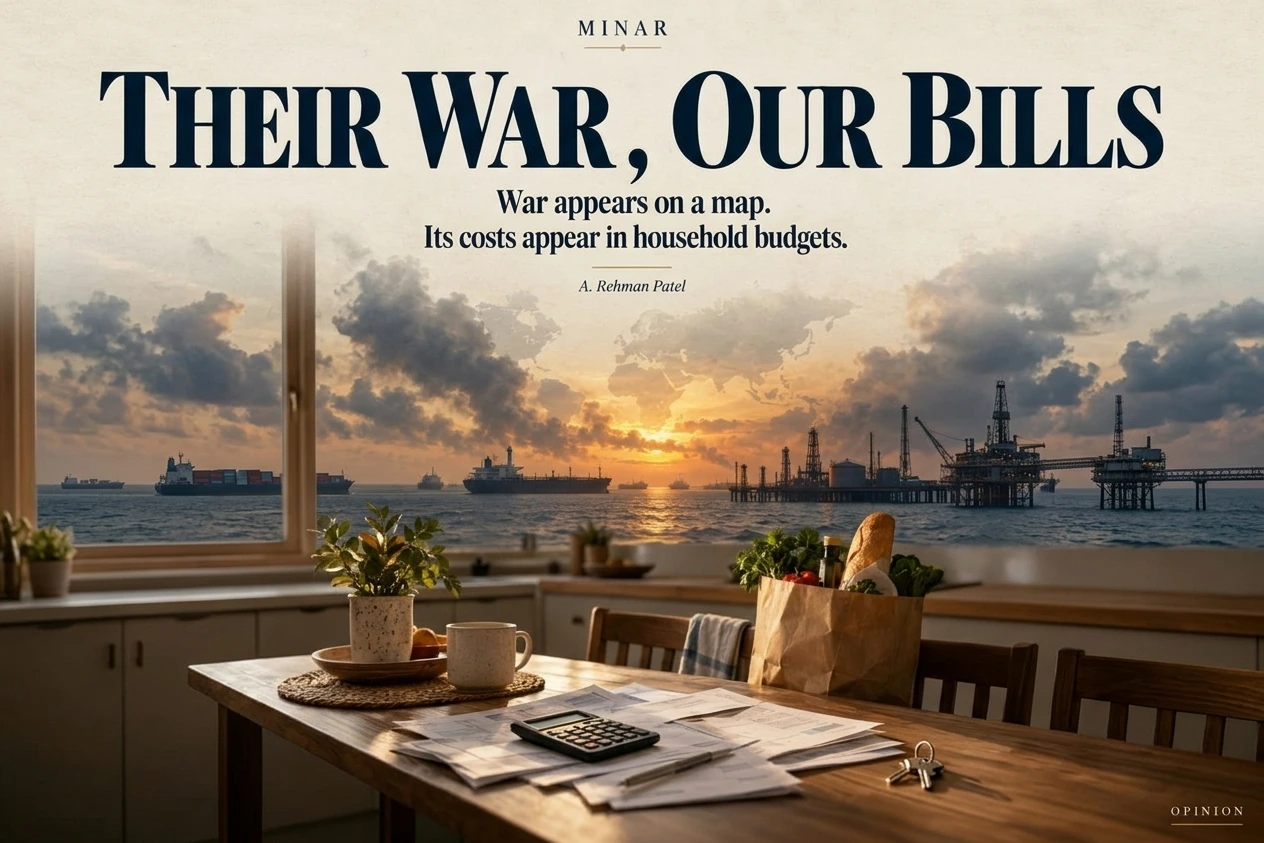
War usually appears on a map. Its consequences eventually show up in household budgets, business expenses and the cost of borrowing.
On October 26, Pakistan’s central bank raised its policy rate to 12 percent amid inflation concerns and economic pressures linked to the Middle East conflict. The decision highlights a difficult reality: although Pakistan does not control global oil prices or regional conflicts, their economic consequences can reach millions of ordinary citizens.
Higher global energy prices can increase transportation costs, electricity expenses and production costs across the economy. Businesses may pass these increases on to consumers, leaving households with less money for essential needs.
Higher interest rates add another challenge. Businesses seeking loans to expand operations, entrepreneurs planning new ventures and young people hoping for more employment opportunities can all feel the effects of tighter financial conditions.
Pakistan’s economic choices remain vulnerable to external shocks, particularly when the country must pay for imported energy and manage pressure on its foreign exchange reserves.
Regional comparisons offer useful context, although they require careful interpretation. As of October 27, the policy rates cited for India, Bangladesh and Sri Lanka stood at 5.5 percent, 9.5 percent and 8.75 percent, respectively, compared with Pakistan’s 12 percent.
These figures represent central bank policy benchmarks, not the actual interest rates charged to every borrower. Differences in inflation, currency conditions, economic structures and financial risks also matter. Therefore, policy rates alone cannot determine which economy is performing better.
Higher interest rates can help moderate demand and contain inflationary pressures. However, expensive credit can also discourage investment, slow business expansion and make borrowing more difficult for small enterprises.
Monetary policy has limits. Higher borrowing costs cannot make imported oil cheaper, fix inefficient electricity systems, diversify exports or create predictable business regulations.
These challenges require sustained structural reforms. Pakistan needs more reliable energy supplies, stronger export industries, improved productivity and a business environment that encourages long-term investment.
The country must also address the distribution of economic sacrifices. Reforms become harder to sustain when households and small businesses bear rising costs while influential groups appear insulated from the consequences.
Pakistan’s recurring economic question is when the next financial lifeline will arrive. An equally important question is how effectively the country uses the time that assistance provides.
External financing may ease immediate pressure, but lasting resilience requires stronger domestic capacity. Political competition does not need to stop for economic progress. However, contracts, institutions and basic economic rules must remain dependable across successive governments.
Reliable energy, competitive exports, skilled workers and fair burden-sharing can help Pakistan withstand future international crises. Policymakers must pursue these priorities consistently rather than relying primarily on emergency measures.
Pakistan cannot prevent every global shock. It can, however, reduce its exposure and strengthen its ability to respond.
True economic sovereignty means facing the next international crisis with stronger institutions, a more productive economy and fewer reasons to seek emergency assistance.