

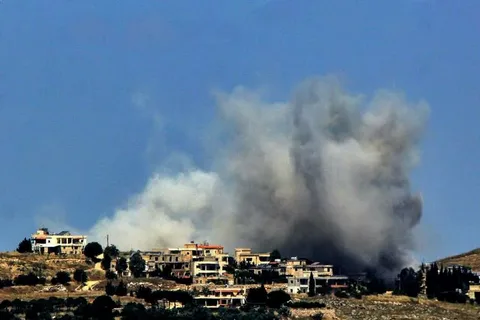

Israel has carried out fresh attacks on southern Lebanon, hitting the town of al-Mansouri and the village of Majdal Zoun, according to Lebanon’s National News Agency and this happened despite an ongoing ceasefire deal and active peace talks between the two countries. Many people are asking the same question right now: did Israel bomb Lebanon yesterday, and is it still happening? The short answer is yes and the full picture is far more complicated than a simple yes or no.
Background: How Did This All Start?
To understand why Israel bombs Lebanon repeatedly, you need to go back to early 2026. The latest Israel-Hezbollah war began when the Lebanese militant group Hezbollah fired rockets into Israel just days after Israel and the United States launched their war on Iran on February 28, 2026.
Israel renewed its assault on southern Lebanon early that month as the war entered its ninth day, with Prime Minister Benjamin Netanyahu promising “many surprises” in the next phase of the conflict rippling across the region. The latest strikes in Lebanon killed at least 20 more people, pushing the death toll above 300, after Israel ordered large swaths of the country to evacuate during an offensive its military said would be aimed at stamping out Iran-supported forces.
From that point forward, Israel bombs Lebanon became not just a news headline but a near-daily reality for millions of Lebanese civilians. The conflict drew in Hezbollah, Iran, the United States, and the wider region in ways that are still unfolding today.
What Happened This Week: Israel Bombs Lebanon Again
This week’s strikes confirm that the bombardment of southern Lebanon has not stopped. Israeli forces bombed parts of Lebanon in a fresh violation of the US-brokered agreement to end the attacks that Israel had signed in June. Israel’s most recent strikes targeted Nabatieh in southern Lebanon, killing at least four people. There are also reports of Israeli drones flying over the coastal city of Tyre.
A school principal, her mother, a foreign domestic worker, and a Syrian citizen were killed when an Israeli drone targeted the car they were travelling in as they returned from checking on their family home in Nabatieh al-Fawqa. These were not combatants. These were ordinary people trying to go home and they were killed in an Israeli strike on southern Lebanon.
People searching “did Israel bomb Lebanon yesterday” or “did Israel bomb Lebanon recently” are finding the same grim answer every single day this week.
The Huge Blasts: Israel’s Massive Bombing Campaigns
The question “Israel huge bomb Lebanon” and even “Israel Lebanon MOAB” has been trending online, and for good reason. The Israeli military released video showing huge explosions and detonations in villages in southern Lebanon, with Israel saying they were targeting Hezbollah infrastructure and tunnels. The scale of the blasts was enormous. Buildings collapsed, roads were destroyed, and entire neighborhoods were reduced to rubble.
On April 8, 2026 shortly after a ceasefire was announced Israel launched what it described as its “most powerful attacks” on Lebanon, killing at least 357 people. The casualty count was among the highest of the entire 2026 Lebanon war. Lebanon called the attacks Black Wednesday and accused Israel of carrying out a massacre. Local observers said the attacks were not targeted and occurred in civilian areas of Lebanon, including in Beirut, where hospitals were flooded by casualties.
To be clear: no MOAB the Massive Ordnance Air Blast, the largest non-nuclear bomb in the US arsenal has been confirmed as used in Lebanon. “Did Israel nuke Lebanon today” is also categorically false. Israel has not used nuclear weapons, and no credible source has suggested otherwise. What Israel has used, however, is some of its most powerful conventional air power and the results on the ground have been devastating.
The Ceasefire That Isn’t Working
A ceasefire deal was signed. So why does Israel still bomb Lebanon this week? Israel resumed air strikes on southern Lebanon only days after signing a US-brokered agreement meant to end its war with the country. The strikes came on Sunday, two days after the framework was signed in Washington following five rounds of talks. Each side is presenting the same document as a victory on its own terms, and the deal has been rejected by Hezbollah and by far-right Israelis, raising immediate doubts over whether it can hold.
Under the framework agreement signed in Washington on June 26, the Lebanese army is to take over Israel-occupied territories in the south, provided that Hezbollah is disarmed. Hezbollah has rejected the agreement outright, with its leader Naim Qassem calling the deal “null and void” and calling for armed resistance to push Israel out of Lebanon. The deal sets no timeline for withdrawal.
That last point matters enormously. There is no deadline forcing Israel to leave. Israel can continue to occupy southern Lebanon and carry out strikes indefinitely under the current terms and that is exactly what it is doing.
The “Pilot Zone” Plan: Small Steps in a Big Crisis
The US State Department said that the implementation of pilot zones for the Israeli military’s withdrawal from south Lebanon had begun in three Lebanese villages: Froun, Srifa, and Zawtar Al Gharbiyeh, in accordance with the Trilateral Framework and under the auspices of the Military Coordination Group for Lebanon.
The Lebanese army confirmed that it had deployed soldiers to Zawtar al-Gharbiya after Israeli forces withdrew from the area. Under the framework agreement, Israel will withdraw from a small number of areas in southern Lebanon, even as it remains in others it has invaded since escalating its war on the country in March, killing more than 4,300 people.
These pilot zones are a start — but only a very small one. Israel still controls large parts of southern Lebanon, and it continues to bomb areas outside the pilot zone boundaries. Families who fled their homes months ago are watching Lebanese soldiers move into a handful of villages while their own towns remain under Israeli occupation and bombardment.
Quotes From Officials and Experts
An Israeli military statement confirmed: “In accordance with the directives from the political echelon, the Safe Zone pilot program began today in southern Lebanon, in cooperation with the US military and the Lebanese Armed Forces.”
On Sunday, Israeli Prime Minister Benjamin Netanyahu claimed, without evidence, that some Christian villages in southern Lebanon have asked to be annexed by Israel. That statement drew immediate condemnation from Lebanese officials and international observers, who called it a violation of Lebanese sovereignty and international law.
An unnamed senior Israeli political source was cited as saying that if the United States pressures Israel to withdraw from Lebanon, Netanyahu “won’t be able to defend such a move to his Likud base and right-wing voters on the eve of elections.” This suggests that domestic Israeli politics not just security concerns are directly shaping how long southern Lebanon remains under Israeli military control.
Lebanese President Joseph Aoun, meanwhile, has taken a different tone. Lebanese President Aoun told US President Trump that Lebanon’s “ultimate objective” is to end hostilities with Israel “forever.
Did Israel Lose the Lebanon War?
This is one of the most-searched questions right now: did Israel lose the Lebanon war? The honest answer is: it depends entirely on how you define winning. Israel succeeded in significantly degrading Hezbollah’s military capabilities, killing senior commanders, and destroying large amounts of weapons infrastructure. But it has not defeated Hezbollah, it has not disarmed the group, it has not achieved a formal peace agreement, and it remains occupying southern Lebanese territory months after the conflict began.
Hezbollah’s forces long held sway in southern Lebanon before the area was taken by the IDF. The terror group has rejected the framework, insisting any arrangement in Lebanon be linked to wider negotiations between Washington and Tehran.
Hezbollah is still armed, still present in Lebanon, and still rejecting the deal that Israel and Lebanon signed. By any military measure, that is not a decisive Israeli victory. By any political measure, the war is still far from over.
Did Lebanon Fire Rockets at Israel?
Yes — and this is part of what triggered the most intense phase of the current conflict. The latest Israel-Hezbollah war began when Hezbollah fired rockets into Israel just days after Israel and the United States launched their war on Iran.
Earlier incidents saw Israeli warplanes carry out several attacks after the Israeli military announced it had detected the launch of two rockets from Lebanese territory toward the Kiryat Shmona area in occupied territories. The army claimed to have intercepted one rocket, while the second landed within Lebanese territory. A Hezbollah official, however, said the group remained fully committed to the truce agreement.
The pattern throughout 2025 and 2026 has been a cycle of rocket fire from Lebanese territory toward northern Israel, followed by disproportionately heavy Israeli airstrikes on southern Lebanon. In this cycle, Lebanese civilians have consistently paid the highest price.
Regional and Global Impact
The impact of Israel bombing Lebanon extends far beyond the two countries directly involved. More than 4,300 people have been killed in Lebanon since March 2026. Hundreds of thousands of Lebanese civilians have been displaced from their homes in the south. Entire towns have been demolished not just damaged, but systematically destroyed by Israeli forces.
Al Jazeera spoke to people in Froun and Ghandouriyeh, neighbouring villages in southern Lebanon to which residents began returning after Israeli bombardment forced them to flee. Some locals questioned the villages’ inclusion in the pilot zone plan, saying they were never occupied by Israeli forces.
The Al Jazeera video report linked from this article shows families returning to destroyed homes in southern Lebanon people who left everything behind and came back to find nothing standing. That is the human cost behind the phrase “Israel bombs Lebanon.”
Regionally, the conflict has strained Lebanon’s already fragile economy, destabilized political institutions, and pulled the country deeper into the orbit of competing powers Iran backing Hezbollah, the US backing Israel and the Lebanese state, and regional Arab governments watching anxiously from the sidelines.
Conclusion: What Comes Next
Lebanese and Israeli officials have been meeting regularly to discuss the implementation of the deal, with the next round of talks scheduled for August 4 in Italy. The pilot zone experiment in three villages is being watched closely by both sides as a test of whether the broader framework can work.
But the fundamental tensions have not been resolved. Israel wants Hezbollah disarmed before it withdraws. Hezbollah refuses to disarm. The Lebanese state wants Israeli forces out but cannot force Hezbollah to lay down its weapons. The United States is mediating but has limited leverage over all three parties simultaneously.
The agreement sets no timetable for Israel’s withdrawal, and the process of the withdrawal itself has not yet been decided.Until those core contradictions are resolved, Israel will continue to bomb Lebanon in southern villages, in Nabatieh, near Tyre, in places where families are simply trying to go home. The ceasefire exists on paper. On the ground, southern Lebanon is still very much a war zone.
FAQs
What is Israel doing in Lebanon right now?
Israel is continuing military operations in southern Lebanon even as a US-brokered ceasefire framework is technically in place. Israeli forces are occupying a security zone in the south and carrying out regular airstrikes, drone attacks, and large-scale detonations targeting what Israel calls Hezbollah infrastructure tunnels, weapons depots, and command positions. Israel launched a “Safe Zone” pilot program in cooperation with the US military and the Lebanese Armed Forces, but strikes and detonations continue in areas outside these pilot zones. Simultaneously, Israeli and Lebanese delegations are meeting most recently in Rome to discuss an eventual full withdrawal, though no timeline has been set and no binding commitment to leave exists in the current agreement. Israeli Prime Minister Netanyahu has also claimed, without evidence, that some Lebanese villages want to be annexed by Israel, a statement rejected by Lebanese officials and the international community. In short, Israel is waging a military occupation, conducting ongoing strikes, and engaging in parallel diplomacy all at the same time.
Did Israel lose the Lebanon war?
The question of whether Israel lost the Lebanon war does not have a clean answer, and anyone giving you one is oversimplifying. On one level, Israel achieved significant tactical objectives it degraded Hezbollah’s military capacity, killed senior figures in its command structure, and destroyed large quantities of weapons and tunnels across southern Lebanon. On April 8 alone, Israel claimed to have killed 250 militants in what it called its most powerful single-day attack on Lebanon. However, Hezbollah still exists as a functioning armed organization, it has rejected the ceasefire framework, and it continues to operate inside Lebanon. Israel is still occupying Lebanese territory and has no clear exit strategy. More than 4,300 Lebanese have been killed, hundreds of thousands displaced, and entire towns demolished yet none of Israel’s stated objectives, including the full disarmament of Hezbollah and the guaranteed safety of northern Israeli communities, have been achieved. Whether that constitutes a loss depends entirely on what standard of success you apply.
Did Lebanon fire rockets at Israel?
Yes, Lebanon specifically Hezbollah did fire rockets at Israel, and this is a critical part of the context for understanding why the current conflict escalated so sharply. Hezbollah fired rockets into Israel just days after Israel and the United States launched their war on Iran in February 2026, pulling Lebanon directly into a broader regional conflict that the Lebanese state itself did not choose to enter. Throughout 2025, there were also repeated incidents of rocket fire from Lebanese territory toward northern Israeli towns, particularly Kiryat Shmona. The Israeli military claimed to have intercepted some of these rockets while others landed within Lebanese territory, and responded with heavy airstrikes on southern Lebanon each time. It is important to note that the Lebanese government and Lebanese army are not firing rockets at Israel it is Hezbollah, a non-state armed group that operates within Lebanon and has consistently defied the elected Lebanese government’s attempts to bring it under state control. The distinction matters enormously for understanding the politics, the law, and the human cost of this conflict.