

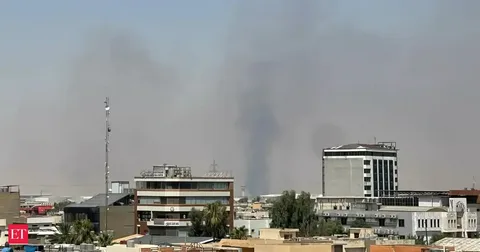

The United States paused its attacks on Iran for a second straight day Sunday, and Tehran confirmed it had done the same, as diplomats rushed behind the scenes to revive ceasefire negotiations. This pause in US attacks on Iran today marks the first back-to-back halt in strikes after nearly two weeks of intense military escalation between the two countries. The world is watching closely to see if this break in violence becomes a real off-ramp or just a brief pause before more fighting begins.
Background: How the Iran War Began
The current conflict did not begin overnight. On February 28, 2026, Israel and the United States launched coordinated airstrikes against Iran, killing its Supreme Leader and many other officials, destroying a large number of military and government targets, and also killing civilians. Iran responded almost immediately with a wide wave of missile and drone strikes targeting US bases, embassies, and allied nations across the Middle East.
Iran also closed the Strait of Hormuz, through which 20 percent of the world’s oil passes, disrupting global trade and shocking energy markets worldwide. A brief ceasefire was reached in April, but it collapsed in recent weeks when Iran resumed attacks on commercial shipping through the Strait of Hormuz. What followed was nearly two weeks of nightly US strikes on Iranian military infrastructure, and Iranian counterattacks on US allies across the region. The Iran war live news situation has changed rapidly almost every single day since then.
US Attacks Iran: What Happened This Week
At least 12 people were killed in Iran by US strikes in a single 24-hour period last week, taking the total death toll to 50 since this latest phase of the war began. At least 500 people have additionally been injured in US strikes since June 27, when the fragile ceasefire in the region first began to fray.
The US targeted Iranian military command centers, air defense and coastal surveillance sites, maritime capabilities, and missile and drone launch facilities across multiple nights of sustained bombing. These were not random strikes they were specifically designed to degrade Iran’s ability to close the Strait of Hormuz and attack US allies in the Gulf region.
Two US service members were killed in Jordan when an Iranian missile got through American air defenses, marking the first American military deaths in the Iran war since March. One additional service member went missing in action. The deaths hardened Washington’s position and led to even heavier bombing runs in the days that followed.
The US military said its naval blockade against Iran “remains in full effect” but did not explain why it halted a streak of 13 nights of escalating strikes. That sudden halt has left analysts and governments around the world guessing about what is happening behind closed doors
Iran’s Response and the Pause in Strikes
Iran did not stay quiet during the US campaign. Kuwait intercepted “hostile targets,” sirens sounded in Bahrain, and Jordan said it downed Iranian missiles. Iran stepped up attacks on all three countries which all host US military forces. Iranian-backed Houthi forces in Yemen also joined the wider conflict, declaring a naval blockade of Saudi Arabia.
Now, however, both sides appear to be stepping back at least temporarily. Iran’s army spokesman Mohammad Akraminia said, “Our strategy has essentially been retaliatory. We have also halted our retaliatory operations,” while also warning that the conflict would widen further if the US continues its attacks.
Iran is halting its attacks as long as the US maintains its latest pause in strikes, a senior Iranian source told Reuters on Sunday. The source cautioned there was “more skepticism than optimism” following the US decision to pause attacks. That careful language tells you everything neither side fully trusts the other right now, and the ceasefire remains fragile at best.
Trump on Iran War: What the President Has Said
Trump Iran war news has been a major driver of the news cycle throughout this conflict. President Trump has shifted his tone multiple times over recent weeks. Trump signaled on July 23 that he was not yet ready to negotiate a new ceasefire with Iran, saying “they need more of the same” following several consecutive days of airstrikes.
Just days later, however, the US quietly stopped bombing. Trump shared a series of AI-generated images on social media on Sunday one portrayed US fighters bombing Iran with the caption “Guardian Angels of the World,” and another showed Trump planting a US flag on an Iranian commercial vessel with the caption “It’s our oil tanker now.” The posts were widely criticized as inappropriate given the human cost of the ongoing conflict, but they reflect the combative political messaging that has surrounded Trump’s handling of the Iran war throughout.
Senator Bill Cassidy of Louisiana said cutting off funding for the Iran war is not a viable solution, but the Trump administration must soon seek congressional approval for its strategy. The political pressure from within Washington is growing, even as the administration projects outward confidence.
Ceasefire Talks: Where Things Stand Today
A regional official involved in mediation efforts said diplomacy was underway and that a pause in US and Iranian strikes was a “positive signal that helps their efforts to de-escalate.” The official confirmed that both countries want to return to the interim ceasefire deal that collapsed earlier this month.
A compromise being negotiated centers on having Iran run vessel transit through the Strait of Hormuz with fewer restrictions on ships meaning the core dispute over who controls access to one of the world’s most critical waterways remains at the center of any deal.Iran had earlier rejected a US ceasefire proposal that was presented to Tehran by the Iraqi prime minister. Iranian officials said Tehran was not interested in a temporary deal that left the question of control of the Strait of Hormuz unresolved. That rejection had triggered another wave of US strikes which is why the current pause feels so significant, even if its permanence cannot be guaranteed.
Israeli Prime Minister Benjamin Netanyahu plans to travel to Washington and meet with Trump on Tuesday, a meeting that could significantly shape the next phase of the war or the terms of any ceasefire deal.
Why Is Iran Attacking the UAE?
Iran’s attacks on the UAE are a direct part of its broader retaliation strategy against the United States and its regional allies. Following the coordinated US-Israel strikes on Iran on February 28, Iran launched a multiday series of missile and drone airstrikes on the UAE, targeting American assets and bases located there. As of April, the UAE had intercepted and destroyed 537 ballistic missiles, 2,256 drone attacks, and 26 cruise missiles fired from Iran.
The attacks killed 13 people and injured 224 others, ranging from minor to severe cases. The UAE hosts major US military installations and has been a key logistics hub for American forces in the Gulf. Iran views strikes on the UAE as a way to impose costs on Washington without hitting American soil directly. The UAE, along with Saudi Arabia, Bahrain, and Kuwait, has been caught in the middle of a war it did not choose.
Global Impact of the Iran War
The US-Iran war latest news carries consequences far beyond the Middle East battlefield. The active conflict has spiked global oil prices back above $100 per barrel. That price surge is being felt by ordinary people in countries that have nothing to do with the fighting from petrol prices in South Asia to heating costs in Europe.The 2026 Iran war disrupted global travel and trade, halted flights in and out of the Middle East, and led to shipping reroutes to avoid the Strait of Hormuz and the Red Sea. Goods that once moved through the Gulf are now taking longer, more expensive routes around southern Africa, adding weeks to delivery times and raising prices for everything from electronics to food.
The conflict has also intensified humanitarian pressure inside Iran itself. Civilian infrastructure has been hit during US bombing campaigns, and international organizations have raised alarm about access to medical supplies and essential services for ordinary Iranians who have no say in their government’s military decisions.
Conclusion: Iran War When Will It End?
The question the world is asking Iran war when will it end has no clear answer yet. The pause in strikes is the most encouraging development in weeks, but it is not a ceasefire, and it could end at any moment. Both sides have shown they are capable of rapid escalation, and both sides still have unresolved demands that make a permanent agreement difficult.
What is clear is that the pressure to find an exit is growing. US military costs have exceeded $37 billion. The death toll on all sides is rising. Oil markets are under severe strain. And the populations of Gulf states, who have watched Iranian missiles fly overhead for months, want stability and safety restored.
If the current pause holds and ceasefire talks resume in earnest, there is a narrow window for diplomacy to succeed. If either side blinks badly or another major incident occurs, the Iran war live news could shift back to full-scale conflict within hours. For now, the world watches and waits.
FAQs
Is the Iran War Ending?
As of July 27, 2026, there are cautious signs that the Iran war could be moving toward a temporary pause or ceasefire, but a full and permanent end to the conflict has not been reached. Both the United States and Iran have halted strikes for two consecutive days, and mediators from regional countries are actively engaged in talks aimed at restoring an interim ceasefire agreement. However, the situation remains deeply fragile. Neither side has formally announced a truce, and both have maintained their hardline public positions. Iran continues to insist on control over the Strait of Hormuz, while the United States demands that commercial shipping pass freely through the waterway. Until those core issues are resolved through negotiation, the war has not ended it has only paused. Analysts warn that a single incident, such as another Iranian missile hitting US troops or a US strike killing Iranian civilians, could reignite full-scale hostilities within hours.
Why Is Iran Attacking the UAE Again?
Iran has been targeting the UAE because the country hosts major United States military bases and serves as a critical logistics and support hub for American forces operating in the Gulf region. When the US and Israel launched their initial strikes on Iran in February 2026, killing Iran’s Supreme Leader and key military commanders, Iran retaliated by firing missiles and drones at every country in the region that provides infrastructure to the US military. The UAE was a primary target because of its hosting of US air bases and naval facilities. Iran’s strategy has been to inflict costs on the United States indirectly, by hitting its allies and partners rather than attacking American soil, which would risk an even larger response. The UAE has defended itself strongly, intercepting hundreds of Iranian ballistic missiles and drones using US-supplied THAAD and Patriot air defense systems. Despite heavy losses on both sides, Iran has continued these strikes as a bargaining chip in negotiations, signaling that it can widen the conflict if the US does not agree to terms acceptable to Tehran.
Is the US Strike on Iran a War?
Yes, the US strike on Iran is widely considered an act of war, and it has evolved into a full-scale military conflict between the two countries. The fighting that began on February 28, 2026, when the United States and Israel launched coordinated airstrikes on Iran, has since involved sustained aerial bombing campaigns by the US military, Iranian missile and drone attacks on US troops and US-allied nations, a US naval blockade of Iranian ports, Iranian closure of the Strait of Hormuz, and combat deaths on both sides. The US government has not formally declared war a step that requires congressional approval under the US Constitution but the military operations being carried out are war in every practical sense. Over 17 American service members have died in the conflict, Iran has suffered hundreds of civilian and military casualties, and the fighting has involved the most sustained US military campaign against a nation-state since the 2003 Iraq War. Internationally, the conflict is referred to as the 2026 Iran War, and it has reshaped Middle Eastern geopolitics, global energy markets, and international alliances in fundamental ways.