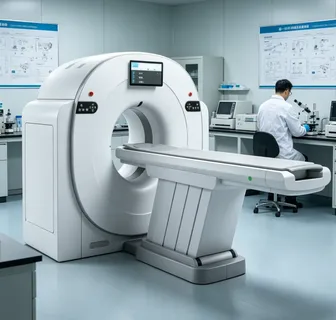
The CT Scanner Machine price has become a major talking point across Pakistan’s healthcare sector as government and private hospitals push to upgrade outdated radiology equipment. Interest in the Toshiba CT Scan Machine and the 640 slice CT scanner price has grown sharply, since these systems represent two very different budget categories for hospital administrators. Officials overseeing hospital procurement say cost remains the single biggest hurdle to expanding access to modern diagnostic imaging across the country.
Background
Pakistan’s public hospital network has struggled for years with a shortage of functional imaging equipment, forcing patients toward expensive private diagnostic centers. Reports from provincial health departments show that several teaching hospitals only recently secured funding to purchase new CT and MRI units after older machines were declared unserviceable.
In Punjab, the provincial government approved a scheme worth more than Rs 718 million to purchase a 128-slice CT scanner and a 1.5 Tesla MRI machine for Lahore General Hospital, reflecting how steep the CT Scanner Machine price has become even for mid-range slice configurations. Similar procurement drives have been reported in Islamabad and other provincial capitals, where machines installed more than a decade ago were finally replaced or scheduled for replacement. Understanding the CT Scanner Machine price is not simply about the base cost of the scanner itself. Hospitals must also budget for installation, radiation shielding, calibration, staff training, and ongoing maintenance contracts, all of which add substantially to the final figure quoted by manufacturers and suppliers.
Details
The CT Scanner Machine price varies enormously depending on the slice count, brand, and whether the unit is new or refurbished. Entry-level 16-slice systems sit at the lower end of the market, while advanced multi-slice platforms used for cardiac and neurological imaging occupy the premium tier. The Toshiba CT Scan Machine has remained one of the more frequently discussed brands among hospital procurement teams in Pakistan, largely because of its reputation for reliable image quality and comparatively manageable maintenance costs. Toshiba, now operating under the Canon Medical Systems banner in many markets, continues to supply CT platforms ranging from basic diagnostic units to higher-slice systems used in specialized imaging centers. Hospital administrators evaluating the Toshiba CT Scan Machine typically weigh the upfront purchase cost against long-term service agreements, since spare parts and technician support can influence the total cost of ownership significantly.
At the far end of the spectrum sits the 640 slice CT scanner price, which represents the most advanced tier of computed tomography technology currently available. A 640-slice scanner can capture an entire organ, such as the heart or brain, in a single rotation, dramatically reducing scan time and radiation exposure compared to older machines. This capability makes the 640 slice CT scanner price substantially higher than mid-range alternatives, often placing it out of reach for smaller hospitals and diagnostic centers. Industry sources familiar with medical equipment procurement in Pakistan note that a 640-slice system is generally imported through specialized medical technology vendors, with pricing influenced by currency exchange rates, import duties, and after-sales service arrangements. Because of this, the 640 slice CT scanner price quoted to a public hospital can differ noticeably from what a private tertiary care facility might negotiate.
Quotes
A senior official at a provincial health department, speaking on condition of anonymity because they were not authorized to discuss procurement figures publicly, said that budget allocation for radiology equipment has increased in recent years but still falls short of demand across district-level hospitals. A radiology department head at a private diagnostic network in Lahore, commenting generally on the sector, noted that hospitals often choose mid-range slice configurations rather than the highest-end systems, since the difference between a 128-slice and a 640-slice unit in day-to-day diagnostic accuracy is far smaller than the difference in cost for most routine cases. Equipment suppliers operating in the Pakistani market have separately indicated that financing options, leasing arrangements, and refurbished units are becoming more common as hospitals try to manage the CT Scanner Machine price without compromising on diagnostic capability.
Impact
The rising CT Scanner Machine price has a direct effect on patient access to timely diagnosis, particularly outside major cities. When public hospitals cannot afford new units, patients are pushed toward private centers where scan fees are significantly higher, creating a two-tier system of access based on income. Regionally, the trend mirrors what has been observed in other South Asian markets, where public-private partnership models have been floated as a way to bring advanced imaging, including systems comparable to the Toshiba CT Scan Machine, into government facilities without the state bearing the full capital cost upfront. The broader impact also touches specialized care. Cardiac and stroke units depend heavily on fast, high-resolution imaging, and the absence of a 640-slice or comparable high-end scanner in most public hospitals means that patients requiring the most detailed scans are frequently referred to private tertiary hospitals, adding both delay and cost to urgent treatment pathways.
Conclusion
As Pakistan’s healthcare infrastructure continues to modernize, the conversation around CT Scanner Machine price is expected to remain active among hospital administrators, provincial health departments, and private investors alike. Demand for both the Toshiba CT Scan Machine and higher-end systems reflected in the 640 slice CT scanner price is likely to grow as more facilities seek to reduce patient wait times and improve diagnostic accuracy. Future procurement decisions will likely continue balancing affordability against capability, with mid-range slice scanners remaining the practical choice for most district hospitals, while the highest-end 640-slice technology stays concentrated in a small number of specialized centers. Continued government investment, combined with more flexible financing from equipment suppliers, will play a central role in determining how quickly access to modern CT imaging expands across the country.
Frequently Asked Questions
How much does a CT scan machine cost in Pakistan?
The CT Scanner Machine price in Pakistan depends heavily on the slice count and brand selected by the hospital. Basic 16-slice units tend to be the most affordable option and are commonly used for routine diagnostic scans in smaller hospitals and clinics. Mid-range 64 to 128-slice systems, which are more common in provincial teaching hospitals, cost considerably more due to their advanced imaging capability and faster scan times. High-end systems such as a 640-slice scanner sit at the top of the pricing scale because of their specialized cardiac and neurological imaging functions, and this figure can run into hundreds of millions of rupees once installation, shielding, and training costs are included.
What is the price of an MRI machine in Pakistan?
MRI machine pricing in Pakistan is generally influenced by the magnet strength, measured in Tesla, along with the brand and whether the unit is new or refurbished. A standard 1.5 Tesla MRI machine, which is the most widely used strength in Pakistani hospitals, typically represents a major capital investment for any healthcare facility, often bundled together with CT scanner procurement in government development schemes. Higher-strength 3 Tesla machines, used for more detailed neurological and musculoskeletal imaging, come at a noticeably higher price point and are currently limited to a smaller number of specialized hospitals and private imaging centers across major cities.
Does Chughtai Lab do MRI scan?
Chughtai Lab is one of Pakistan’s well-known diagnostic and laboratory service networks, and it does offer MRI scanning services alongside its broader radiology and pathology testing options at several of its branches. Patients interested in booking an MRI scan through Chughtai Lab are generally advised to confirm availability, appointment slots, and current pricing directly with their nearest branch or through their official booking channels, since service availability can vary depending on location and the specific type of MRI scan required.