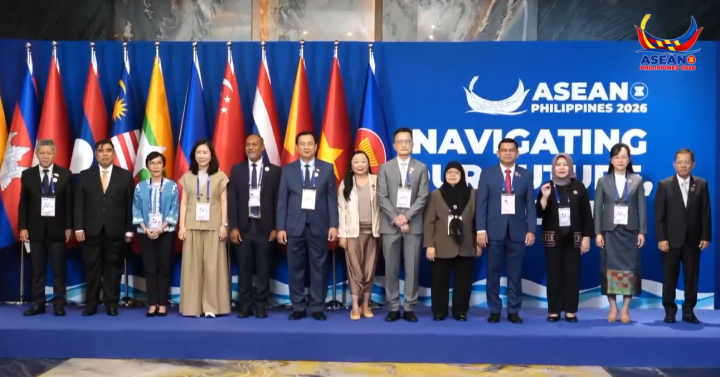
Southeast Asia’s top diplomats opened three days of talks in Manila on Tuesday, with an agenda topped by their most daunting security problems, set against a backdrop of unfolding crises led by resurging US-Iran fighting and a violent skirmish in the disputed South China Sea.
The 33rd ASEAN Regional Forum ministerial meeting is the centrepiece of a broader week of high-level diplomatic engagements in the Philippine capital. The series of meetings, hosted by the Philippines as ASEAN Chair for 2026, is taking place in Manila from July 18 to 24, under the theme “Navigating Our Future, Together.” It is rare for the ASEAN Regional Forum to convene with this level of global attention, but then, few years in recent memory have produced the kind of simultaneous regional crises now testing the forum’s purpose.
What Is the ASEAN Regional Forum?
For those encountering the ASEAN Regional Forum for the first time, a brief explanation helps set the scene. The ASEAN Regional Forum was formally agreed upon at the 26th ASEAN Ministerial Meeting and Post Ministerial Conference held in Singapore on 23–25 July 1993, and its inaugural meeting took place in Bangkok on 25 July 1994.The ARF is the first regionwide Asia-Pacific multilateral forum for official consultations on peace and security issues. An outgrowth of the annual ministerial-level meeting of ASEAN members and the states serving as ASEAN’s dialogue partners, the ARF provides a setting for discussion, diplomacy, and the development of cooperative responses to regional problems.
The objectives of the ASEAN Regional Forum are outlined in the First ARF Chairman’s Statement of 1994: to foster constructive dialogue and consultation on political and security issues of common interest and concern, and to make significant contributions to efforts toward confidence-building and preventive diplomacy in the Asia-Pacific region.
Over the three decades since that first Bangkok meeting, the ASEAN Regional Forum has grown steadily in membership and stature, even as debates about its effectiveness have persisted in diplomatic and academic circles.
ASEAN Regional Forum Headquarters
The ARF Unit is housed at the ASEAN Secretariat, located at 70A Jalan Sisingamangaraja, Jakarta, Indonesia. The Secretariat serves as the institutional memory and administrative backbone of the entire ASEAN Regional Forum process, maintaining the forum’s document repository, managing its database, and providing secretarial support to the ARF Chair. The ASEAN Regional Forum does not have a separate standalone headquarters of its own it operates as an integral part of the ASEAN institutional architecture, with the ASEAN Secretariat in Jakarta functioning as its permanent administrative home.
Who Are the Members of the ASEAN Regional Forum?
The ASEAN Regional Forum has a membership that makes it genuinely unlike any other regional security body in the world. The ASEAN Regional Forum consists of 27 participants: Australia, Bangladesh, Brunei Darussalam, Cambodia, Canada, China, the Democratic People’s Republic of Korea, the European Union, India, Indonesia, Japan, Lao PDR, Malaysia, Mongolia, Myanmar, New Zealand, Pakistan, Papua New Guinea, the Philippines, the Republic of Korea, Russia, Singapore, Sri Lanka, Thailand, Timor-Leste, the United States, and Vietnam.
This membership comprises the ten ASEAN member states, ten of ASEAN’s dialogue partners Australia, Canada, China, the European Union, India, Japan, New Zealand, the Republic of Korea, Russia and the United States as well as Timor-Leste, Papua New Guinea, Bangladesh, the Democratic People’s Republic of Korea, Mongolia, Pakistan, and Sri Lanka.
What makes the ASEAN Regional Forum unusual is this combination of great powers, middle powers, and smaller states all sitting at the same table without a formal hierarchy. The United States and China attend as equals alongside North Korea, Papua New Guinea, and Sri Lanka. The ARF is the largest and oldest of the ASEAN centrality institutions. It has 27 members, which includes the ASEAN 10, the 10 dialogue partners of ASEAN, and seven other countries.
ASEAN Regional Forum History: From Cold War Aftermath to Today
To understand why the ASEAN Regional Forum was created, it helps to go back to the early 1990s. The bipolar order that had structured regional relations was gone, and there was real uncertainty about how rising powers, especially China, would behave. ASEAN responded by creating a forum to address the opportunities and concerns generated by the end of the Cold War. The underlying logic was that engaging powerful states in regular dialogue would make their behaviour more predictable and reduce the risk of conflict.
The inaugural ARF meeting in Bangkok in July 1994 was attended by ten ASEAN members and ASEAN’s ten dialogue partners. Papua New Guinea and Mongolia joined in 1999, and North Korea was admitted in 2000. Pakistan joined the ASEAN Regional Forum in 2004, becoming one of the South Asian members alongside India, Bangladesh, and Sri Lanka.Unique among international organizations of its type, the ARF is characterised by minimal institutionalisation, decision-making by consensus, and the use of both first-track official diplomacy and second-track non-official diplomacy. That combination has always been both the forum’s greatest strength and its most debated limitation.
The 33rd ASEAN Regional Forum: Rubio and Wang Yi at the Centre
The highlight of this year’s ASEAN Regional Forum meeting is undoubtedly the high-level diplomatic traffic it has generated. US Secretary of State Marco Rubio plans to join regional security talks at the ASEAN Regional Forum, which will also include Russian Foreign Minister Sergey Lavrov and Chinese Foreign Minister Wang Yi.
Rubio will meet Wang on the sidelines on Wednesday, the State Department confirmed. It will be the highest-level contact between the United States and China since President Donald Trump flew to Beijing in May for talks with Chinese President Xi Jinping that focused on the US-Israel war on Iran, trade, and the status of Taiwan. The meeting on the fringes of the ASEAN Regional Forum is therefore being watched closely by analysts across the Indo-Pacific, as it signals where US-China relations stand at a particularly turbulent moment.
Pakistan’s Deputy Prime Minister and Foreign Minister Ishaq Dar arrived in Manila to participate in the 33rd ASEAN Regional Forum ministerial meeting, with a busy programme of engagements ahead, including participation in the ARF plenary meeting and bilateral meetings with counterparts on the sidelines.
The Foreign Office stated that the high-level meeting brings together foreign ministers and delegates from all 27 ARF member states, with the ASEAN Secretary-General also in attendance.
Key Issues on the ASEAN Regional Forum Agenda
Regional security issues are expected to dominate the meetings, including renewed fighting in the Middle East, ongoing tensions in the South China Sea, and efforts to revive ASEAN’s stalled initiative for resolving the conflict in Myanmar.
Among the issues expected to be on the agenda are the ongoing crisis in Myanmar, South China Sea tensions, and the fallout of the US-Israeli war on Iran, which brought fuel shortages, rising oil prices, and disruptions to Southeast Asia’s international trade.
The foreign ministers of ASEAN met behind closed doors in Manila and issued a joint statement calling for an immediate halt to fighting in the Middle East and the full and safe reopening of the Strait of Hormuz, a key corridor for energy shipments.
Beyond the immediate crises, the ASEAN Regional Forum meeting also addressed longer-term security cooperation. During the ARF Senior Officials’ Meeting held in Manila in June, the Indian side underscored the importance of the ARF as a platform for open, constructive engagement between ASEAN member states and their dialogue partners, with discussions focused on regional security and the relevance of dialogue in addressing Indo-Pacific geopolitical challenges.
The Philippines as ASEAN Chair 2026
This year’s ASEAN Regional Forum meeting takes on added significance because it is hosted by the Philippines as ASEAN Chair for 2026. The Chair of the ASEAN Foreign Ministers’ Meeting 2026 is Her Excellency Ma. Theresa P. Lazaro, Secretary of Foreign Affairs of the Republic of the Philippines.
The Philippines assumed the ASEAN chairship in 2026 at a defining moment for the region. Myanmar will be bypassed for the ASEAN chair role, and the Kuala Lumpur Declaration on ASEAN 2045 sets the bloc’s future trajectory, emphasising resilience, innovation, and a people-centred ASEAN.
Manila’s hosting of the ASEAN Regional Forum summit represents a significant diplomatic moment for the Philippines, which has itself been at the centre of South China Sea tensions in recent years.
Global and Regional Impact
The 33rd ASEAN Regional Forum meeting matters well beyond Southeast Asia. When 27 member states including nuclear powers the United States, China, Russia, India, and North Korea sit in the same room to discuss regional security, the conversations held there shape the diplomatic landscape of an entire half of the world.
The ASEAN Regional Forum brings together 27 diverse members, including all ten ASEAN nations, the United States, Russia, China, and India. Unlike traditional military alliances, the ARF functions as a track-one diplomatic forum designed to foster trust through a gradual, evolutionary process moving from basic confidence-building to eventual conflict resolution.
For a region navigating South China Sea disputes, the Myanmar conflict, Middle East energy disruptions, and great-power competition simultaneously, the ASEAN Regional Forum serves as one of the few spaces where all parties are still talking directly to one another. That alone, many diplomats argue, is reason enough to keep the forum going.
Quotes
Pakistan’s Foreign Office said that Ishaq Dar “will participate in discussions on political and security issues affecting the Asia-Pacific region, with a special focus on promoting peace, stability, and mutual cooperation through sustained dialogue and diplomacy.”
The Foreign Office noted that since becoming a member in 2004, Pakistan has maintained an active role within the ASEAN Regional Forum, consistently engaging on matters of regional security and multilateral cooperation.
Philippine DFA spokesperson Dominic Xavier Imperial told reporters: the meetings arrive at a moment of heightened global instability, which makes dialogue between ASEAN and its partners more consequential than usual.
What Comes Next
Rubio, Wang, and Lavrov will also attend a final forum called the East Asia Summit, where 18 Western and Asian countries, including the 11-nation ASEAN, will tackle geopolitical, economic, and security concerns.
Concluding the series of meetings, the ASEAN Secretary-General will participate in commemorative activities marking the 50th anniversary of the Treaty of Amity and Cooperation in Southeast Asia on July 24, including a high-level conference, a signing ceremony for new contracting parties, and a Gala Dinner hosted by Philippine President Ferdinand Marcos Jr.
The outcomes of the 33rd ASEAN Regional Forum will set the diplomatic tone for the region through the rest of 2026. Whether the Rubio-Wang bilateral produces any concrete signals on Taiwan or trade, whether the Myanmar crisis sees any new ASEAN initiative emerge, and whether the South China Sea statement contains stronger language than previous years these will be the details that analysts, governments, and the public watch most closely in the days ahead.
Frequently Asked Questions (FAQs)
Is Pakistan a member of ASEAN?
Pakistan is not a member of the Association of Southeast Asian Nations (ASEAN) itself, which remains a Southeast Asia-specific regional bloc currently comprising eleven member states: Brunei, Cambodia, Indonesia, Laos, Malaysia, Myanmar, the Philippines, Singapore, Thailand, Timor-Leste, and Vietnam. However, Pakistan is a full participant in the ASEAN Regional Forum (ARF), the broader security dialogue platform associated with ASEAN. Pakistan joined the ASEAN Regional Forum in 2004 and has since maintained an active presence in its annual ministerial meetings and inter-sessional activities. Pakistan’s participation in the ARF reflects its interest in engaging with the Asia-Pacific’s security architecture, even though full ASEAN membership requires countries to be located within Southeast Asia. Pakistan has also pursued deeper engagement with ASEAN through trade and diplomatic channels over the years, and at this year’s 33rd ASEAN Regional Forum in Manila, Pakistan’s Deputy Prime Minister and Foreign Minister Ishaq Dar participated in both the ARF plenary session and a series of bilateral meetings on the sidelines.
Who are the members of the ASEAN Regional Forum?
The ASEAN Regional Forum has 27 member participants, making it one of the most inclusive multilateral security dialogues anywhere in the world. The members are: Australia, Bangladesh, Brunei Darussalam, Cambodia, Canada, China, the Democratic People’s Republic of Korea (North Korea), the European Union, India, Indonesia, Japan, Lao PDR, Malaysia, Mongolia, Myanmar, New Zealand, Pakistan, Papua New Guinea, the Philippines, the Republic of Korea (South Korea), Russia, Singapore, Sri Lanka, Thailand, Timor-Leste, the United States, and Vietnam. The membership spans all of Southeast Asia’s ten ASEAN member states, the ten formal dialogue partners of ASEAN, and seven additional countries including several South
When was the ASEAN Regional Forum established?
The decision to establish the ASEAN Regional Forum was taken at the 26th ASEAN Ministerial Meeting and Post Ministerial Conference held in Singapore in July 1993. The inaugural meeting of the ASEAN Regional Forum was then held in Bangkok, Thailand, on 25 July 1994, attended by the ten ASEAN member states of that era and ten of ASEAN’s dialogue partners. The forum was created in the immediate aftermath of the Cold War, at a time when the region faced real uncertainty about the behaviour of rising powers, particularly China, and needed a structured multilateral space to manage those relationships through dialogue rather than confrontation.