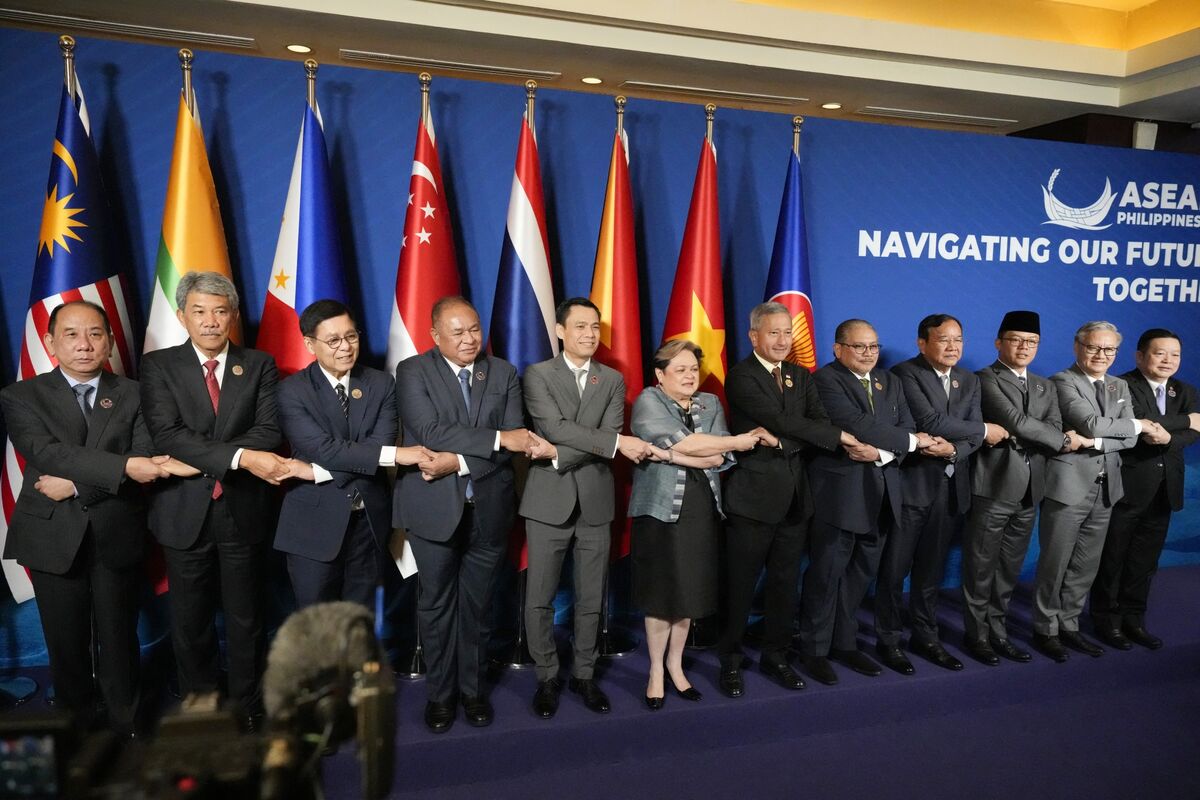
Pakistan’s Deputy Prime Minister and Foreign Minister Ishaq Dar arrived in Manila on Wednesday to participate in the 33rd ASEAN Regional Forum Ministerial Meeting, the Foreign Office confirmed. The high-stakes diplomatic gathering is bringing together top foreign ministers and security officials from across the Asia-Pacific and beyond, as the region faces a complex web of geopolitical pressures.
Upon his arrival, Dar was received by Elmer G. Cato, Assistant Secretary at the Philippines’ Department of Foreign Affairs, along with Pakistan’s Ambassador to the Philippines Asima Rabbani and other officials. The warm official reception signals the importance both Islamabad and Manila attach to this bilateral relationship and to Pakistan’s wider presence in the Asia-Pacific diplomatic arena.
What Is the ASEAN Regional Forum?
The ASEAN Regional Forum, widely known by its acronym ARF, is the primary multilateral platform dedicated to peace, stability, and security dialogue in the Indo-Pacific. The Twenty-Sixth ASEAN Ministerial Meeting and Post Ministerial Conference, held in Singapore on July 23–25, 1993, agreed to establish the ASEAN Regional Forum, and its inaugural meeting took place in Bangkok on July 25, 1994.
The ARF is described as the first regionwide Asia-Pacific multilateral forum for official consultations on peace and security issues, providing a setting for discussion and diplomacy and the development of cooperative responses to regional problems. Over the past three decades, it has grown into one of the most consequential diplomatic venues in the world, touching on issues ranging from maritime disputes to cyber threats and counterterrorism.
According to the ASEAN Regional Forum Wikipedia and official ASEAN documentation, the forum operates on the foundational principle of consensus-based decision-making. No single member can impose its position on others, which is precisely what makes it a trusted space for dialogue among nations that do not always see eye to eye.
The ASEAN Regional Forum headquarters is not a standalone institution but operates under the umbrella of ASEAN itself, which is headquartered in Jakarta, Indonesia. The ARF Secretariat functions within the ASEAN structure, and the chair of ASEAN automatically serves as the chair of the ASEAN Regional Forum for that year.
ASEAN Regional Forum Members: Who Sits at the Table
One of the defining features of the ASEAN Regional Forum is the breadth and diversity of its membership. The ARF comprises 27 members: the ten ASEAN member states Brunei Darussalam, Cambodia, Indonesia, Laos, Malaysia, Myanmar, Philippines, Singapore, Thailand, and Vietnam along with ASEAN’s ten dialogue partners, which include Australia, Canada, China, the European Union, India, Japan, New Zealand, the Republic of Korea, Russia, and the United States.
Beyond these, countries such as Pakistan, Sri Lanka, Bangladesh, Mongolia, Papua New Guinea, North Korea, and Timor-Leste are also among the ASEAN Regional Forum members, making the group an extraordinarily diverse coalition that spans multiple geopolitical orientations and strategic interests. The sheer diversity of the ASEAN Regional Forum members — from nuclear powers to small island states is what sets it apart from more narrowly defined regional groupings.
The inaugural ARF meeting was attended by 10 ASEAN members and ASEAN’s 10 dialogue partners. Papua New Guinea and Mongolia joined the group in 1999, and North Korea was admitted in 2000. The gradual expansion of ASEAN Regional Forum members over the years reflects the forum’s growing relevance and its willingness to include a wide range of stakeholders in the security conversation.
ASEAN Regional Forum History: Three Decades of Diplomacy
The ASEAN Regional Forum history stretches back to the post-Cold War era, when the international community was searching for new institutional frameworks to manage an uncertain strategic environment in Asia. The ARF was established as an outgrowth of the annual ministerial-level meeting of ASEAN members and the states serving as ASEAN’s dialogue partners.
In its early years, the ASEAN Regional Forum focused primarily on confidence-building measures practical steps designed to reduce misunderstandings between military establishments and lower the risk of accidental conflict. Over time, it evolved to address a much broader security agenda including maritime safety, non-proliferation, disaster response, and cybersecurity.
On the tenth anniversary of the ASEAN Regional Forum, ARF Ministers meeting in Phnom Penh on June 18, 2003, declared that “despite the great diversity of its membership, the forum had attained a record of achievements that have contributed to the maintenance of peace, security and cooperation in the region.” This self-assessment captured something real: the ARF had succeeded in keeping channels of communication open even between rival powers, a significant achievement in a region prone to historical grievances.
The ASEAN Regional Forum history also includes the formal adoption of criteria for participation in 1996, specifying that new members must commit to the forum’s goals and demonstrate relevance to the peace and security of Northeast and Southeast Asia as well as Oceania. This ensured that membership remained meaningful rather than purely symbolic.
The 33rd ASEAN Regional Forum Meeting: What Is on the Table
Held under the theme “Navigating Our Future, Together,” the 2026 event is chaired by the Philippines and assembles the foreign ministers of the bloc’s ten member states, along with a striking attendance of international partners including US Secretary of State Marco Rubio and Chinese Foreign Minister Wang Yi.
The 33rd ASEAN Regional Forum ministerial session, scheduled for July 22–23, 2026, is taking place against a backdrop of heightened regional tensions and shifting global power dynamics. The South China Sea dispute, the ongoing crisis in Myanmar, instability in the Middle East, and questions about the future of US engagement in Asia are all expected to feature prominently in the discussions.
Opening the 59th ASEAN Foreign Ministers’ Meeting, Philippine Foreign Affairs Secretary Ma. Theresa Lazaro called for unity and collective action as the region faces mounting geopolitical uncertainty, maritime tensions and persistent conflicts. Her remarks set the tone for what promises to be a substantive and at times tense round of diplomacy.The ASEAN Regional Forum summit format allows foreign ministers to speak candidly on sensitive security issues in a structured multilateral setting. Unlike bilateral negotiations, the ARF plenary creates a unique space where competing narratives can be aired without the pressure of a formal negotiation outcome.
The most recent previous Ministerial Meeting of the ARF was held in Kuala Lumpur on July 11, 2025. That meeting produced the 32nd ARF Chair’s Statement, which addressed issues including maritime security, cyber norms, and humanitarian concerns. The 33rd ASEAN Regional Forum 2026 meeting in Manila is expected to build on those discussions while responding to new and rapidly evolving developments.
Pakistan at the ASEAN Regional Forum: Bilateral Meetings Planned
Pakistan’s foreign ministry said in a statement that Dar will participate in discussions on political and security issues affecting the Asia-Pacific region, “with a special focus on promoting peace, stability, and mutual cooperation through sustained dialogue and diplomacy.”Pakistan’s presence at the ASEAN Regional Forum 2026 carries particular diplomatic weight this year. Islamabad has recently been positioning itself more actively in the Indo-Pacific space, strengthening ties with Southeast Asian economies and signalling a strategic pivot toward deeper engagement with ASEAN member states.
Ishaq Dar is expected to hold bilateral meetings with participating foreign ministers and other dignitaries on the sidelines of the forum, making Manila a hub for a wider series of diplomatic conversations beyond the ARF plenary itself. These sideline engagements are often where the most substantive progress is made in international diplomacy away from scripted statements and closer to frank, direct exchange.
Russian Foreign Minister Sergey Lavrov met with Pakistan’s Deputy Prime Minister and Foreign Minister Muhammad Ishaq Dar for a high-level meeting on the margins of the ASEAN summit in Manila, further illustrating the multilayered diplomatic activity surrounding the ASEAN Regional Forum meeting.
Pakistan is not a member of ASEAN itself, but as a member of the ASEAN Regional Forum, it has a formal seat at this multilateral security dialogue. The distinction matters: ARF membership is broader than ASEAN membership, and it is through ARF that countries like Pakistan, India, the United States, and Russia engage with the Southeast Asian security community.
Quotes From Officials
The Foreign Office of Pakistan issued a statement ahead of Dar’s departure, outlining the objectives of the visit in clear terms. The statement said the meeting “will bring together foreign ministers and delegates from 27 ARF member states, adding that the ASEAN secretary general will also attend the meeting.”
Dar’s office added that the Deputy Prime Minister will “reaffirm Pakistan’s commitment to peace, stability, and dialogue in the Asia-Pacific region” — a formulation that reflects Islamabad’s consistent diplomatic messaging during a period of intense regional and global flux.
Philippine Foreign Affairs Secretary Theresa Lazaro, speaking at the opening of the broader ASEAN meetings, stated that the region must act with “unity and collective action” in the face of geopolitical challenges — an appeal that resonated across delegations arriving in Manila from around the world.
Regional and Global Impact
The ASEAN Regional Forum 2026 meeting in Manila is more than a routine annual gathering. It is taking place at a time when the architecture of global security is under strain. The United States and China remain locked in strategic competition. Russia’s position in global diplomacy has shifted dramatically. The Middle East is in prolonged turmoil, and its energy implications reach directly into Southeast Asian supply chains.
The meetings are set to discuss an array of issues touching on the security and stability of the region, primarily the consequences of ongoing global crises such as geopolitical tensions in the Middle East and their direct implications for energy security, supply chains, and food security in Southeast Asian countries.
For Pakistan, the stakes are also significant at home. An active diplomatic presence at the ASEAN Regional Forum summit sends a signal to both domestic and international audiences that Islamabad is an engaged, forward-looking actor in the broader Asian security landscape. After its role in facilitating dialogue between Iran and the United States earlier in the year, Pakistan arrives in Manila with a degree of diplomatic credibility that it intends to build upon.
The ASEAN Regional Forum history shows that even in periods of deep international tension, the forum has managed to keep dialogue alive. Whether it can do the same in 2026, with so many competing pressures converging simultaneously, remains to be seen. What is clear is that nations like Pakistan, which are not ASEAN members but active ARF participants, play an increasingly important role in shaping the security conversation in this critical part of the world.
What Comes Next
The 33rd ASEAN Regional Forum ministerial session will conclude on July 23, 2026, with the issuance of the ARF Chair’s Statement the principal formal outcome document of the meeting. This statement will reflect the consensus positions of all 27 ASEAN Regional Forum members and is expected to address South China Sea developments, the situation in Myanmar, cybersecurity norms, and climate-related security risks.
The ARF will continue implementing confidence-building measures through activities under its Inter-Sessional Meetings while the ARF Plan of Action beyond 2026 is being developed. Singapore is set to chair the ARF in 2027, and the next cycle of meetings will be shaped by the outcomes and agreements reached in Manila this week.For Pakistan, the bilateral meetings that Dar holds on the sidelines will likely shape specific cooperation frameworks in the months ahead. The ASEAN Regional Forum 2026 meeting thus marks not just a moment of diplomatic engagement, but potentially the beginning of a new phase in Pakistan’s relationship with the broader Indo-Pacific security community.
FAQs
Is Pakistan a member of ASEAN?
Pakistan is not a member of the Association of Southeast Asian Nations (ASEAN), which is a grouping of ten Southeast Asian states: Brunei, Cambodia, Indonesia, Laos, Malaysia, Myanmar, the Philippines, Singapore, Thailand, and Vietnam. ASEAN membership is geographically restricted to countries in Southeast Asia, and Pakistan, located in South Asia, does not qualify for full membership. However, Pakistan is an active and recognized member of the ASEAN Regional Forum, which is a broader security dialogue platform that includes 27 countries from across the Asia-Pacific and beyond. Through the ASEAN Regional Forum, Pakistan participates meaningfully in regional security discussions, bilateral diplomatic engagements on the sidelines of ARF meetings, and multilateral consultations on issues ranging from maritime security to counterterrorism. Pakistan has consistently used its ARF membership to advocate for dialogue-based solutions to regional and global security challenges.
Who are the members of the ASEAN Regional Forum?
The ASEAN Regional Forum currently has 27 member states and entities, making it one of the most inclusive security dialogue platforms in the Asia-Pacific. The ten ASEAN member states Brunei Darussalam, Cambodia, Indonesia, Laos, Malaysia, Myanmar, the Philippines, Singapore, Thailand, and Vietnam form the core of the forum. They are joined by ASEAN’s ten dialogue partners: Australia, Canada, China, the European Union, India, Japan, New Zealand, the Republic of Korea, Russia, and the United States. The remaining members include Pakistan, Sri Lanka, Bangladesh, Mongolia, Papua New Guinea, North Korea, and Timor-Leste. This wide membership base is one of the ASEAN Regional Forum’s greatest strengths and also one of its most significant challenges, as achieving consensus among nations with divergent strategic interests requires careful diplomatic management.
When was the ASEAN Regional Forum established, and how has it evolved?
The ASEAN Regional Forum was formally established in 1993 when ASEAN foreign ministers meeting in Singapore agreed to create a dedicated multilateral security dialogue platform for the Asia-Pacific. The inaugural meeting of the ASEAN Regional Forum was held in Bangkok, Thailand, on July 25, 1994, attended by the ten ASEAN members and their ten dialogue partners at the time. The forum was born out of the recognition that the end of the Cold War had created both new opportunities and new uncertainties in the Asia-Pacific region, and that no existing institution was adequately equipped to bring together such a diverse range of nations for frank security discussions. Over the decades, the ASEAN Regional Forum history reflects a gradual expansion of both membership and agenda. Papua New Guinea and Mongolia joined in 1999, North Korea was admitted in 2000, and several other countries have since joined.