
Category: World News
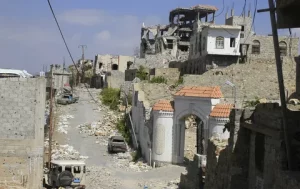
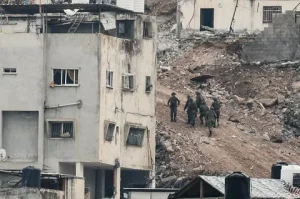
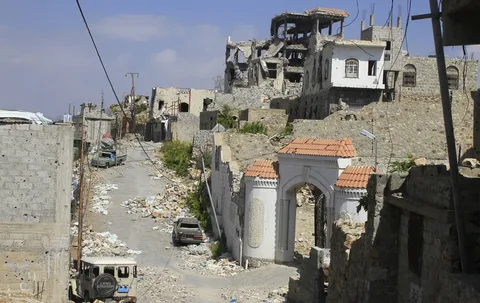
Soaring rents and a shattered economy have pushed some of Yemen’s poorest families to move into homes along Taiz’s active front line, where sniper fire remains a daily threat. The Yemen housing crisis in Taiz has left residents choosing between unaffordable safe housing and cheap but dangerous homes wedged between government and Houthi-controlled territory.
Background
Taiz, Yemen’s most populous governorate with nearly 4.5 million people, has endured more than a decade of civil war between government forces and Houthi rebels. Unlike most front lines in the country, Taiz’s runs directly through an urban area, with hills and a mountain overlooking the city giving snipers unusually clear lines of sight over residential streets below.
More than 400,000 people remain internally displaced within Taiz governorate alone, according to the local statistics office. Over 10,000 houses have been completely or partially damaged by the fighting, and officials say the true number is likely higher since many affected areas remain too dangerous to survey.
Even where reconstruction is possible, most residents simply cannot afford it. Humanitarian groups, including the Nahda Makers Organisation working with UNHCR, have repaired several thousand homes across Taiz and other governorates, but the scale of need still far outweighs what these programs can address.
Details
For some residents, the housing shortage has become severe enough that living near the front line feels like the only realistic option. One single mother of four, who spoke under a pseudonym for safety reasons, spent eight months searching for housing she could afford across Taiz and its outskirts before settling on a home near the front line for roughly $13 a month, a fraction of the typical $130 monthly rate for a similar house elsewhere in the city.
Two months after moving in, her 11-year-old son was shot while playing outside. He survived and was treated at a hospital, but the family still couldn’t afford to relocate afterward. Instead, they adopted precautions common among front-line residents, including keeping lights off at night in rooms visible from a distance and keeping children away from open areas.
Sniper violence in Taiz is not an isolated risk. A United Nations monitoring project recorded that 66 percent of all sniper-related civilian casualties in Yemen last year occurred in Taiz specifically, with 21 total cases logged, nine of them involving children.
Other residents living near the front line described similar trade-offs. A 53-year-old unemployed man living in the al-Thawrah neighbourhood since 2023 said he lives in a house rent-free in exchange for guarding the property, a common arrangement in areas close to the fighting where landlords struggle to find paying tenants willing to accept the risk.
Not everyone chooses to stay. A 46-year-old accountant who owns a home in Taiz’s al-Kamb neighbourhood fled during heavy fighting in 2018 and has not returned, even though he still pays rent elsewhere while his own property sits empty. He said a neighbour who did return later lost a son to sniper fire.
Quotes
The single mother who moved her family near the front line told Al Jazeera that a huge demand for housing left her with no better options after her efforts to find something safer repeatedly failed.
Khalid Alwan, director of Taiz’s local statistics office, said reconstruction costs remain far too high for most residents to manage, even for homes located in areas that are otherwise considered safe, further deepening the city’s housing crisis.
The accountant who fled his own home in 2018 said returning to a dangerous area simply isn’t the right decision, even though he continues paying rent elsewhere while his own house sits unused.
Impact
The Taiz housing crisis is part of a broader pattern across Yemen, where more than a decade of war has left an estimated 4.8 million people displaced nationwide, many with no realistic path back to their original homes. Economic collapse has compounded the problem, since even residents who want to rebuild or relocate often lack the income to do so.
The danger extends beyond the immediate risk of injury or death. Families living near front lines describe long-term psychological strain, including children who have had to adapt to the sound of nightly gunfire simply to function day to day.
For humanitarian organizations, the scale of unmet need remains overwhelming. Programs that have rehabilitated several thousand homes represent meaningful progress for individual families, but officials acknowledge these efforts are a small fraction of what would be needed to meaningfully reduce the number of people still living in or near dangerous front-line areas.
The situation also points to wider uncertainty about Yemen’s fragile de-escalation. While the front line in Taiz has been relatively quiet in recent years, residents remain aware that any renewed escalation could instantly turn their homes into an active combat zone.
Conclusion
Until reconstruction funding and economic conditions improve significantly, families like Um Yousef’s are likely to keep facing the same impossible calculation between affordability and safety. With hundreds of thousands still displaced across Taiz alone, humanitarian groups say expanded support for home repairs and safer, low-cost housing options remains urgently needed.
For now, many residents near Taiz’s front line say they have simply learned to live with the risk, adapting daily routines around the threat of sniper fire rather than leaving homes they cannot afford to replace.
Frequently Asked Questions
Why do people live near Taiz’s front line if it’s dangerous?
Most residents who live near Taiz’s front line do so because they simply cannot afford housing anywhere else in the city. Yemen’s decade-long war has driven poverty rates sharply higher, and a typical three-bedroom home in a safer part of Taiz can cost around $130 a month, an amount well beyond reach for many families, especially single-income households. Homes near the front line, by contrast, can rent for as little as $13 a month, or even be occupied rent-free in exchange for guarding the property, making them one of the only realistic options for Taiz’s poorest residents despite the risk of sniper fire and shelling.
How dangerous are snipers in Taiz compared to the rest of Yemen?
Taiz is considered uniquely dangerous among Yemen’s front lines because its combat line runs directly through a dense urban area, unlike most other front lines in the country. The city’s hilly terrain and overlooking mountain give snipers unusually clear sightlines over residential streets below, turning ordinary movement into a serious risk for civilians. According to a United Nations monitoring project, 66 percent of all sniper-related civilian casualties recorded in Yemen last year occurred in Taiz alone, with nine of the 21 documented cases involving children, making it the epicenter of sniper violence nationwide.
How many people have been displaced by Yemen’s war?
Yemen’s war has displaced an estimated 4.8 million people across the country, with more than 400,000 of them concentrated in Taiz governorate alone, according to local statistics officials. Many of these families remain unable to return home, either because their houses were destroyed or damaged in the fighting, or because their neighborhoods still sit too close to active or dormant front lines to be considered safe. While humanitarian organizations have repaired several thousand homes in Taiz and nearby governorates, officials say this progress remains a small fraction of what’s needed to meaningfully reduce the number of people still displaced or living in dangerous conditions.