


President Donald Trump paused a planned 50 percent tariff on billions of dollars of Canadian goods just hours before it was due to take effect, saying the pause reflects a near-finished trade agreement with Ottawa. The move has reignited public interest in the underlying USMCA agreement, how it differs from the older NAFTA deal it replaced, and whether the trilateral pact is even still in effect after a rocky formal review process earlier this year. This article breaks down what just happened, what USMCA actually is, and what comes next for US-Canada trade.
Background
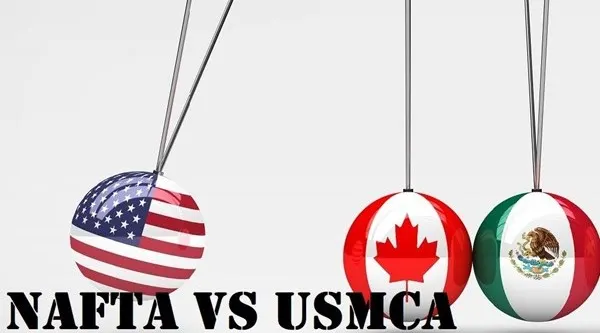
The United States-Mexico-Canada Agreement, sometimes referred to in Canada as CUSMA, entered into force on July 1, 2020, replacing the original North American Free Trade Agreement that had governed trade between the three countries since 1994. Trump signed and repeatedly praised USMCA during his first term, calling it an improvement on NAFTA because it added stronger labor and environmental standards, updated digital trade rules that did not exist when NAFTA was written in the early 1990s, and introduced stricter rules of origin for the automotive sector. Unlike NAFTA, which had no built-in expiration date, USMCA was written with a 16-year term and a mandatory six-year joint review, meaning the three governments were required to meet on July 1, 2026, to decide whether to extend the deal for another 16 years.
That review did not go smoothly. Earlier this year, the Trump administration declined to confirm a full 16-year renewal of USMCA in its current form, a decision announced by US Trade Representative Jamieson Greer following a virtual meeting with Canadian and Mexican counterparts. This did not cancel the agreement outright. Under USMCA’s own terms, declining to renew simply triggers a rolling annual review process that will continue until 2036, when the agreement is set to expire unless the three countries agree to an extension before then. In the meantime, USMCA remains fully in force, and bilateral negotiating rounds between the US and Mexico, and separately with Canada, have continued through the summer.
Details
Tensions between Washington and Ottawa escalated further last month when Trump signed executive orders imposing new 50 percent tariffs on a range of Canadian goods, including wine, cheese, beer, hockey sticks and cement, covering roughly 20 billion dollars worth of Canadian exports. The White House said the tariffs, issued under Section 338 of the Tariff Act of 1930, were a response to what it called discriminatory Canadian policies affecting American alcohol, automobile and dairy exports, along with provincial bans on US alcohol that Canada imposed in retaliation for earlier US tariffs. Those new duties were scheduled to take effect at 12:01 a.m. Wednesday. Late Tuesday, with the deadline just hours away, Trump announced on Truth Social that he was pausing the tariffs for three days, citing a deal that was still being finalized on paper. He wrote that the pause was based on the fact that Canada and the United States, subject to finalization of documents, have reached an agreement. Trump also referenced the long-stalled Keystone XL pipeline project in the same post, suggesting it could potentially be revived, though he did not provide further detail connecting that project directly to the tariff pause.
Canadian Prime Minister Mark Carney offered a more cautious account of where talks stood, saying substantial progress had been made but that important work remained. Carney’s government has previously described the threatened 50 percent tariffs as a direct violation of USMCA, and he said Canada’s broader goal remains building a stronger, more independent and more competitive economy regardless of how the US talks conclude. Canadian and US officials have held a series of meetings in recent days, with Carney describing the negotiations as very intense and delicate. The Office of the US Trade Representative said on social media that the emerging deal would include comprehensive market access for American goods, economic security commitments, and digital trade alignment provisions, while continuing to protect American workers alongside Canadian partners. According to reporting from CBC News and Bloomberg, Canadian negotiators are pushing not only to have the Section 338 tariffs scrapped entirely, but also to secure lower Section 232 tariffs on steel and aluminum that have separately weighed on Canadian industry.
Quotes
US Trade Representative Jamieson Greer had defended the administration’s tariff approach in the lead-up to the pause, telling reporters that the US would not tolerate retaliation from trading partners. On the pause itself, Trump wrote directly that the two countries, subject to finalizing paperwork, now have a deal. Carney, addressing reporters separately, said Canada’s negotiating team was aiming to deliver greater certainty and real benefits for Canadian businesses, workers, farmers and families. The US Chamber of Commerce had earlier warned that new tariffs would risk the 13 million American jobs tied to North American trade if no agreement was reached.
Impact
A prolonged US-Canada tariff fight carries consequences well beyond the two governments involved. Oxford Economics estimated that the threatened 50 percent duties covered about 5.5 percent of Canada’s total exports to the US, worth close to 20 billion dollars, warning the tariffs would pose a modest but real risk to Canada’s economy while hitting central Canada’s manufacturing sector particularly hard. On the US side, business groups warned that higher duties would raise costs for American consumers, disrupt supply chains that run across the shared border, and threaten jobs in industries tied closely to Canadian trade. The pause also matters symbolically: it comes just weeks after the US declined to fully renew USMCA at its formal six-year review, meaning the current tariff standoff and its resolution are likely to shape how the broader annual review negotiations unfold between now and the agreement’s 2036 expiration date. A finalized US-Canada deal could also set an early template for how Washington’s parallel negotiations with Mexico, which have focused heavily on automotive rules of origin and steel and aluminum tariffs, ultimately play out.
Conclusion
With the three-day pause set to expire soon, both governments face pressure to finalize the paperwork Trump referenced or risk the 50 percent tariffs taking effect after all. Even if this specific dispute is resolved, it sits inside a much longer negotiating window, since the broader USMCA joint review process is scheduled to continue on an annual basis through 2036 unless all three countries agree to extend the deal sooner. Trade watchers will be looking for whether the emerging US-Canada agreement addresses the alcohol, dairy and auto disputes that triggered this latest tariff threat, and whether a similar framework can be reached with Mexico in the ongoing bilateral talks running in parallel.
Frequently Asked Questions
What is the USMCA trade agreement?
The United States-Mexico-Canada Agreement is a trilateral free trade deal between the three North American countries that took effect on July 1, 2020, replacing the original North American Free Trade Agreement that had governed regional trade since 1994. USMCA updated NAFTA’s rules across several areas, including stronger labor and environmental standards, new digital trade provisions that did not exist under NAFTA, and stricter automotive rules of origin requiring a higher percentage of vehicle content to be manufactured in North America to qualify for tariff-free treatment. Unlike NAFTA, USMCA was written with a fixed 16-year term and a mandatory six-year joint review process, meaning the three governments must periodically reassess whether to extend the agreement. The full text of the agreement, including all annexes, is publicly available as an official USMCA agreement PDF on the website of the Office of the US Trade Representative.
What are the current Canadian tariffs on US goods?
Canada has imposed retaliatory measures over the past year in response to earlier US tariffs, including provincial-level bans on American alcohol products in several Canadian provinces, a step that has become one of the most contentious sticking points in the current negotiations. The exact scope of Canada’s retaliatory tariffs has shifted multiple times as talks have progressed, with some measures eased or paused during active negotiation windows and others remaining in place pending a broader resolution. Because these measures are tied directly to the outcome of the ongoing US-Canada talks, the specific list of affected goods and duty rates can change on short notice, and readers should check official Canadian government trade notices for the most current list of tariffs in effect at any given time.
How is USMCA different from the original NAFTA agreement?
USMCA and NAFTA share the same basic goal of eliminating most tariffs between the US, Mexico and Canada, but USMCA added several updates NAFTA never included. These changes cover stronger protections for labor rights, particularly around Mexican auto manufacturing wages, updated environmental commitments, new rules governing digital trade and e-commerce that simply did not exist when NAFTA was negotiated in the early 1990s, and tighter automotive content requirements meant to encourage more vehicle production within North America. USMCA also introduced the mandatory six-year joint review process and a fixed 16-year term, both features that were absent from NAFTA, which had no built-in expiration date or scheduled renegotiation requirement.