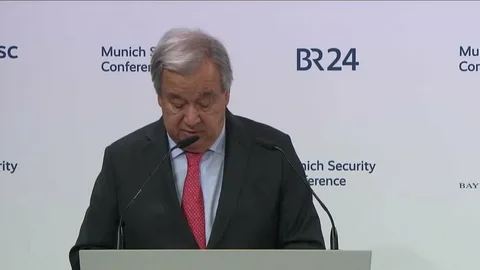
The current Secretary-General is António Guterres of Portugal, whose second term ends on December 31, 2026. That means the United Nations needs a new chief and fast.
On November 25, 2025, the Presidents of the General Assembly and the Security Council formally opened the 2026 Secretary-General race with a joint letter inviting nominations from member states. Since then, the process has moved quickly, drawing in candidates from across the globe.
Latin America is widely regarded as the region next in line for the top UN job, which explains why three of the four early candidates came from the Latin American and Caribbean Group. However, the convention is not binding, and Africa has also put forward a strong contender.
This is one of the most closely watched UN Secretary-General elections in recent memory and one of the few times that a woman leading the organization looks like a genuine possibility.
The Six Official UN Secretary-General Candidates 2026
Chilean Michelle Bachelet, Costa Rican Rebeca Grynspan, Senegalese Macky Sall, Ecuadorian Maria Fernanda Espinosa, Argentine Rafael Mariano Grossi, and Guyanese Carolyn Rodrigues-Birkett are all candidates for UN Secretary-General, with the decision expected on July 24, 2026.
Here is a closer look at each of them.
1. Michelle Bachelet Chile
Bachelet, 74, is the most prominent candidate in the field, with extensive UN credentials. She served as the first Executive Director of UN Women from 2010 to 2013 and as UN High Commissioner for Human Rights from 2018 to 2022, in addition to two terms as President of Chile.
A Chilean socialist who was brutally tortured by the regime of Augusto Pinochet, Bachelet became her country’s first woman president in 2006. She later served as the UN rights chief a sensitive role in which she drew criticism from Beijing for reporting on China’s alleged abuses of the Uyghur minority.
She calls for a more efficient, results-oriented United Nations and stronger preventive diplomacy. Her nomination was supported by Brazil, Mexico, and Chile, and she has drawn early expressions of backing from a wide range of member states pushing for a female Secretary-General.
2. Rafael Mariano Grossi Argentina
Argentine diplomat Rafael Grossi currently serves as Director General of the International Atomic Energy Agency, a position he has held since 2019. He has built his career around nuclear diplomacy and non-proliferation, arguing that his experience dealing with nuclear security challenges gives him valuable insight into today’s geopolitical landscape.
He supports ongoing UN reform efforts aimed at reducing bureaucracy, streamlining overlapping agencies, and improving efficiency without fundamentally restructuring the organization.
Observers say Grossi is still the most frequently mentioned front-runner, but he has not locked the race up. Other candidates like Grynspan and Rodrigues-Birkett also have significant numbers of admirers.
3. Rebeca Grynspan — Costa Rica
Grynspan, an economist, served as Second Vice President of Costa Rica from 1994 to 1998, Secretary-General of the Ibero-American General Secretariat from 2014 to 2021, and is the current Secretary-General of the UN Conference on Trade and Development. Her platform emphasizes gender equality, development finance reform, and multilateral economic governance.
Grynspan has called for a more decisive and less risk-averse United Nations and supports expanding representation on the Security Council, particularly for African and Latin American countries.
She is seen as a credible dark horse who could emerge as a compromise candidate if the front-runners encounter Security Council vetoes.
4. Macky Sall Senegal
Former Senegalese President Macky Sall led the country from 2012 to 2024 after previously serving as prime minister. His presidency was marked by major infrastructure development but was also overshadowed by political unrest, including protests over the imprisonment of opposition leader Ousmane Sonko and controversy surrounding an attempt to delay the 2024 presidential election. Senegal’s government has since endorsed his candidacy after initially withholding support.
Sall represents the African push for the Secretary-General role and brings strong diplomatic weight from his time as Chairperson of the African Union.
5. María Fernanda Espinosa Ecuador
Espinosa became the fourth woman in the seventy-three-year history of the United Nations to be elected President of the General Assembly. Besides her political career, she is also a poet and essayist.
She was nominated by Antigua and Barbuda on May 11, 2026. In her vision statement, Espinosa pledges to rebuild the UN to restore trust and deliver results by focusing on five pillars: peace and security, the development imperative, energy and digital transformation, closing the delivery gap, and institutional reform.
6. Carolyn Rodrigues-Birkett Guyana
Guyana’s Permanent Representative to the United Nations, Carolyn Rodrigues-Birkett, entered the race in June 2026. She previously served as Guyana’s foreign minister and has held several senior UN positions.
Rodrigues-Birkett is the youngest contender in the 2026 UN Secretary-General selection. She was nominated by Guyana on June 15, 2026, and has quickly gained attention for her fresh perspective on multilateral reform.
How Is the Next UN Secretary-General Selected?
The selection process is more transparent in 2026 than it has ever been in history but it is still ultimately decided by geopolitics.
The five permanent members of the Security Council China, France, Russia, the United Kingdom, and the United States play a decisive role in the selection process. A candidate must secure at least nine votes from the fifteen-member Security Council and must not be vetoed by any of the five permanent members. The General Assembly then formally appoints the candidate by a majority of its 193 member states.
Resolution 79/327, adopted in September 2025, refines the framework with more explicit rules, greater ethics oversight, and stronger visibility for the General Assembly. Candidates must disclose campaign financing, suspend their work in the UN system during campaigns, and engage in public dialogues.
This is a far cry from the secretive process used for decades, where the five permanent Security Council members controlled everything behind closed doors.
When Will the Next UN Secretary-General Be Elected?
Timing is critical, and the 2026 schedule is now in full motion.A UN Town Hall debate with all six candidates took place on July 23, 2026, in the General Assembly Hall. The Security Council formally began its process of considering candidacies on May 29, 2026.
In practice, the final decision is typically finalized between August and October. The General Assembly will then formalize the appointment in late 2026.
The tenth Secretary-General will be appointed by the General Assembly, on the recommendation of the Security Council, in accordance with Article 97 of the UN Charter. Assuming the role in January 2027, the newly appointed Secretary-General will serve a term of five years, which member states can renew for an additional five years.
The Gender Question: Will the UN Finally Elect a Woman?
One of the defining conversations around this race is gender. No woman has ever held the position of Secretary-General. With four of the six candidates being women, 2026 represents the strongest field of female candidates the UN has ever seen.
“The choice of Secretary-General will show whether the United Nations reflects the diversity of the eight billion people it serves,” said Annalena Baerbock, highlighting the importance of civil society participation.
Bachelet and Grynspan are the candidates who would fulfill that aspiration. However, the decision still rests with the Security Council’s five permanent members, and political calculations not just symbolism will drive the final outcome.
The Trump Factor: How the US Veto Shapes the Race
The Trump administration has signaled wariness about multilateral institutions and could use its Security Council veto to block any candidate it finds insufficiently aligned with US interests.
Many names are still circulating in UN corridors and the media, notably that of FIFA president Gianni Infantino, whom Trump would reportedly like to see take the helm of the UN, according to the New York Post. While Infantino has not formally entered the race, the speculation itself signals how volatile the selection dynamics remain.
The US position is widely seen as the biggest wildcard in this election. Without Washington’s approval or at least its abstention no candidate can succeed.
Global Impact: What Hangs in the Balance
The next Secretary-General will take office at one of the most turbulent moments in the UN’s eighty-year history. The organization is grappling with a severe funding crisis, a paralyzed Security Council, multiple active wars, and declining confidence from member states.
In 2027, the Security Council will begin working with a new Secretary-General amid heightened geopolitical tensions, financial constraints, and growing scepticism toward the current global governance structure.
Whoever leads the UN from January 2027 onward will need diplomatic skill, political resilience, and genuine moral authority to hold the world body together and push it forward.
What Happened in the 2016 Election? A Quick Comparison
The 2016 race was heralded as the UN’s democratic moment. For the first time, candidates presented vision statements and campaigned openly. The legitimacy this transparency conferred allowed António Guterres’s selection to be accepted without controversy, despite defying predictions of a first female or Eastern European Secretary-General.The 2026 process is even more structured. A dedicated UN webpage tracks every step, campaign financing must be disclosed, and civil society now plays a far more visible role than it did even a decade ago.
Frequently Asked Questions (FAQs)
Who is the next General Secretary of the UN?
As of July 2026, no final decision has been made yet. Six candidates are officially in the running: Michelle Bachelet of Chile, Rafael Mariano Grossi of Argentina, Rebeca Grynspan of Costa Rica, Macky Sall of Senegal, María Fernanda Espinosa of Ecuador, and Carolyn Rodrigues-Birkett of Guyana. The Security Council is expected to conduct its straw polling process between July and October 2026, with the General Assembly expected to formally appoint the new Secretary-General before the end of the year. The winner will take office on January 1, 2027. Grossi is widely cited as a front-runner, but the race remains highly competitive and the outcome could change depending on how the five permanent Security Council members align their votes.
Who is the current UN Secretary-General in 2026?
The current UN Secretary-General in 2026 is António Guterres of Portugal. He has served in the role since January 1, 2017, and is now completing his second five-year term, which ends on December 31, 2026. Guterres previously served as Prime Minister of Portugal and as UN High Commissioner for Refugees before being elected to lead the United Nations. During his tenure, he has focused on climate action, peacekeeping reform, and multilateral cooperation, though his two terms have also coincided with some of the most severe crises in the UN’s history, including the COVID-19 pandemic and the wars in Ukraine and Gaza. He will hand over leadership to his successor on January 1, 2027.
How many UN Under-Secretaries-General are there?
The United Nations currently has around 30 Under-Secretaries-General, though the exact number can shift depending on organizational restructuring, retirements, and new appointments. Under-Secretaries-General are the senior-most officials in the UN system below the Secretary-General and Deputy Secretary-General. They typically lead major UN departments, funds, programmes, and offices such as the Department of Political and Peacebuilding Affairs, the Office for the Coordination of Humanitarian Affairs, UN Women, and the UN Environment Programme. Each plays a critical role in the day-to-day functioning of the world body and reports directly to the Secretary-General. The incoming Secretary-General in 2027 is expected to review and potentially reshuffle these senior appointments as part of any broader reform agenda.