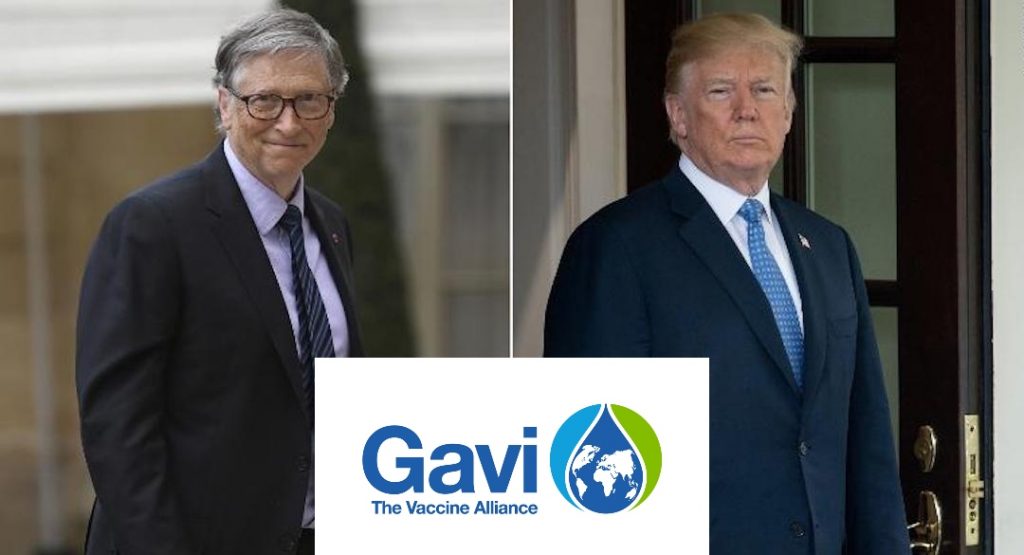

The United States has announced a significant shift in its global health funding policy. Washington released $600 million for Gavi, the Vaccine Alliance, but at the same time formally cut off the World Health Organization (WHO) from receiving any US government money channeled through this alliance. The move marks another sharp turn in America’s complicated relationship with international health institutions under President Donald Trump.
What Happened The Core Decision
The US Department of State and the Department of Health and Human Services released a joint statement confirming the decision. The statement made clear that the United States will not provide US government funding to the World Health Organization through Gavi. This is a direct financial blow to WHO, which has long relied on the Gavi Vaccine Alliance as one of its key operational partnerships in delivering immunizations to low-income countries. The decision follows months of pressure from the Trump administration on international health bodies to accept policy and structural reforms as a condition for continued American support.
Background What Is the Gavi Vaccine Alliance?
Many people searching “Gavi Vaccine Alliance full form” or “Gavi Vaccine Alliance wiki” may not be fully familiar with this body. Gavi, the Vaccine Alliance, is a global health partnership that was founded in 2000. Its core mission is to improve access to vaccines for children living in the world’s poorest countries. Gavi, the Vaccine Alliance headquarters is located in Geneva, Switzerland the same city that hosts the World Health Organization. The alliance brings together governments, the private sector, civil society, and international organizations to fund and coordinate immunization programs globally.
According to the Gavi Vaccine Alliance’s own data, it has helped vaccinate more than one billion children since it was founded. The Gavi Vaccine Alliance CEO and leadership team work in close coordination with the WHO, UNICEF, and the Bill and Melinda Gates Foundation. The alliance receives significant funding from donor governments, and the United States has historically been one of its largest contributors. People searching for Gavi Vaccine Alliance jobs will find that the organization employs hundreds of professionals across public health, finance, policy, and operations.
The Reform Conditions What Did the US Demand?
The Trump administration did not release the $600 million without strings attached. The State Department confirmed that Gavi agreed to work toward replacing mercury-containing vaccines with mercury-free alternatives, in partnership with its board and partner countries. This demand aligns with Health and Human Services Secretary Robert F. Kennedy Jr.’s longstanding concerns about certain vaccine additives, particularly thimerosal, a mercury-based preservative used in some multi-dose vaccine vials. The administration tied this public health condition directly to the renewal of US funding, making the agreement one of the most politically charged moments in the Gavi Vaccine Alliance’s history.
US Republican Senator Susan Collins, who had actively pushed for the reinstatement of US funding for the global program, welcomed the announcement. She had argued that cutting Gavi off entirely would harm millions of children in developing countries and damage America’s standing as a global health leader.
Gavi Vaccine Alliance Controversy A History of US-WHO Tensions
This latest move does not exist in a vacuum. The Gavi Vaccine Alliance controversy surrounding US involvement goes back to at least 2020, when Trump first targeted WHO funding during the COVID-19 pandemic. At the time, Trump accused the WHO of promoting Chinese disinformation about the coronavirus and ordered a temporary halt to US contributions. The United States was then the single largest donor to WHO, contributing more than $400 million in 2019 alone roughly 15 percent of the organization’s total budget.
When President Joe Biden took office in January 2021, he reversed those decisions and restored US funding. However, on the very first day of his second term, January 20, 2025, Trump once again announced that the US would withdraw from the WHO and suspended all American contributions. Experts and public health professionals widely criticized the move, describing it as ideologically driven rather than based on strategic or evidence-based health policy considerations.
Now, in July 2026, by cutting WHO off from Gavi vaccine alliance money, Trump has extended that pressure campaign into one of the most critical vaccine financing mechanisms in the world.
Expert Voices What Are Officials Saying?
Public health analysts and former WHO officials have expressed serious concern. Specialists argue that the WHO plays a critical coordination role within the Gavi Vaccine Alliance framework, and excluding it from US-channeled funding creates significant operational disruption. Removing WHO from Gavi’s funding pipeline does not just hurt the organization it hurts the children and communities on the ground that depend on the programs WHO helps coordinate.
Senator Collins, while welcoming the funding restoration, acknowledged the political complexity of the situation. Her public statement reflected a cautious optimism relief that the $600 million would flow, but recognition that the conditions attached and the exclusion of WHO represent a significant departure from how the alliance has operated for more than two decades.
Global Impact Who Gets Harmed?
The WHO uses its funding to support programs that prevent and treat polio, tuberculosis, HIV, malaria, measles, and numerous other diseases primarily in countries that cannot afford to provide adequate healthcare on their own. It also operates in active conflict zones, including parts of Gaza, Sudan, and the Democratic Republic of the Congo. The WHO’s total budget is approximately $3.4 billion roughly a third of what the US Centers for Disease Control and Prevention receives in annual core funding. Any reduction in WHO’s operational capacity has cascading effects on the world’s most vulnerable populations.
Countries that receive Gavi vaccines are primarily low- and lower-middle-income nations across sub-Saharan Africa, South Asia, and parts of Southeast Asia. Nations such as Nigeria, Ethiopia, Pakistan, Bangladesh, and the Democratic Republic of the Congo are among the largest beneficiaries. Cutting WHO out of the Gavi funding equation risks slowing down vaccine delivery in these regions, where WHO technical staff on the ground play an essential role in health system coordination.
Looking Ahead What Happens Next?
The announcement leaves several questions unresolved. It remains unclear how Gavi the Vaccine Alliance will restructure its partnerships to compensate for WHO’s exclusion from US funding channels. The alliance’s board will need to determine how to absorb the operational gap without compromising ongoing immunization programs. The mercury-free vaccine transition demanded by the Trump administration will also take time and significant coordination with manufacturers and partner governments.
What is clear is that the Gavi Vaccine Alliance sits at a difficult crossroads. The $600 million is a genuine financial lifeline. But the political conditions attached, and the formal exclusion of WHO, signal that America’s relationship with multilateral global health institutions will remain volatile and unpredictable as long as the current administration remains in power.
Frequently Asked Questions (FAQs)
What is the Gavi Vaccine Alliance?
Gavi, the Vaccine Alliance, is an international organization founded in the year 2000 with the specific purpose of improving access to vaccines in the world’s poorest countries. The full form “Gavi” originally stood for the Global Alliance for Vaccines and Immunization, though the organization now operates under the name Gavi, the Vaccine Alliance officially. It operates as a public-private partnership that brings together donor governments, the pharmaceutical industry, civil society organizations, UNICEF, the World Health Organization, and the Bill and Melinda Gates Foundation. Since Gavi, the Vaccine Alliance was founded, it has helped vaccinate more than one billion children and is widely credited with significantly reducing child mortality rates in low-income countries by making vaccines available at a fraction of their market cost.
What countries receive Gavi vaccines?
Gavi vaccines are provided to low-income and lower-middle-income countries that meet the organization’s eligibility criteria based on gross national income per capita. The largest recipient countries are found in sub-Saharan Africa and South Asia, and include nations such as Nigeria, Ethiopia, the Democratic Republic of the Congo, Pakistan, Bangladesh, Tanzania, Kenya, Uganda, and Myanmar, among many others. In total, Gavi supports immunization programs in more than 70 countries worldwide. The vaccines provided through the alliance cover diseases such as polio, measles, typhoid, yellow fever, hepatitis B, and pneumococcal disease, among others. Countries that receive Gavi support are required to co-finance part of the vaccine cost, with the expectation that they will gradually transition to full self-financing as their economies grow a model the organization calls the “graduation” process.
Where is Gavi, the Vaccine Alliance headquarters?
The Gavi Vaccine Alliance headquarters is located in Geneva, Switzerland. This places it in the same city as the World Health Organization, the International Labour Organization, and numerous other major international bodies, making Geneva a central hub for global health diplomacy. Gavi maintains a small additional office presence in Washington, DC, which is particularly important for managing its relationship with the US government and engaging with Congress on funding matters. The Geneva headquarters houses the majority of the alliance’s permanent staff, including the Gavi Vaccine Alliance CEO and the senior leadership team who oversee strategic planning, donor relations, vaccine procurement, and country program management.