

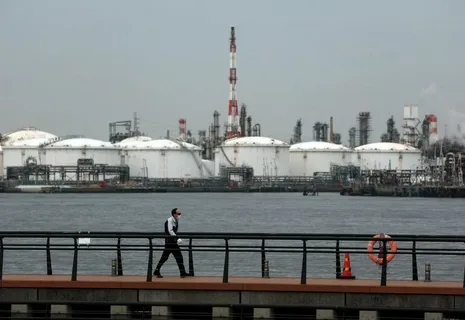

Japan has received its first shipment of Canadian crude in over a year, marking a significant shift in Japan oil imports by country as Tokyo scrambles to reduce its historic reliance on Middle Eastern supply routes through the Strait of Hormuz. The move comes as ongoing conflict in the Gulf has disrupted tanker traffic and pushed prices sharply higher.
Background
Japan has almost no domestic oil production of its own, making it one of the most import-dependent major economies in the world. Japan oil production sits at a fraction of national demand, historically covering less than half a percent of daily consumption, largely through refinery processing gains rather than actual extraction from Japanese oil fields.
Because of this, Japan oil imports by year have consistently ranked among the highest globally, with the country recognized as the world’s fourth-largest crude oil importer. For decades, the overwhelming majority of that crude has traveled through a single chokepoint: the Strait of Hormuz, which normally carries around 90 percent of Japan’s oil supply from Middle Eastern producers.
That heavy dependence became a serious vulnerability once fighting between the United States, Israel, and Iran escalated earlier this year. When Iranian forces threatened to close the strait, shipping companies paused transits, and Japan oil imports per day from the region dropped sharply, forcing Tokyo to look elsewhere for supply.
Details
The first Canadian shipment since 2025 left Vancouver aboard the Freedom Glory, a Marshall Islands-flagged tanker capable of carrying up to 750,000 barrels, loaded with crude from the Trans Mountain pipeline. Japan’s largest refiner, Eneos, purchased the cargo, according to tracking firm Kpler.
The Trans Mountain pipeline, which moves up to 890,000 barrels of crude daily from Alberta to a marine terminal in Burnaby, British Columbia, has become central to Asia’s efforts to diversify away from Hormuz-dependent supply. Exports to Asia via the pipeline accounted for nearly 77 percent of total oil shipments from Vancouver this year, up from about 51 percent in 2024.
Japan isn’t alone in this shift. India, Malaysia, and Singapore have all resumed purchases of Trans Mountain crude since the Iran war began, reflecting a broader regional pattern of countries hedging against future Hormuz disruptions. Canadian crude already accounts for close to 60 percent of US crude oil imports, giving Ottawa an established track record as a reliable alternative supplier.
The economic toll of the disruption has already shown up in official forecasts. Tokyo cut its growth outlook for the year to 0.9 percent from 1.3 percent, citing higher Japan Crude Oil price levels as a direct drag on the broader economy. Japan’s government also released roughly 80 million barrels from its strategic oil reserves, equivalent to about 45 days of domestic demand, to cushion the shock while new supply routes are established.
Unlike Middle Eastern suppliers, Canada’s Pacific coast infrastructure offers a route that bypasses not just Hormuz but other global chokepoints as well, including the Strait of Malacca and waters near the South China Sea. Combined with the nearby LNG Canada export terminal in Kitimat, which shipped its first cargo in 2025, Canada has positioned itself as a geographically safer long-term alternative for Asian energy buyers.
Quotes
Kpler senior market analyst Richard Ro said Japan’s renewed purchases of Trans Mountain crude highlight Canada’s growing role in Asia’s evolving import strategy as refiners diversify away from Middle East Gulf supplies.
Japan’s ambassador to Canada, Kanji Yamanouchi, said that before the Trans Mountain pipeline existed, there wasn’t much possibility for Japan to import Canadian crude oil due to a lack of infrastructure, but that the completed pipeline changed that picture entirely.
Yamanouchi also described Canada’s broader energy ambitions, saying Canada has enormous intentions to become an energy superpower and that Japan views the country as a close and reliable partner as it works to diversify its crude oil sources beyond any single region.
Impact
The shift carries significant implications for how Japan oil imports by country are likely to be distributed in the years ahead. If the current trend holds, Canada could become a meaningfully larger source of crude for Japan, reducing the outsized influence that Saudi Arabia and the United Arab Emirates have historically held over Tokyo’s energy security.
Regionally, other Asian economies dependent on Hormuz shipping routes may well follow Japan’s lead, accelerating investment in Pacific-facing pipeline and LNG infrastructure across Canada’s west coast. Over time, that could reshape global oil trade flows that have stayed relatively stable for decades.
For Canada, the renewed Japanese demand offers an opportunity to diversify its own customer base beyond the United States, particularly at a time when Washington has imposed new tariffs on Canadian products. Canadian Prime Minister Mark Carney has said he does not intend to use the country’s oil exports as leverage in trade talks with the US, framing Canada instead as a dependable long-term supplier for allies like Japan.
Conclusion
With the Strait of Hormuz crisis still unresolved and Japan Crude Oil price pressures still weighing on the domestic economy, Tokyo appears set to continue expanding its purchases of Canadian crude in the months ahead. Japan is also expected to formalize a broader energy security strategy in August that places greater emphasis on supply diversification and fossil fuel reliability.
Whether this shift becomes a lasting change to Japan oil imports by country, or simply a temporary hedge until Hormuz shipping stabilizes, will depend largely on how the wider Middle East conflict develops in the coming months.
Frequently Asked Questions
What are Japan’s top 3 imports?
Japan’s largest imports by value typically include mineral fuels such as crude oil, LNG, and coal, followed by machinery and electrical equipment, and then chemical products including pharmaceuticals and plastics. Crude oil consistently ranks as one of Japan’s most critical imports given the country’s almost total dependence on foreign energy sources, with the Middle East historically supplying the overwhelming majority of that crude before recent diversification efforts toward Canada and other regions gained momentum. Japan is also the world’s largest importer of liquefied natural gas, underscoring how central energy imports are to the country’s overall trade profile.
Why does Japan import so much oil?
Japan imports the vast majority of its oil because the country has almost no significant domestic oil fields or reserves of its own, unlike major producing nations in the Middle East or North America. Japan oil production has historically covered less than one percent of the country’s daily consumption, meaning nearly all of the fuel used to power its industries, vehicles, and households must come from abroad. This near-total dependence on imported crude has long been viewed as a core vulnerability in Japan’s energy security planning, which is why the country maintains large strategic oil reserves and has recently accelerated efforts to diversify its supplier base away from any single, geopolitically unstable region.
How much oil does Japan import every year?
Japan imported around 147.2 million metric tons of crude oil in 2024, translating to roughly 2.5 million barrels per day, according to Japanese government trade data. This figure has been gradually declining over the past decade due to a shrinking population, slower economic growth, improved energy efficiency, and a modest increase in nuclear power generation, even as oil remains the country’s largest single source of primary energy. Despite the decline, Japan continues to rank among the world’s top oil importers, with the majority of its supply still arriving from Middle Eastern producers, though that share is now shifting as new sources like Canadian crude become more accessible.