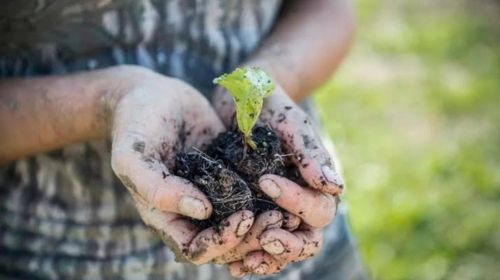
LONDON: Getting your hands dirty by touching soil, moss, grass and trees may offer more than a connection with nature. Research suggests that regular contact with natural materials can increase the diversity of microbes living on the skin and may also support the immune system.
For many people, a walk in the park is mainly a chance to enjoy fresh air, greenery, flowers and birdsong. But researchers say the health benefits of spending time outdoors may be greater when people physically interact with nature rather than simply looking at it.
Mira Grönroos, an ecologist and nature-health researcher at the Finnish Environment Institute, investigated what happens when people come into direct contact with natural materials.
In one experiment, participants rubbed their hands with soil, peat and moss for about 20 seconds. Researchers found that the abundance and variety of microbes on their skin increased, even after participants rinsed their hands with tap water.
The findings suggest that touching soil and natural materials can quickly introduce a broader range of microorganisms to the skin.
Although the idea of having more bacteria on the skin may initially sound unpleasant, researchers say microbial diversity can be beneficial. A healthy mixture of microorganisms can help prevent potentially harmful bacteria from becoming dominant.
The skin is home to a complex community of bacteria and other microorganisms known as the skin microbiome. Maintaining a diverse microbiome is increasingly viewed as an important part of overall health.
Research indicates that exposure to diverse environmental microbes may help strengthen interactions between the skin and the immune system. This means that touching soil, plants and other natural surfaces could have effects that extend beyond the skin.
However, the researchers caution that these changes may not last indefinitely. Grönroos found that the skin microbiome could return relatively quickly to a state similar to its previous condition.
That suggests frequent contact with nature may be more important than a single brief encounter.
Children playing in mud provide clues
The potential benefits of natural microbial exposure are also being investigated among children.
At Aurinkolinna daycare centre in central Finland, children spend several hours outdoors each day in a wooded environment. They play among bushes and trees, build sandcastles, climb, splash through puddles and come into regular contact with soil and woodchips.
Researchers are studying whether this repeated exposure to natural environments can influence children’s health.
The daycare centre is among 43 Finnish daycare centres participating in the Vahvistu research project. Scientists are examining microbes found on children’s skin, saliva and faeces, while also analysing blood and hair samples to monitor changes in their immune systems over time.
Forest floors may increase healthy bacteria
The research builds on an earlier study led by environmental scientist Marja Roslund.
Researchers introduced elements of a forest floor into a daycare environment, including peat and planting boxes. They then monitored children’s skin, saliva and gut bacteria after regular exposure to the natural environment.
Compared with children who spent their time in a paved outdoor yard, those who played on the forest floor showed greater microbial diversity on their skin.
The difference remained detectable a year after the intervention, highlighting the possibility that repeated exposure to diverse natural environments could have longer-term effects.
Roslund has compared a healthy microbial community to a balanced society in which harmful organisms have less opportunity to dominate.
Healthy skin could support wider health
The importance of the skin extends beyond preventing infections and maintaining its physical barrier.
Researchers are increasingly investigating links between skin health and broader body functions, including immune regulation, cardiovascular health, hormonal activity and cognitive processes.
One area receiving particular attention is the relationship between environmental microbes and the immune system.
In another experiment, children played in a sandbox containing microbially diverse soil. A comparison group used a similar-looking sandbox with lower microbial diversity.
Children exposed to the richer microbial environment developed greater diversity in certain bacteria on their skin. Researchers also observed changes in immune-related blood markers called cytokines, which play an important role in regulating immune responses.
The findings do not mean people should abandon basic hygiene or deliberately expose themselves to potentially dangerous contaminants.
Instead, researchers are highlighting the potential value of regular, safe contact with natural environments.
Simple activities such as gardening, sitting on grass, touching tree bark, walking through natural areas or allowing children to play outdoors can increase contact with the microorganisms found naturally in soil and plants.
For people who normally experience nature only through their eyes, the research suggests there may be another reason to occasionally stop, reach out and touch the natural world.
A few seconds of contact may temporarily change the microbes living on the skin, while regular exposure to biodiverse environments could potentially have broader effects on microbial and immune health.