ISLAMABAD: Pakistan and Turkmenistan have agreed to hold a meeting of the steering committee for the TAPI gas pipeline, giving fresh political momentum to a project that has been discussed for decades. The decision followed talks between Deputy Prime Minister and Foreign Minister Ishaq Dar and Turkmenistan’s Foreign Minister Rashid Meredov in Islamabad on Tuesday. Both sides also signed three documents covering institutional cooperation, diplomatic engagement and tourism.
Background of the TAPI Gas Pipeline
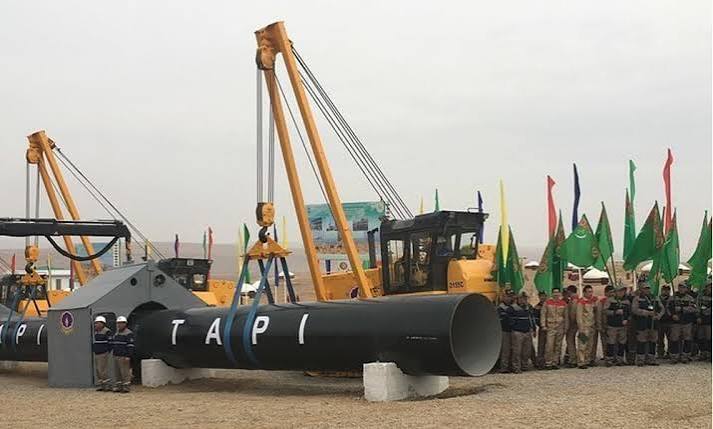
The TAPI gas pipeline is designed to carry natural gas from Turkmenistan through Afghanistan and Pakistan to India. The route is expected to run about 1,800 kilometres, starting at the Galkynysh gas field, which is described as the second largest in the world. In Afghanistan it passes through Herat and Kandahar, and in Pakistan through Quetta and Multan, before ending at Fazilka in India.
The project is planned to deliver around 33 billion cubic metres of gas every year. It is divided into two phases. The first is a free flow phase estimated at between five and six billion dollars, and the second adds compressor stations costing at least 1.9 billion dollars.
Pakistan and Turkmenistan signed a joint implementation plan in June 2023 to move the project toward execution. In September 2024, Afghanistan said it would begin work on its section of the route. Even so, progress has repeatedly slowed because of security concerns inside Afghanistan, which has remained the biggest question mark over the pipeline.
Meredov was in Pakistan for the 30th meeting of the Economic Cooperation Organisation Council of Ministers, held on November 15 and 16. The bilateral talks took place on the sidelines of that regional gathering, which added weight to the discussions on energy and connectivity.
Details of the Islamabad Talks
The discussions were held during the 6th session of the Pakistan and Turkmenistan Joint Intergovernmental Commission. Dar told reporters at a joint press stakeout that both countries recognised the importance of political engagement among all participating nations on the technical and commercial aspects of the pipeline. Meredov confirmed that the two sides had agreed to convene the steering committee, although no date was announced.
Beyond gas, the two foreign ministers reviewed a wide range of bilateral issues. Trade, investment and regional connectivity featured prominently, and Dar said both sides discussed progress on a bilateral transit trade framework and the search for commercially viable transport links. They also welcomed closer contact between business communities and chambers of commerce.
The ministers also looked at the proposed electricity transmission project linking Turkmenistan, Afghanistan and Pakistan, along with a fibre optic communications link attached to it. Both sides stressed that more assessment is needed on its technical and commercial viability before any final decisions are taken.
Meredov said the talks covered links between the seaports of Chabahar and Gwadar, as well as the prospect of railway connections running through Afghanistan. He said particular attention was paid to the viability of rail routes, tariffs and border procedures. Turkmenistan also plans to arrange a state visit to Islamabad next year.
Agreements Signed
Pakistan and Turkmenistan signed the protocol of the 6th JIC session and a Programme of Cooperation between the two foreign ministries for the period 2026 to 2030. They also signed a memorandum of understanding on tourism cooperation. Pakistan’s Foreign Office said these documents reflect a shared commitment to regular diplomatic engagement and stronger ties between the two peoples.
Other Areas of Cooperation
Dar said the discussions also touched on agriculture, industry, culture, higher education, information technology, health and financial services. These areas received less attention than energy and transport, but they show that both governments want a broader relationship than a single pipeline project.
What Officials Said
Describing the atmosphere of the meeting, Dar called the talks cordial and constructive, and said they reflected longstanding friendship between the two countries. He added that Pakistan respects Turkmenistan’s policy of permanent neutrality and values its role in regional and international forums. That message matters in Ashgabat, where neutrality is a central part of foreign policy.
Meredov focused on diplomacy in his remarks. He said he stressed the central role of dialogue, respect for international law and the principles of the United Nations Charter in dealing with regional and global challenges. His comments came at a time when several conflicts are shaping the wider neighbourhood, including the tensions linked to Iran that Pakistan Chronicle has covered in its report on US strikes on Iran and fears of war returning.
Impact on Pakistan and the Region
For Pakistan, the TAPI gas pipeline has long been presented as a possible source of piped gas to support industry, power generation and households. The country faces recurring energy shortages, and supporters of the project argue that a long term supply from Central Asia could ease that pressure. However, the commercial terms, including pricing, will matter as much as the political will shown this week.
For Turkmenistan, the pipeline offers a chance to reach new customers in South Asia and reduce its dependence on a small number of export markets. For Afghanistan, it could bring transit revenue and a role as a regional energy corridor, provided security conditions allow construction to move ahead safely.
The talks on Gwadar, Chabahar and rail links also point to a wider ambition of connecting Central Asia with the Arabian Sea. Pakistan has regularly promoted itself as a gateway for landlocked Central Asian states, a theme that also appears in Pakistan Chronicle’s analysis of Pakistan’s regional diplomacy and military restraint. Water and resource disputes across the region add another layer, as seen in the debate over the Indus Waters Treaty.
Conclusion: What Happens Next
The agreement to convene the steering committee is a procedural step, but it signals that Islamabad and Ashgabat want to keep the project alive. The real test will be whether all four partner countries can align on technical plans, financing and security guarantees. Observers will watch for an announced date for the committee meeting and for any movement on the Afghan section of the route.
The planned state visit by Turkmenistan’s leadership next year could provide another opportunity to turn words into firm commitments. Until construction milestones are visible on the ground, the TAPI gas pipeline will remain a project defined as much by promise as by progress. For more updates on foreign policy and energy, readers can follow the National and International sections of Pakistan Chronicle.
Frequently Asked Questions About the TAPI Gas Pipeline
What is the TAPI gas pipeline?
TAPI stands for Turkmenistan, Afghanistan, Pakistan and India. It is a planned natural gas pipeline of roughly 1,800 kilometres that would carry gas from Turkmenistan’s Galkynysh field through Afghanistan and Pakistan to the Indian city of Fazilka. The project is expected to move about 33 billion cubic metres of gas every year once it is fully operational. It has been under discussion for many years and is often described as one of the most important regional energy projects in South Asia.
What did Pakistan and Turkmenistan agree on in Islamabad?
The two countries agreed to convene a meeting of the steering committee for the TAPI gas pipeline, as confirmed by Turkmenistan’s Foreign Minister Rashid Meredov. They also signed the protocol of the 6th Joint Intergovernmental Commission session, a Programme of Cooperation between their foreign ministries for 2026 to 2030, and a memorandum of understanding on tourism. These steps are meant to strengthen regular diplomatic contact and people to people ties. No date has been announced for the steering committee meeting yet.
Why has the TAPI gas pipeline been delayed for so long?
The main reason is security. Large parts of the planned route run through Afghanistan, where conflict and instability have made construction difficult and financing uncertain. Commercial questions such as gas pricing and the cost of compressor stations have also played a role. Although Pakistan and Turkmenistan signed an implementation plan in 2023 and Afghanistan said in 2024 that it would start work, progress has remained slow and uneven.
How much will the TAPI gas pipeline cost?
The project has two phases. The free flow phase is estimated at between five and six billion dollars, while installing compressor stations in the second phase would cost at least 1.9 billion dollars. Earlier reports have indicated that Turkmenistan would carry most of the financial burden through its state energy company, with smaller shares held by the other three countries. Final costs depend on technical decisions, security arrangements and financing agreements still to be settled.
How could the TAPI gas pipeline help Pakistan?
If completed, the pipeline could supply piped natural gas to Pakistan’s industry, power plants and homes at a time when the country struggles with energy shortages. It could also diversify Pakistan’s energy sources and strengthen its position as a transit and trade partner for Central Asia. The benefits will depend heavily on the final gas price, delivery timelines and the security of the route, all of which still need to be settled among the partner countries.