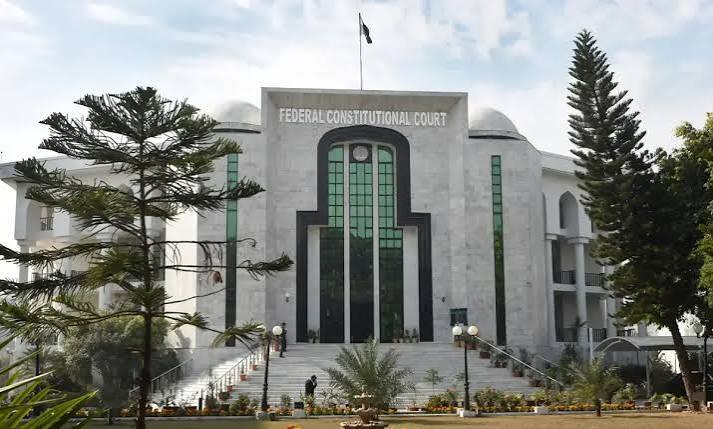
ISLAMABAD: The Federal Constitutional Court has strongly criticised the Lahore Development Authority for pursuing a long legal fight against the Rashid Minhas family. The court dismissed the authority’s appeal in a Gulberg III property dispute and directed it not to waste public money on pointless cases against individuals. The judgment was released on Tuesday, November 17, 2026.
Background of the Rashid Minhas Family Property Dispute
Pilot Officer Rashid Minhas of the Pakistan Air Force is remembered as one of the nation’s most celebrated heroes. He died in August 1971 after preventing the hijacking of his trainer aircraft, and he was posthumously awarded the Nishan-i-Haider, the country’s highest military gallantry award. His name is taught to schoolchildren and honoured at national events every year.
The legal dispute involves his real brother, Farooq Minhas, and a 14 marla plot in Gulberg III, Lahore. A consent decree was passed in Farooq Minhas’s favour on May 7, 2005, and that decree became the foundation of everything that followed. For years, the Rashid Minhas family has had to defend that outcome in one court after another.
The matter reached a new stage when the LDA director general challenged a Lahore High Court judgment dated March 5, 2018. That judgment had gone in favour of Farooq Minhas. The authority then took its objections to the highest constitutional forum, which has now settled the question.
Details of the FCC Judgment
A three judge bench heard the appeal. It was led by Justice Ali Baqar Najafi, who wrote the judgment, along with Justice Rozi Khan Barrech and Justice Syed Arshad Hussain Shah. The bench examined the long paper trail behind the plot and found the LDA’s position unconvincing at nearly every point.
What the LDA Argued
During execution of the 2005 decree, the LDA objected that the plot was evacuee property that it had acquired for the Gulberg III scheme. It said its predecessor, the Lahore Improvement Trust, had paid the award amount to the custodian of evacuee property and taken possession on December 24, 1955.
The authority also pointed to a notification dated August 6, 1953, and an award announced on October 30, 1962. It argued that the earlier owners, Nawab Mirza and Maqsooda Begum, never received any exemption or adjustment. It further questioned a 1976 sale deed and a transfer document issued in 1966, calling the transaction contrary to policy.
Why the Courts Rejected the Objections
The FCC noted that the executing court, the revisional court and the Lahore High Court had all rejected these objections already. In its view, the appeal was an attempt to reopen findings that had become final. The consent decree, it observed, was passed on the basis of the LDA’s own “no objection.”
The bench also found no evidence that the central government had transferred the evacuee portion of the land to the Lahore Improvement Trust through a 1951 notification, or that any payment had been made to the trust or the custodian. The court further relied on an August 17, 1980 decision of the Vigilance Commission, which the authority had accepted and acted upon. That decision said verified transfer orders would be honoured and only development charges would be recovered.
The judgment added that the Supreme Court had earlier dismissed an LDA petition on the same land, holding that the authority had no ownership rights because the Settlement Department had already transferred it to the occupants. The FCC dismissed the present appeal as devoid of merit and refused leave to appeal.
What the Judges Said
Justice Najafi expressed regret that the family of a national hero had been pulled into prolonged litigation over a property matter. In his observations, the family was living with distress caused by the authority’s decision to keep taking them to court over a plot that had already been settled in law.
The court chose not to impose costs on the LDA. Instead, it directed the director general to make sure the authority does not drain its resources or public money on cases it described as “frivolous, vexatious and obnoxious.” That instruction applies to litigation against individuals in general, which gives the judgment a reach beyond this one dispute.
Impact of the Ruling
For the Rashid Minhas family, the verdict brings legal closure after a dispute that began with a decree in 2005. The Lahore High Court, the Supreme Court and now the Federal Constitutional Court have all reached the same practical result. The family can reasonably expect the matter to end here, since no further appeal remains open on the question.
For public bodies, the ruling is a clear warning about the cost of repeated appeals. Taxpayer money pays for every round of litigation, and the court has now linked that spending to institutional accountability. Residents of Lahore who face long disputes with development authorities may also read the judgment as a reminder that settled decrees carry real weight. Readers following similar questions of accountability can find more on the National desk of Pakistan Chronicle and in our Punjab coverage.
The case also carries symbolic weight. Pakistan honours its armed forces and their martyrs, a theme explored in our analysis of Pakistan’s armed forces, military strength and regional diplomacy. Many citizens will feel that the family of a Nishan-i-Haider recipient should not have spent years defending a property they had already won. The wider principle of answerability, discussed in our piece on criminal accountability and the Rabia Ahsan case, applies to public institutions as much as to individuals.
Conclusion
The Federal Constitutional Court has ended a long running contest between the LDA and the Rashid Minhas family with a firm message about restraint. The plot dispute, rooted in a 2005 consent decree and repeatedly upheld by lower courts, is now settled. What remains is the direction to the LDA’s director general to stop spending public funds on weak cases.
The next thing to watch is how the authority responds in practice. If it follows the court’s guidance, similar disputes involving individuals may be handled with more care and fewer appeals. For the Rashid Minhas family, the judgment offers the closure they have waited a long time to receive.
FAQs
What did the Federal Constitutional Court decide in the Rashid Minhas family case?
The court dismissed the LDA’s appeal against a Lahore High Court judgment that favoured Farooq Minhas, the real brother of Pilot Officer Rashid Minhas. It held that the authority’s objections had already been rejected by three lower courts and that the decree had become final. The bench also directed the LDA’s director general not to waste public money on frivolous litigation against individuals.
Who was Rashid Minhas and why is his family respected?
Rashid Minhas was a Pakistan Air Force Pilot Officer who died in August 1971 while stopping the hijacking of his aircraft. He received the Nishan-i-Haider, the country’s highest military gallantry award, after his death. His sacrifice remains part of the national story, which is why many people felt the long legal pressure on his family was unfair.
What was the property dispute about?
The dispute concerned a 14 marla plot in Gulberg III, Lahore. A consent decree in favour of Farooq Minhas was passed on May 7, 2005. The LDA later claimed the land was evacuee property acquired for its housing scheme. The courts found no proof of the transfer or payment the authority described, and they upheld the decree.
Why did the court not impose costs on the LDA?
Justice Ali Baqar Najafi wrote that, instead of imposing costs, the court preferred to direct the LDA’s director general to protect the authority’s resources. Costs would also have been paid from public funds. The instruction therefore aims to prevent future waste while still sending a clear message about frivolous and vexatious cases.
Can the LDA challenge this judgment again?
The FCC refused leave to appeal, which means the authority’s appeal was dismissed at the final stage. The Supreme Court had already rejected an earlier LDA petition on the same land. In practical terms, the dispute is closed and the Rashid Minhas family can treat the plot as settled in their favour.