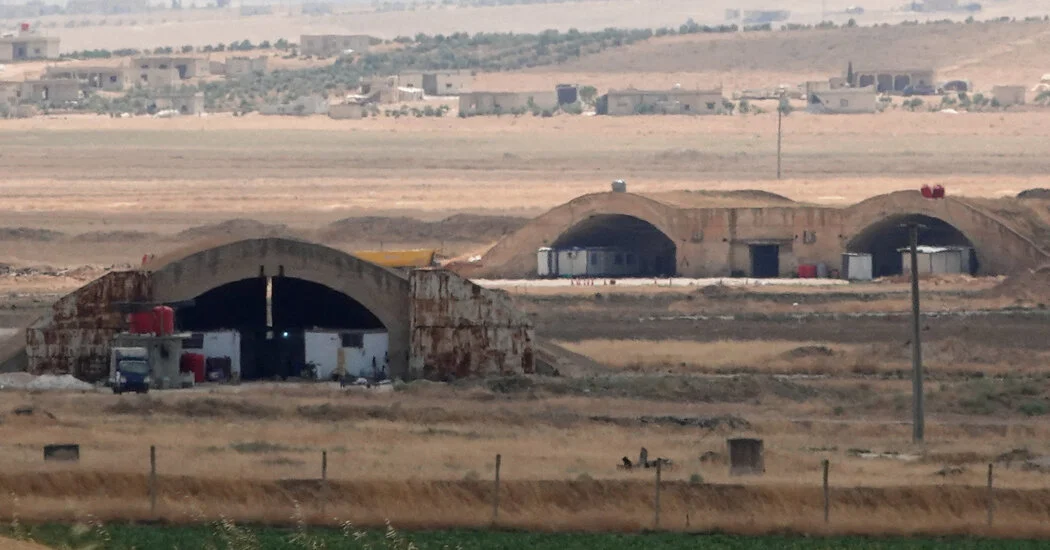
Israel struck a military airbase in Syria’s northwestern Idlib province this week, and the region has not settled down since. The target was Abu al-Duhur, a base near Aleppo, and Israeli officials say the strike was meant to stop Turkish troops from setting up there. Damascus, Ankara, and Washington have all responded, and each has a different version of what actually happened. Anyone searching for Syria latest news right now is going to find a fast-moving story. Eight strikes hit the base’s runway and storage facilities. Syrian state media reported damage but no casualties. What comes next is still unclear, and that uncertainty is exactly why this attack in Syria today matters beyond the immediate headlines.
Background
Syria has been rebuilding a new political order since December 2024, when Bashar al-Assad’s government collapsed and Ahmed al-Sharaa’s forces took control of Damascus. That transition opened space for outside powers to jockey for influence, and Turkey and Israel have ended up on opposite sides of that contest. Turkey has close military ties with the new Syrian government and has been helping train and equip its forces. Israel, for its part, has carried out repeated strikes inside Syria since Assad’s fall, arguing it needs to prevent weapons and military infrastructure from ending up in hostile hands. Talks brokered by the United States between Israel and Syria on a broader security arrangement have dragged on for more than a year without a deal. That’s the backdrop for the current situation in Syria. Neither Turkey nor Israel trusts the other’s intentions in the country, and both have been testing how far they can push.
Details
Early Tuesday, Israeli jets carried out eight strikes on the Abu al-Duhur airbase in Idlib province. Israel’s government said the base was on the verge of hosting a Turkish military deployment, something it considers a direct violation of an informal security understanding it had reached with Damascus. Prime Minister Benjamin Netanyahu addressed the strike directly in a podcast interview the following day. He said Israel had already warned Turkey against building up forces in Syria and described the message as blunt: a single word, “Don’t,” delivered before the strike. He added that Israel would not accept a Turkish military presence that “descends south because it threatens us.”
Syria’s Foreign Minister, Asaad al-Shaibani, rejected Israel’s justification outright. He called the strikes an act of aggression and said they amounted to an unjustified provocation and a violation of Syrian sovereignty. A source in Syria’s Foreign Ministry also denied Israeli claims that Damascus had been offered a diplomatic off-ramp before the attack, disputing a report that said Israel tried to reach an understanding through indirect channels first. Turkey’s response was equally sharp. A Turkish source told reporters that the country had no military presence on the base at the time of the strike and accused Israel of manufacturing a pretext to justify bombing a neighboring country. Turkey’s Foreign Minister, Hakan Fidan, had already argued days earlier that Israeli strikes are one of the biggest destabilizing forces working against Syria’s recovery. Anyone tracking Syria on a map will notice Abu al-Duhur sits in a strategically sensitive corridor near Aleppo, close to routes that matter for both Turkish and Israeli military planning. That location is a big part of why this particular base became a flashpoint rather than just another target on a long list.
Quotes
Netanyahu’s office issued a formal statement defending the operation. It said Israel and Syria had an informal understanding on security matters, and that Syria was “on the verge of breaching” that understanding by allowing Turkish forces to deploy at the airbase. The statement added that Israel had repeatedly warned Damascus that such a deployment would threaten Israeli security. Israel’s Defense Minister, Israel Katz, went further in public remarks, accusing Turkish President Recep Tayyip Erdogan of dragging his country into what Katz called “dangerous adventures” in Syria. Katz said Israel would not allow any actor to threaten its security, regardless of who that actor is. On the American side, US Ambassador Tom Barrack criticized the strike as an “unnecessary escalation,” a rare public rebuke of an Israeli military action from a senior US diplomat involved in the region. Barrack’s comment reflects Washington’s discomfort with a fight breaking out between two of its own regional partners.
Impact
This isn’t an isolated incident. Israel has carried out hundreds of strikes inside Syria since Assad’s government fell, and this attack fits a pattern of trying to shape the military balance in the country before the new government fully consolidates power. For US Army news in Syria and broader US strategy in the region, that pattern is a headache, since Washington needs cooperation from both Turkey and Israel to keep other threats, including remnants of ISIS and Iran-backed militias, in check. The regional impact goes beyond Syria’s borders too. Turkey is a NATO member and was the first Muslim-majority country to recognize Israel, so open friction between the two carries weight well past this one airstrike. If Ankara and Jerusalem keep testing each other’s limits inside Syrian territory, it raises real questions about whether either side can be a stabilizing force in a country that badly needs one. There’s also a domestic angle in Israel. Some regional commentators have linked the timing of recent strikes to Netanyahu’s political calculations ahead of general elections, arguing that a tough posture in Syria plays well with certain segments of Israeli voters. That claim is disputed, but it’s part of the wider conversation about why the strikes are happening now rather than at some other point in the standoff.
Conclusion
Where this goes next depends largely on whether US mediators can get Israel and Syria back to the negotiating table, and whether Turkey decides to press ahead with a military footprint in the country despite Israeli objections. Neither outcome looks close. For now, the Syria war today is less a single conflict than a set of overlapping rivalries playing out inside one country’s borders. Israel is watching Turkey. Turkey is watching Israel. Syria’s new government is trying to hold together a state without giving either outside power an excuse to intervene further. Whether that balance holds through the coming weeks will say a lot about how much sovereignty Damascus actually has right now.
FAQs
Why did Israel attack Syria?
Israel said it struck the Abu al-Duhur airbase in Idlib because Syria was about to allow Turkish troops to deploy there, which Israeli officials viewed as a breach of an informal security understanding between Jerusalem and Damascus. Israel has repeatedly said it will not tolerate a Turkish military buildup near its borders and framed the strike as a preventive move rather than a response to any direct Syrian aggression. Officials also pointed to a broader pattern of trying to stop weapons systems and foreign military infrastructure from being established close to Israeli territory since Assad’s government collapsed in December 2024.
Was there a recent attack in Syria?
Yes. Israeli forces carried out eight airstrikes on the Abu al-Duhur airbase in Idlib province in mid-August 2026, hitting the runway and storage facilities. Syrian state media reported material damage to the base but did not report any casualties from the strike. The attack triggered strong condemnation from both Syria and Turkey, along with criticism from a senior US diplomat who called it an unnecessary escalation, making it one of the more significant recent flashpoints between Israel and the new Syrian government.
Is Syria in a war now?
Syria is not in a single, unified war in the traditional sense, but the country remains highly unstable and subject to frequent outside military action, especially from Israel. Since Bashar al-Assad’s government fell in December 2024, Israel has carried out hundreds of strikes across Syrian territory, and tension between regional powers like Turkey and Israel over influence inside the country continues to simmer. Syria’s new government under Ahmed al-Sharaa is still working to consolidate control nationwide, which leaves plenty of room for external military pressure even without a formally declared war.