AMERICAN COMMUNITY MEDIA | News Briefing | May 15, 2026
Erasing the Black Vote in the Deep South
Five Voting Rights Activists Fight Back
By Kainat Rajput
On April 29, the Supreme Court struck down Louisiana’s congressional map — the one with two majority-Black districts. In doing so, it gutted Section 2 of the Voting Rights Act, the provision that for decades had prohibited voting procedures designed to dilute minority representation. Within hours, state legislators across the South were calling for emergency redistricting sessions.
That was the backdrop for this briefing, convened by American Community Media on May 15, 2026. Five voting rights attorneys, organizers, and elected officials — all working in the Deep South — came together to explain what just happened, what it means for the next election cycle, and what communities can actually do about it.
How We Got Here
Amir Badat, voting rights attorney at Fair Fight Action, started with history — because you can’t understand the ruling without it.
After the Civil War, Black political power in the South rose quickly. Black men voted and held office. Then came the systematic dismantling: poll taxes, literacy tests, grandfather clauses, and outright terror. It took a century and the 1965 Voting Rights Act to begin reversing that. The Act worked. In the South, Black voter registration jumped from single-digit percentages to 50-70%. The number of Black members of Congress went from four in 1964 to more than sixty today.
The Voting Rights Act produced dramatic increases in Black voter registration — from single digits to 50-70% in the South — and Black congressional representation from 4 members in 1964 to over 60 today.
But each expansion of Black political power has been met with backlash. Badat traced a clear legal through-line: Shelby County v. Holder in 2013 eliminated Section 5 preclearance — the requirement that Southern states get federal approval before changing voting rules. Brnovich v. Democratic National Committee weakened vote-denial claims. And now Louisiana v. Callais has effectively ended Section 2 protections against vote dilution.
“We haven’t dealt with the root cause of racism and discrimination,” said Mitchell Brown, Senior Voting Rights Counsel at SCSJ. “They want to ignore history.” The Supreme Court’s colorblind approach treats race-neutral language as proof of race-neutral intent — which ignores the documented history of racial discrimination baked into American political life.
The Scale of What’s at Stake
Badat’s numbers are sobering. Across ten Southern states, up to 19 congressional districts and 191 state legislative districts — including 130 that are majority-Black — could be redrawn to dilute Black voting power. And it doesn’t stop at Congress. City councils, county boards, school boards: all of these are now exposed. The decisions those bodies make — on school funding, discipline policies, curriculum — directly affect Black communities.
Up to 19 congressional districts and 191 state legislative districts across 10 Southern states could be redrawn to dilute Black voting power.
When asked about whether seats held by Black representatives would be eliminated, the panelists clarified: the total number of seats per state is set by Census data and won’t change. What changes is who wins them. Districts currently held by Black representatives may simply be redrawn to ensure they no longer represent majority-Black constituencies.
Louisiana: Ground Zero
Davante Lewis, Louisiana’s elected Public Service Commissioner for the Third District — which includes Baton Rouge and New Orleans — described a situation that has moved from abstract legal threat to immediate political chaos.
The governor suspended an election after 42,000 people had already voted, claiming the Callais decision compromised election integrity. The legislature pushed through maps that would reduce Black congressional representation from two districts to one, and stripped racial demographic data from the redistricting analysis entirely. State Senator Jay Morris has reportedly led efforts to eliminate Black elected officials, including a judge who won with 68% of the vote.
Lewis was one of the plaintiffs in Robinson v. Ardoin, the case that had successfully challenged Louisiana’s earlier gerrymandered map and produced the two majority-Black districts now being dismantled.
Alabama: A Different Legal Fight
Jerome Dees, Policy Director for the Southern Poverty Law Center in Birmingham, noted that despite Callais, Alabama still has a viable legal path. The 14th Amendment’s discriminatory intent standard remains intact, and the SPLC’s Milligan case is still active, with court deadlines that week.
In the meantime, Alabama voters face a confusing dual-election situation: a May 19th primary and an August 11th special primary running simultaneously. Dees was direct: confusion or not, people need to vote in both.
This Isn’t New — It’s a 40-Year Strategy
Rhyane Wagner, Policy, Narrative and Coalition Partnerships Director at Alabama Values Progress, pushed back on any framing that treats this ruling as an isolated legal event. It’s part of a longer assault — anti-DEI legislation, Project 2025, and a sustained effort going back four decades to limit Black political power.
She also named a persistent problem in how outside organizations respond to these crises: they show up for the emergency and disappear after election day. Black-led local organizations have been doing this work for years without the funding that national groups receive. That has to change.
“Local Black-led organizations have been leading this fight and need sustained support, not just parachute moments.”
Black Voters Are Not Backing Down
Despite everything, the numbers coming out of Louisiana tell a different story than voter suppression success. Black voters made up 36% of early votes in recent elections — compared to their usual 22-25%. Absentee ballots: 37%, up from a typical 22%. This isn’t passive resilience. It’s active, organized, generational. Communities that have been fighting this since Reconstruction aren’t standing down because the Supreme Court issued a new ruling.
What You Can Actually Do
Several participants asked how communities can fight back practically. The speakers’ answers were consistent:
- Vote in every election — even the ones with bad maps. Districts that look safe on paper become competitive when turnout changes. The maps are drawn on projections of past turnout. Change the turnout, change the projection.
- Participate in mass mobilizations — including gatherings in Montgomery on May 16th and Mississippi on May 20th.
- Invest in local Black-led organizations year-round, not just during election cycles. The infrastructure that makes voter turnout spikes possible takes years to build.
- Connect electoral outcomes to what people actually care about: schools, the economy, environmental safety. That’s the argument that turns out voters who feel like their vote doesn’t count.
As Brown put it: the ruling was designed to make Black voters feel like an afterthought. The response is to make that strategy fail.
About the Speakers
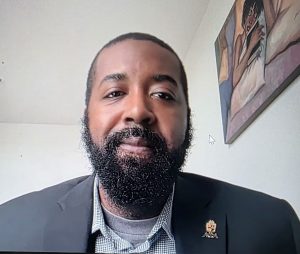 |
Mitchell Brown
Senior Voting Rights Counsel | Southern Coalition for Social Justice mitchellbrown@scsj.org Mitchell Brown is Senior Voting Rights Counsel at SCSJ, based in Durham, North Carolina. He graduated from NYU School of Law in 2017, where he chaired the Black Allied Law Students Association. He clerked for Judge J. Michelle Childs on the U.S. District Court for South Carolina and for Chief Judge Carl E. Stewart on the U.S. Court of Appeals for the Fifth Circuit. He holds a B.S. in Business Economics from North Carolina A&T State University. |
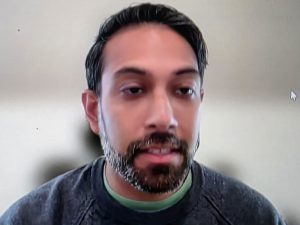 |
Amir Badat
Manager, Black Voters on the Rise & Voting Special Counsel | NAACP Legal Defense Fund / Fair Fight Action abadat@naacpldf.org Amir Badat leads LDF’s year-round election protection, voter education, and advocacy work. He is part of the litigation team in Houston Area Urban League v. Abbott, challenging Texas’s omnibus voter suppression law. Before LDF, he was an associate at Patterson Belknap Webb & Tyler. He clerked for Judge Vernon S. Broderick on the U.S. District Court for the Southern District of New York. A native of Meridian, MS, he holds a J.D. cum laude from NYU School of Law and a B.A. from Stanford University. |
| Davante Lewis
Elected Public Service Commissioner, 3rd District | Louisiana Public Service Commission davante.lewis@la.gov Davante Lewis represents over one million Louisiana residents from Baton Rouge to New Orleans. Elected in 2022, he is a recognized advocate for energy reform, climate justice, and racial equity. He was one of the plaintiffs in Robinson v. Ardoin, the landmark case that challenged Louisiana’s racially gerrymandered map and produced the two majority-Black congressional districts now under threat. He serves as co-chair of the National Utilities Diversity Council. |
| Jerome Dees
Policy Director | Southern Poverty Law Center jerome.dees@splcenter.org Jerome Dees serves as Policy Director for the Southern Poverty Law Center, based in Birmingham, Alabama. He holds a B.A. in Classical and Ancient Studies from the University of Florida and a J.D. from the University of Alabama School of Law. His work focuses on policy advocacy in the fight against racial injustice across the South. |
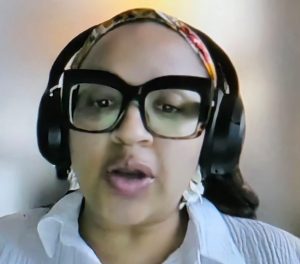 |
Rhyane Wagner
Policy, Narrative & Coalition Partnerships Director | Alabama Values / Alabama Values Progress rhyane@alvalues.org Rhyane N. Wagner works at the intersection of advocacy, narrative, and democratic power-building across Alabama and the Deep South. She leads efforts connecting policy strategy with grassroots organizing and cross-sector coalition work. Her background spans voting rights, racial justice advocacy, coalition management, and strategic communications, with a focus on expanding civic participation in historically marginalized communities. |
This briefing was hosted by American Community Media on May 15, 2026.
Contact: Sandy Close — sclose@americancommunitymedia.org | Pilar Marrero — pmarrero@americancommunitymedia.orgp