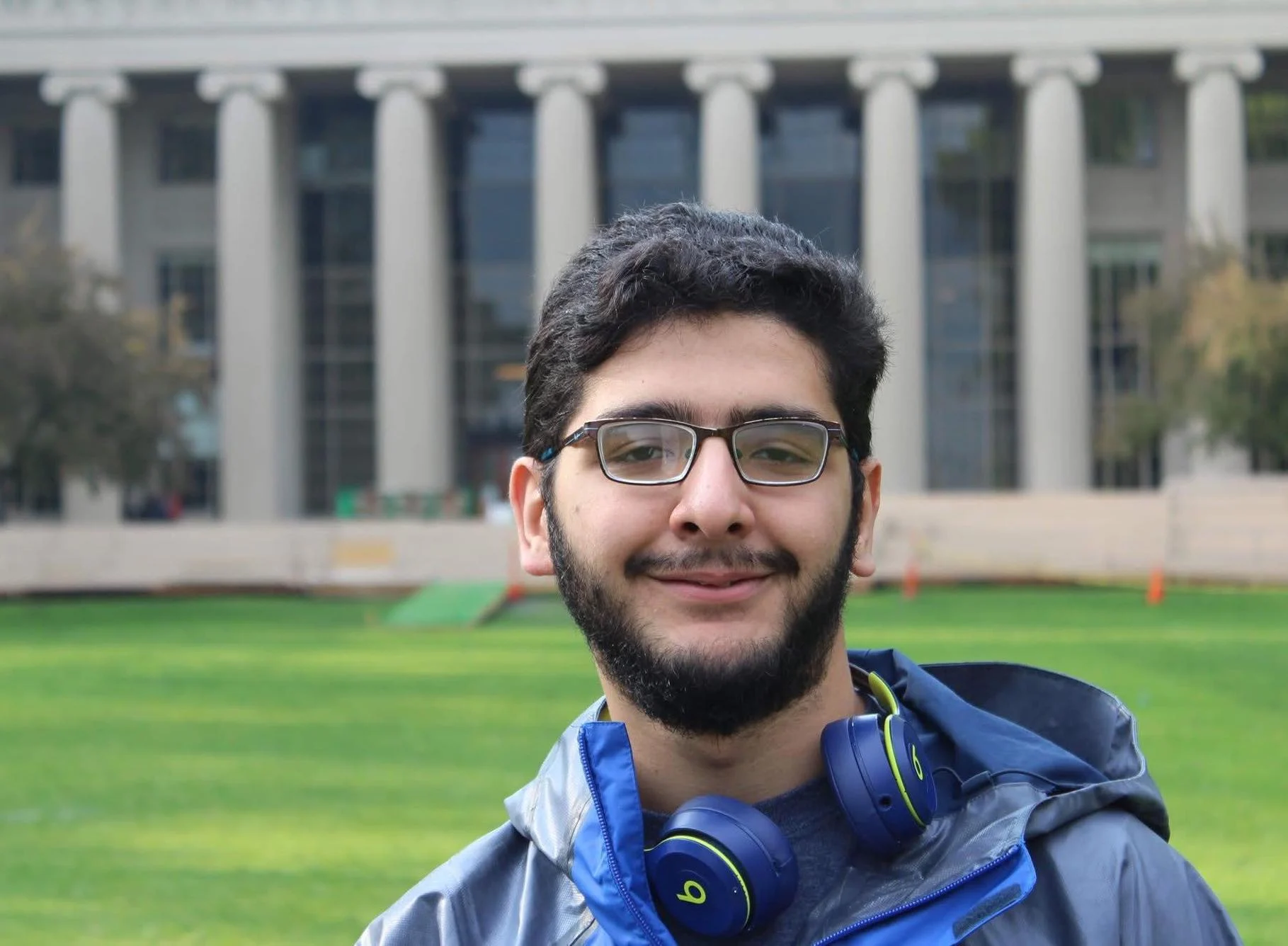
Sualeh Asif, a 26-year-old entrepreneur from Karachi, has become one of the most talked-about names on any Pakistan AI founders list after the artificial intelligence coding startup he co-founded, Cursor, drew a landmark acquisition deal from Elon Musk’s SpaceX. Asif, who studied at MIT before helping build Cursor’s parent company Anysphere, now appears on Forbes’ Billionaires List with an estimated net worth in the billions, making him one of the youngest self-made billionaires to emerge from Pakistan’s growing technology sector.
Background
Sualeh Asif was born in Karachi on January 24, 2000, and grew up showing an early talent for mathematics. He attended Nixor College in Karachi before representing Pakistan at the International Mathematical Olympiad and later at the Asian Pacific Mathematical Olympiad between 2016 and 2018, competitions that first brought attention to his analytical ability. That mathematical foundation carried him to the Massachusetts Institute of Technology, where he pursued a Bachelor of Science in Mathematics and Computer Science from 2018 to 2022, studying subjects including machine learning, number theory, and performance engineering while also working on early large-language-model research projects and gaining industry experience at IBM Watson.
It was at MIT that Asif met the three collaborators who would become his co-founders: Michael Truell, Arvid Lunnemark, and Aman Sanger. Bonded by long nights spent building and debugging software together, the group went on to found Anysphere in 2022, the San Francisco-based company that would go on to develop Cursor, an AI-powered code editor built on top of Visual Studio Code.
Details
What Cursor AI actually does
Cursor is not a simple autocomplete tool. Built as a full AI-native integrated development environment, it is designed to understand a developer’s entire codebase rather than just the line currently being written, allowing it to generate, edit, search, and refactor code using natural-language instructions. Its standout feature, often described as Agent Mode, lets a developer hand the tool a high-level goal and have it carry out multi-step coding tasks with minimal manual intervention. Since its release, Cursor has been adopted by millions of individual developers as well as enterprise engineering teams at companies including Nvidia, Adobe, Uber, and Shopify.
From startup to a $29.3 billion valuation .
Cursor’s growth over the past two years has been unusually fast even by Silicon Valley standards. The company crossed 1 billion US dollars in annualized recurring revenue by late 2025, and in November 2025 it raised 2.3 billion US dollars in a funding round co-led by venture capital firms Accel and Coatue Management, pushing its valuation to 29.3 billion US dollars. By mid-2026, reported revenue figures had climbed further still, with some reports placing Anysphere’s annualized recurring revenue at around 3 billion US dollars.
The SpaceX deal that changed everything
In April 2026, reports emerged that Elon Musk’s SpaceX had secured an option tied to Cursor: the right to acquire the company later in the year for 60 billion US dollars, or alternatively pay 10 billion US dollars to form a deeper partnership between the two companies. The move was seen as part of SpaceX’s broader push into the AI coding tools market through xAI, its Grok chatbot subsidiary, an area where the company had previously lagged behind rivals such as OpenAI and Anthropic. According to Forbes, that option was ultimately exercised, with SpaceX completing its acquisition of Cursor in August 2026. Forbes has reported that each of Cursor’s four co-founders received shares in SpaceX valued at approximately 2.4 billion US dollars at the deal’s closing, a figure that would place Asif’s holdings well into billionaire territory.
Where Sualeh Asif’s net worth stands today
Multiple outlets, citing Forbes’ real-time Billionaires List, have placed Asif’s net worth at approximately 1.3 billion US dollars in the months following the initial SpaceX option announcement, a figure that ranked him among the several thousand individuals tracked on the list at the time. Following the reported completion of the SpaceX acquisition in August 2026, Forbes’ estimate of his holdings — tied largely to the value of the SpaceX equity he and his co-founders received — appears to have risen further, though exact real-time figures fluctuate with SpaceX’s own private valuation and are updated periodically rather than continuously. As with most privately held company founders, precise net worth figures for Asif should be treated as informed estimates rather than fixed, audited totals.
Quotes
Asif’s rise has drawn attention from prominent voices in Pakistan’s own technology and policy circles, many of whom have used his story to make a broader point about talent, opportunity, and what Pakistan’s ecosystem still lacks. Umar Saif, Pakistan’s former federal minister for IT, publicly praised Asif as an example other young Pakistanis should look up to, writing that he represents “the kind of role Pakistani youth needs.” Saif went further, contrasting Asif’s path with more traditional routes to wealth in Pakistan, noting that Asif built his success as “a self-made kid from a middle-class family in Karachi.” Saif’s comments were widely shared precisely because they framed Asif’s success not just as an individual achievement, but as a pointed contrast to wealth accumulated through property speculation, tax avoidance, or inherited privilege — categories he explicitly distinguished Asif from in his remarks. On his own product philosophy, Asif has said Cursor’s goal is to build tools that “increase productivity and learning, not replace the coder,” a line frequently cited when describing his broader approach to AI-assisted software development. This framing has become something of a recurring theme in how Asif discusses Cursor publicly: rather than positioning the tool as a replacement for human programmers, he has consistently described it as an amplifier of existing developer skill, a distinction that matters both for how Cursor is marketed to enterprise clients and for how Asif is perceived within debates about AI’s impact on software engineering jobs more broadly. Public reaction within Pakistan to Asif’s story has also carried a more critical undertone in places, adding useful context to the celebratory coverage. Some commentators, reacting to news of his success, pointed out that Asif built Cursor entirely outside Pakistan, with one widely shared comment on social media noting bluntly that he “couldn’t do any of it in Pak because banks will not support him.” That remark, while informal, echoes a concern raised more formally by economists and policy analysts: that Pakistan’s domestic banking and venture capital infrastructure remains a significant barrier for founders who might otherwise choose to build and scale their companies at home.
Impact
Asif’s success has become a reference point in a wider conversation about Pakistan’s position in the global AI industry, and its ripple effects extend well beyond his personal net worth. His story is frequently cited alongside a small but growing list of Pakistani-founded AI ventures, including Uplift AI, a voice-technology startup founded by Hammad Malik and Zaid Qureshi that has raised funding from Y Combinator and Indus Valley Capital to build Urdu-language voice tools for underserved communities. Both stories are increasingly used by Pakistani policymakers and tech commentators as evidence that the country’s engineering talent is fully capable of competing on a global stage, even when the surrounding financial and regulatory infrastructure lags behind. Commentary around Asif’s rise has also highlighted a recurring and more uncomfortable theme: several observers, including comments attributed to Umar Saif, have noted that Asif’s company was built and funded almost entirely outside Pakistan, raising questions about whether the country’s banking and venture funding infrastructure is currently capable of supporting similarly ambitious startups domestically. This tension sits at the center of ongoing debate in Pakistan’s tech and policy circles, where officials have simultaneously celebrated Asif’s success as a national talking point while facing pointed questions about why founders like him so consistently need to leave the country to access the capital, banking relationships, and regulatory environment required to scale a company to Cursor’s size. For Pakistan’s broader technology sector, which has seen accelerating government attention to AI policy through initiatives like the Digital Nation Pakistan Act and the National Artificial Intelligence Policy, Asif’s success is frequently used as evidence both of the country’s technical talent pool and of the structural gaps that still push its most successful founders toward Silicon Valley rather than local markets. The scale of the SpaceX deal in particular has also drawn attention from Pakistan’s startup investment community, with some early-stage investors and founders citing it as proof that global capital markets are increasingly comfortable backing AI ventures with South Asian founders, provided those founders have access to the same institutional pathways — top-tier universities, US-based incorporation, and Silicon Valley networks — that have historically been difficult for Pakistan-based entrepreneurs to reach without first relocating abroad.
Conclusion
With the reported SpaceX acquisition now shaping the next phase of Cursor’s growth, Asif’s role within the combined companies, and the scale of his resulting wealth, are likely to remain closely watched in the coming months, both within Silicon Valley’s AI coding tools market and within Pakistan’s own technology press. Analysts following the AI coding space expect continued consolidation among major players, and Cursor’s absorption into SpaceX’s broader AI and infrastructure ambitions, alongside its Grok-focused subsidiary xAI, will likely shape how quickly the product evolves and how much independence its founding team retains going forward. For Pakistan specifically, the more lasting question raised by Asif’s story may not be about his personal wealth at all, but about what, if anything, changes structurally as a result of it. Whether his success translates into more direct investment in Pakistan’s own AI ecosystem — through mentorship, angel investing, or simply raising the profile of Pakistani founders among international venture capital firms — or whether it instead remains primarily an inspirational data point cited in speeches and opinion columns without shifting the underlying access-to-capital problem, is likely to become clearer only as Cursor’s integration with SpaceX and xAI continues to unfold through the rest of 2026 and into 2027. What is already clear is that Asif’s name has become shorthand in Pakistan’s tech conversation for both what is possible and what is still missing at home.
Frequently Asked Questions
Who is the 26-year-old billionaire in Pakistan?
The 26-year-old billionaire frequently referenced in connection with Pakistan is Sualeh Asif, a Karachi-born entrepreneur who co-founded the AI coding startup Cursor, developed by his company Anysphere. Asif reached billionaire status following Cursor’s rapid valuation growth and, according to Forbes, the subsequent acquisition of Cursor by Elon Musk’s SpaceX in 2026. It’s worth noting that Asif holds this wealth primarily through equity and company shares rather than liquid cash, which is typical for founders of fast-growing private technology companies, and that his current standing on the Forbes Billionaires List reflects real-time market estimates rather than a fixed, publicly audited figure.
Which Pakistani AI startup was sold?
Cursor, developed by Anysphere and co-founded by Sualeh Asif along with Michael Truell, Arvid Lunnemark, and Aman Sanger, is the startup most closely associated with a major acquisition involving a Pakistani-born founder. While Cursor itself is a US-based company headquartered in San Francisco, Asif’s Pakistani background has made the deal a significant story within Pakistan’s own technology press. According to Forbes, SpaceX completed its acquisition of Cursor in August 2026 after initially securing an option in April of that year to acquire the company for 60 billion US dollars or pursue a smaller 10 billion US dollar partnership instead.
What are the top AI companies founded by Pakistanis?
While Cursor, co-founded by Sualeh Asif, is currently the most prominent example due to the scale of its valuation and the SpaceX deal, it is not the only Pakistani-founded AI venture drawing attention. Uplift AI, founded by Hammad Malik and Zaid Qureshi, has built voice-based AI technology aimed at helping Urdu-speaking users interact with digital services in their native language, and has raised funding from investors including Y Combinator. Pakistan’s broader AI startup landscape remains relatively young compared to markets like the United States or India, but analysts and industry commentators increasingly point to the country’s large annual output of software engineers and data scientists as a foundation for further AI-focused ventures in the coming years, even as questions remain about domestic access to funding, compute infrastructure, and structured data.