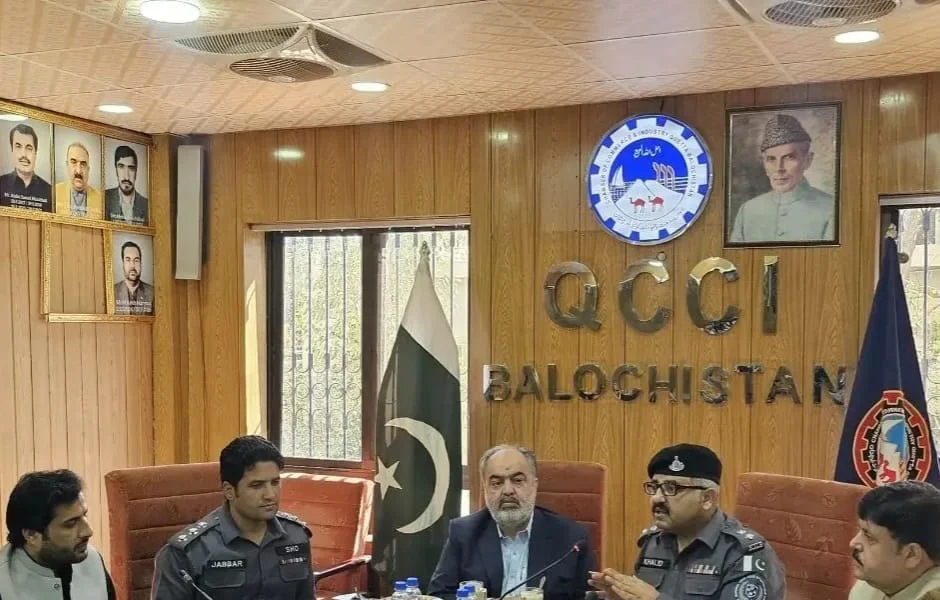
Quetta (Syed Sardar Mohammad Khondai): The National Cyber Crime Investigation Agency (NCCIA) Quetta has announced a zero-tolerance policy against financial fraud, blackmailing and character assassination through social media.
The announcement came during an awareness session at the Chamber of Commerce and Industry Quetta Balochistan (CCIQ). Additional Director NCCIA Khalid Baqi addressed the session and explained the growing risks linked to online fraud.
The session focused on common cybercrime methods. It also highlighted the financial and reputational damage caused by fake social media accounts, online banking fraud and blackmailing.
NCCIA Targets Social Media Fraud and Blackmailing
Additional Director Khalid Baqi said the NCCIA will take strict action against people involved in financial fraud and blackmailing on social media.
He said organized groups use mobile calls, Facebook and WhatsApp to target citizens. According to him, many groups involved in such fraud operate from South Punjab and Kacha areas.
Khalid Baqi also shared details about cases registered by the agency. He said the NCCIA has registered 158 cases and nominated several accused in connection with these cases. He added that none of the nominated accused belongs to Balochistan.
The official also stressed the need for citizens to remain careful while using social media platforms. Online criminals often try to gain access to personal information before demanding money or making threats.
Therefore, citizens should avoid sharing sensitive information with unknown people. They should also verify suspicious messages and calls before taking any action.
Business Community Faces Heavy Financial Losses
The business community also raised concerns about the increasing number of online fraud cases. CCIQ President Ahmad Gul Kakar, Senior Vice President Mirza Khan Khalji and Vice President Jangiyan Dashti attended the awareness session.
The chamber representatives expressed concern over fraud involving online banking, Easypaisa and JazzCash. They said such incidents are causing serious financial losses for traders and business owners.
CCIQ President Ahmad Gul Kakar said fake social media accounts and online blackmailing have become a serious concern for the business community.
He said traders have suffered losses worth millions of rupees because of online fraud. He also pointed to the spread of fake news and baseless allegations on social media.
According to the chamber president, such content can damage the reputation of citizens and business owners. As a result, victims can face both financial losses and social pressure.
The business community therefore called for a stronger system to handle cybercrime complaints. They stressed that victims need a quick and effective response when they report online fraud.
Joint Task Force Proposed to Fight Cybercrime
During the awareness session, CCIQ officials proposed the formation of a joint task force. The proposed team would include representatives from CCIQ, the Federal Investigation Agency and NCCIA.
The chamber believes that cooperation between these institutions could improve the complaint process. It could also help investigators respond more quickly to cybercrime cases.
A joint mechanism could provide a clearer route for traders and citizens who face online fraud. It could also improve communication between investigators and victims.
Khalid Baqi endorsed the proposal for a joint team. He also urged citizens to take greater care of their personal information.
In particular, he warned people against sharing One-Time Passwords (OTPs) with anyone. OTPs can provide access to financial accounts and other protected services. Therefore, people should keep these codes private.
NCCIA Announces Action Against OTP Fraud
The Additional Director also announced that the NCCIA will soon launch a crackdown against OTP fraud and illegal telecom franchises.
OTP scams can cause major financial losses. Fraudsters may contact victims through phone calls or messages and pretend to represent a bank, mobile company or another service provider.
They may then ask for an OTP or other sensitive information. Once victims share the information, criminals may use it to carry out unauthorized transactions.
For this reason, citizens should never share an OTP with another person. They should also avoid clicking suspicious links or providing banking details to unknown callers.
The NCCIA awareness session highlighted the importance of public cooperation in fighting cybercrime. Citizens, businesses and government agencies all have a role to play.
Meanwhile, the proposed joint task force could help improve coordination between the business community and cybercrime authorities. Such cooperation may also help victims report cases more easily.
The NCCIA’s zero-tolerance policy sends a clear message against social media fraud, financial scams, blackmailing and character assassination in Balochistan. With greater public awareness and stronger cooperation between institutions, authorities aim to reduce cybercrime risks and protect citizens from online threats.