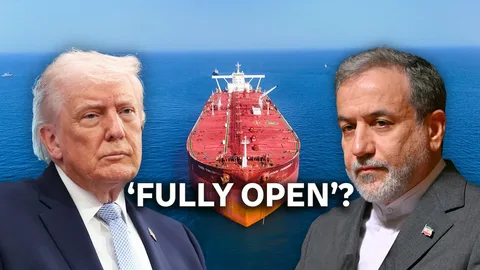
Strait of Hormuz energy security news took a serious turn this week after the head of the International Energy Agency warned that global oil supply is running out of room to absorb further disruption. IEA Executive Director Fatih Birol said the world should be “worried” if oil flows through the strait do not improve within weeks.
Background
The Strait of Hormuz sits between Iran and Oman and normally carries about a fifth of the world’s seaborne oil. It has been largely blocked since the wider US-Israel-Iran conflict escalated in late February 2026, cutting off a route that Asian economies in particular depend on for daily energy supply.
This is not the first time the world has watched Strait of Hormuz oil impact headlines closely. During the earlier Twelve-Day War in June 2025, brief closures caused sharp but short-lived price spikes. This time, the disruption has dragged on for months, and Birol has described it as the worst energy shock in the IEA’s history.
Understanding why is the Strait of Hormuz closed requires looking at the standoff directly. Iran has kept the waterway shut, citing what it calls a lack of US commitment to an earlier memorandum of understanding, while the US has reimposed a naval blockade on Iranian oil exports and continued near-nightly strikes on Iranian coastal targets.
Details
Speaking at a Council on Foreign Relations event, Birol said “oil security is still a critical issue” and stressed that global buffers are being stretched thin. He pointed to China’s stockpile of more than one billion barrels of oil, built up before the war, along with the country’s growing use of electric vehicles and public transport, as key reasons the crisis has not yet turned into a full-blown emergency.
The IEA has also coordinated the release of up to 400 million barrels of oil from member countries’ reserves to help ease pressure. But Birol was clear that these are temporary fixes rather than lasting solutions to a Strait of Hormuz closure oil crisis of this scale.
US oil production has offered some relief. Birol noted that American output has climbed by one to two million barrels per day, though he was quick to point out its limits, saying the US “cannot increase 10 million” barrels a day to fully offset a closed strait. Even the world’s top oil and gas producer cannot single-handedly replace a fifth of global seaborne supply.
The timing of Birol’s warning coincided with a sixth consecutive night of US strikes on Iran, which hit Bandar Abbas, Ahvaz, and Iranshahr, alongside a US strike on a vessel accused of attempting to break the naval blockade. Al Jazeera reported that American attacks on Iran’s coastal cities are increasingly hitting infrastructure, including bridges, with Iranian state media reporting casualties from at least one such strike in Hormozgan province.
Quotes
Birol did not soften his warning when addressing reporters and analysts. “We should be worried, and I am worried, if the situation does not improve in the next few weeks,” he said, adding that the strait eventually needs to be “fully open, unconditionally open,” rather than reopened under limited or conditional terms.
He also described the toll in stark terms, telling Bloomberg that markets are “nervous” and facing “big uncertainty” as attacks from both sides continue to threaten shipments of oil, natural gas, fertilizer, and other cargo passing through the waterway.
Iran’s Armed Forces have pushed back on any suggestion that the US should manage security in the strait. A spokesperson said, “We insist on US not to interfere in the Strait of Hormuz, and on its withdrawal from the region,” underscoring how far apart the two sides remain on any near-term resolution.
Impact
The effects of Strait of Hormuz closure are not falling evenly across the globe. Birol was direct about this, saying the crisis is hitting Asia hardest because the region sourced roughly 80 to 90 percent of its energy needs from the strait before the war began.
Wealthier importers such as Japan and South Korea have absorbed the shock through reserves and diversified supply contracts. But countries with thinner financial cushions, including Bangladesh, Pakistan, and India, are far more exposed. Higher fuel and fertilizer costs in these nations translate quickly into food price inflation and, in some cases, social unrest.
Beyond crude oil, the Strait of Hormuz closure oil crisis is also squeezing diesel, jet fuel, and liquefied natural gas supplies. Qatar’s LNG export infrastructure has reportedly sustained damage that could take years to repair, adding a longer-term supply constraint on top of the immediate wartime disruption.
This crisis is also arriving as the greatest global energy security threat in history, according to several analysts, just as winter demand builds in the northern hemisphere. That raises the risk of shortages hitting multiple fuel types at once rather than a single, contained oil price spike.
Conclusion
Birol’s warning adds urgency to any Strait of Hormuz prediction for the months ahead. With Iran maintaining the closure and the US continuing military operations rather than negotiations, a quick resolution looks unlikely in the immediate term.
The IEA energy security threat assessment now hinges on whether diplomatic contact between Washington and Tehran can produce results within Birol’s stated window of weeks. If not, the world may be forced to test just how long stockpiles, alternative production, and coordinated reserve releases can hold a fragile global energy system together.
Frequently Asked Questions
Can countries bypass the Strait of Hormuz?
There are a few alternative routes, but none can fully replace the strait’s capacity. Saudi Arabia and the United Arab Emirates operate pipelines that allow some crude to reach the Red Sea or the Gulf of Oman without passing through Hormuz, and these have been used more heavily since the crisis began. However, these pipelines only cover a fraction of the roughly 20 million barrels per day that normally move through the strait, meaning most exporters in the Gulf still depend on Hormuz remaining open for the bulk of their shipments. This is part of why Birol and other officials describe the current disruption as historically severe rather than a routine supply hiccup.
Can the US control the Strait of Hormuz?
The US has significant naval power in the region, including a reimposed blockade on Iranian oil exports and military escorts for some commercial shipping, but it does not have full control over the waterway. Iran continues to maintain its own closure of the strait from its side, and the narrow, shallow geography of Hormuz makes it difficult for any single navy to guarantee safe passage for all vessels at all times. Analysts note that lasting control would likely require either a negotiated agreement with Iran or a level of sustained military presence far beyond what either side has committed to so far.
Does the UAE need the Strait of Hormuz?
Yes, though somewhat less than some of its neighbors. The UAE has built the Habshan-Fujairah pipeline specifically to move oil to the Gulf of Oman, bypassing Hormuz entirely for a portion of its exports. This gives it more flexibility than countries like Saudi Arabia or Kuwait, which rely almost entirely on the strait. Still, a large share of UAE energy exports and nearly all of its imports of goods and fuel continue to depend on Hormuz remaining functional, meaning a prolonged closure would still carry real economic costs for the country even with its partial workaround in place.