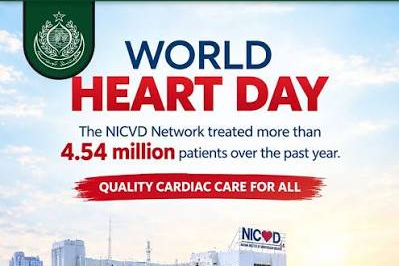
KARACHI: SICVD free cardiac care in Sindh has treated 22,639 heart attack patients through angiography and angioplasty and carried out 1,626 open heart surgeries between January and October 2026. The figures were shared in a statement issued by the Sindh Institute of Cardiovascular Diseases. The institute says every consultation, test and procedure during this period was provided at no cost to patients.
Background
The Sindh Institute of Cardiovascular Diseases is one of the largest public sector heart care networks in the country, and its work has long been built around emergency response. Heart attacks are a major cause of death in Pakistan, and the first hours after the onset of chest pain often decide whether a patient survives. For many families in smaller towns, reaching a well equipped hospital in time has been the biggest obstacle.
To address this gap, the institute built a network of chest pain units spread across the province. These units allow patients to receive first level cardiac emergency care close to home, before being moved to a larger centre if they need advanced treatment. The latest statement gives a ten month snapshot of how far this model has expanded in 2026.
Free treatment has remained a central part of the institute’s approach. Families who would otherwise face heavy bills for angioplasty, pacemakers or surgery can access the same services without paying, which is a significant relief in a country where out of pocket health spending pushes many households into debt. You can read more health coverage in the Health section of Pakistan Chronicle.
Details of the Ten Month Performance
According to the statement, the institute’s network of 30 chest pain units across Sindh handled 463,975 emergency cases during the period. Its triage and emergency departments received 598,401 patients in total, while 55,846 patients were admitted for inpatient care. These numbers show how heavily the system is used, and how much of the workload begins with emergencies.
In the catheterisation laboratories, 22,639 heart attack patients were treated through angiography and angioplasty. Another 7,210 patients underwent diagnostic angiography and were later referred for either medical management or surgery. The institute also carried out 880 permanent pacemaker implantations, 612 temporary pacing procedures and 89 stroke interventions during the same months.
Of the 1,626 open heart surgeries, 220 were performed on children and 1,406 on adults. Paediatric cardiology remained an important part of the work, with 1,660 catheterisation procedures and 37,679 echocardiograms recorded. Outpatient clinics logged 413,097 visits, made up of 62,901 paediatric consultations and 350,196 adult consultations.
The diagnostic side of the institute was equally busy. More than one million electrocardiograms were performed, along with 975,661 laboratory tests and 116,819 echocardiograms. Nearly 60,000 X-rays were taken, and more than 6,300 brain CT scans and CT angiograms were completed. In addition, 13,390 physiotherapy sessions were held to support recovery. Taken together, the institute provided nearly 3.77 million patient services free of charge across Sindh in ten months.
What Officials Said
Prof Dr Jawaid Akbar Sial, the executive director of the institute, said the priority was to bring emergency cardiac care closer to communities across Sindh. He added that patients who need specialised treatment, including angioplasty and open heart surgery, should receive it free of charge.
He also pointed out that access to emergency care near a patient’s home can save lives for people experiencing chest pain. In his remarks, he noted that the 30 chest pain units had handled nearly 464,000 emergency cases in the first ten months of the year, which he presented as evidence that the network is meeting a real public need.
Impact on Patients and the Healthcare System
The scale of these numbers carries clear meaning for public health in Sindh. A network of chest pain units reduces travel time for people in districts far from Karachi, and shorter delays can limit permanent damage to the heart muscle. For rural families, this is often the difference between treatment and tragedy.
The large number of paediatric procedures is also significant. Children born with heart defects need specialised surgery and long term follow up, which private hospitals often price out of reach. By treating 220 children through open heart surgery in this period, the institute has offered hope to families who might otherwise have had no option.
At a wider level, the figures highlight how free heart treatment in Pakistan can work when a public institution combines emergency response, diagnostics and surgery in one system. They also raise a continuing question about funding, since a service of this size depends on steady government support and public donations. Related stories on provincial health policy can be found under the Sindh category.
Why Early Heart Care Matters
Doctors often stress that the warning signs of a heart attack should never be ignored. Chest pain or pressure, pain spreading to the arm or jaw, sweating, nausea and shortness of breath all call for urgent medical attention. Lifestyle also plays a large role in heart health, and readers interested in the wider picture can explore our report on why too little body fat can be unhealthy and our feature on breast cancer awareness in Pakistan. For a look at how technology is shaping disease detection, see our story on the UK AI hub for dementia detection.
Conclusion
The ten month record shows that SICVD free cardiac care in Sindh has grown into a large scale lifeline for heart patients, covering emergencies, surgery, children’s care and diagnostics. The next test will be keeping this level of service steady as demand rises, which will require reliable funding, trained staff and continued expansion of chest pain units. If the current pace holds, the institute is likely to report even higher numbers by the end of the year. For more national updates, visit the National section of Pakistan Chronicle.
Frequently Asked Questions (FAQs)
1. How many heart attack patients did SICVD treat in 2026?
Between January and October 2026, the Sindh Institute of Cardiovascular Diseases treated 22,639 heart attack patients through angiography and angioplasty. These procedures are used to find blocked arteries and to open them quickly, which helps restore blood flow to the heart and limits lasting damage. On top of this, another 7,210 patients had diagnostic angiography and were then referred for medical management or surgery depending on their condition.
2. Is treatment at SICVD really free of charge?
Yes. According to the institute’s statement, all consultations, diagnostic investigations and medical procedures were provided free of charge during this period. This covers emergency care, hospital admission, outpatient visits, laboratory tests, scans and specialised procedures such as angioplasty and open heart surgery. In total, the institute reported nearly 3.77 million patient services provided at no cost across Sindh in ten months.
3. What are chest pain units, and how do they help patients?
Chest pain units are emergency cardiac centres set up closer to communities so that people with heart symptoms do not have to travel long distances before receiving care. The institute operates 30 of them across Sindh, and they handled 463,975 emergency cases in the ten month period. Quick assessment at these units can identify a heart attack early, stabilise the patient and arrange transfer for advanced treatment when needed.
4. How many children received heart surgery at SICVD?
Out of 1,626 open heart surgeries performed in the period, 220 were on children and 1,406 were on adults. The paediatric department also carried out 1,660 catheterisation procedures and 37,679 echocardiograms. Its outpatient clinics recorded 62,901 paediatric consultations, which shows the demand for specialised heart care for young patients, including those born with congenital defects.
5. What are the warning signs that someone needs emergency heart care?
Common warning signs include chest pain, tightness or pressure that lasts more than a few minutes, pain moving to the left arm, neck or jaw, cold sweats, nausea, dizziness and sudden shortness of breath. Some people, especially women and older adults, may feel unusual tiredness or discomfort without sharp chest pain. Anyone showing these signs should seek emergency medical help immediately and should not wait for the symptoms to pass.