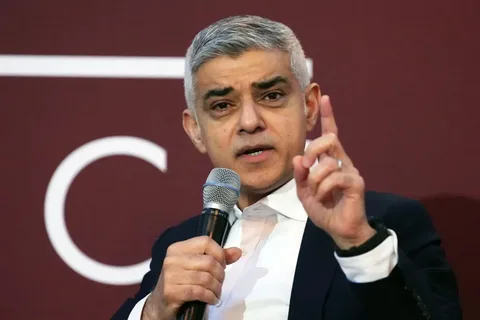
Sir Sadiq Khan, the Mayor of London, has stepped into one of the most emotionally charged immigration disputes in recent memory calling on the government to immediately pause new visa rules that are pushing hundreds of Transport for London workers toward deportation. The story has gripped London and reignited fierce debate around the UK’s shifting immigration landscape, with the London Mayor news making headlines across national outlets including BBC Khan coverage and beyond.
Background: What Changed and When
In July, the Home Office raised the salary threshold for skilled worker visa sponsorship to £41,700 per year for new applicants. At the same time, several transport-related roles including station assistant and rail travel assistant were quietly removed from the official “skilled worker” list.
The changes were introduced with very little notice, catching employers and workers completely off guard. Many of the TfL staff affected had joined the organisation from abroad on graduate visas and had fully expected to transition onto skilled worker visas as the next natural step in their career path. That transition was suddenly no longer available to them under the new rules.
This sudden shift sent shockwaves through the workforce. People who had built their lives in London, who had paid taxes, taken out tenancies, and in some cases started families here, were now left with deep uncertainty about whether they would be allowed to stay.
Details: The Human Scale of the Crisis
Between 200 and 300 TfL staff are estimated to be at risk as a direct result of these immigration rule changes. The majority of those affected work as customer service assistants in Tube stations across the city, doing frontline work that keeps London’s transport network functioning on a daily basis.
Caroline Russell, who leads the Green Party on the London Assembly, told the Mayor that the staff were “people who had done everything right” and had “had the rug pulled out from under their feet.” She added that many of them were now struggling to sleep at night because of the anxiety the situation had caused.
The Sadiq Khan news on this front has been deeply human in its nature. One woman who is pregnant feared being forced out of the UK before her baby is born. Another affected worker, Avi Khera, told the BBC Politics London programme that it was “a shock” when he realised the new rules meant he might have to return to India.
These are not abstract policy statistics. These are real people, living real lives, with real consequences now hanging over them because of a policy shift introduced with barely three weeks of notice.
Sadiq Khan’s Response: Calling for a Pause
During a session of Mayor’s Question Time on 9 October, the Sadiq Khan Met Police and mayoral governance machinery sprang into action. Sir Sadiq Khan told the London Assembly that the changes had “left TfL staff in limbo” and that deputy mayor for transport Seb Dance had written to the migration minister to call for the measures to be paused and for TfL staff to be protected immediately.
The London Mayor did not mince his words in describing what had happened. He accused the government of moving the goalposts and said that the affected workers were “unclear about whether they can stay in the UK and continue the important work they do for us.” He added that the rules would “inhibit TfL’s ability to carry out its functions” not a minor operational note, but a direct warning about the impact on London’s transport system.
The Mayor stressed that the situation extended far beyond TfL, affecting hospitality, health and social care, construction, and the creative industries all sectors that depend heavily on workers who came to the UK through routes now being closed or restricted.
At the very least, he said, the government must provide “immediate transitional protections” for those already in the system and working legally.
Government’s Response: Firm but Vague
The Home Office said it would respond to the letter in due course. They had previously stated that the government’s immigration white paper, which includes these measures, will “restore order” to immigration and “end dependence on lower-skilled international recruitment.”
The government’s position has remained consistent: net migration must come down, and the new rules are part of a broader strategy to achieve that. But critics argue that the people affected are not low-skilled workers in any meaningful sense. They are employed on permanent contracts, contributing to essential public services, and were given no reasonable warning of what was about to change.
Immigration minister Mike Tapp replied to the deputy mayor’s letter stating that he “cannot commit to a meeting on this subject.” He added in the letter that people entering the UK as students or on youth mobility schemes should be made aware that this does not guarantee them future employment or extensions to their immigration permission.
That response was seen by many as dismissive and tone-deaf to the real crisis unfolding on the ground.
Quotes: What Officials and Unions Are Saying
Sir Sadiq Khan has been unambiguous in his position on the matter. A spokesperson confirmed that he was “deeply disappointed by the situation that TfL workers have been left in” and that “these are transport workers who have given dedicated service supporting Londoners during the pandemic at huge personal risk and keep our capital city moving.”
The unions have been equally vocal. RMT general secretary Eddie Dempsey, speaking outside Downing Street, said: “These are workers who are on permanent contracts of employment, who were given every expectation they have the right to remain here in Britain. They have started to build families here and we think this is just wrong. We are not here to argue about the broader policy, we are here to say this just ain’t cricket.”
Dempsey called specifically for an exemption for this group, arguing that their circumstances were unique enough to warrant a pause and a reconsideration, regardless of what the broader immigration policy direction may be.
Impact: Beyond London, Beyond Transport
This story reaches well beyond the Sadiq Khan Met Police and London Mayor news cycle. The London Mayor immigration fight has thrown a spotlight on a much wider structural problem with how the UK’s post-Brexit immigration system handles workers who arrived through legitimate channels and have been contributing to public services for years.
The BBC Khan coverage of this issue has helped bring the human dimension of the crisis to a national audience. For many viewers and readers, the idea that a pregnant woman might be deported before giving birth, or that a long-serving Tube worker might be sent back to a country they barely know anymore, represents a failure of basic fairness in policymaking.
Beyond the individual stories, there is a practical operational argument being made by TfL and the Mayor’s office: removing this many experienced workers from frontline transport roles will cause real disruption. Station assistants and customer service staff are not easily or quickly replaced, and their removal would degrade the service that millions of Londoners depend on every day.
The London Mayor scandal framing that some have applied to this story is arguably unfair to Khan himself, who in this instance is advocating for workers rather than against them. The real controversy lies with the government’s approach to the policy change.
Sadiq Khan: A Brief Profile
Understanding who Sadiq Khan is helps to contextualise this fight. Sir Sadiq Khan was re-elected for a third term as Mayor of London in May 2024 and was subsequently knighted by King Charles, becoming the first Mayor of London to receive the honour.
He first entered politics as the MP for Tooting in 2005 and became Mayor of London in 2016, making him the first Muslim mayor of any major European city. His tenure has been marked by a focus on air quality, affordable housing, transport expansion, and policing reform.
Most recently, he was named among 26 new members of the House of Lords by outgoing Prime Minister Sir Keir Starmer in July 2026, in one of Starmer’s final acts before leaving office. A government source described him as “a brilliant mayor who has transformed London for the better.”
Throughout his career, Khan has positioned himself as a champion of London’s diversity and its working people which makes his intervention in the TfL immigration dispute entirely consistent with his political identity.
Conclusion: What Happens Next
The formal request from Deputy Mayor Seb Dance to the immigration minister asking for a pause and transitional protections remains unanswered in any substantive way. The government has indicated it will respond in due course, but TfL workers facing imminent visa expiry do not have the luxury of waiting indefinitely for a ministerial letter.
The pressure on the government is building from multiple directions from the Mayor’s office, from the RMT union, from the Green Party on the London Assembly, and now from the media attention this case is receiving. Whether that pressure translates into a policy change, an exemption, or at minimum a delay in enforcement, remains to be seen.
What is clear is that the Sadiq Khan news on this front is not going away. The London Mayor has staked a clear public position. The affected workers remain in limbo. And the question of what a fair immigration system looks like one that does not punish people for following the rules as they existed when those people made the most important decisions of their lives will not be answered quietly or quickly.
Frequently Asked Questions (FAQs)
Why has June Sarpong been given a peerage?
June Sarpong OBE was included in the July 2026 political peerages list announced by the UK government, recognised as a broadcaster, charity campaigner, and social equity advocate. Her elevation to the House of Lords follows a distinguished career in British media and public life. She served as the BBC’s first Director of Creative Diversity, where she led a substantial investment in diverse content and became the first Black woman to sit on the corporation’s Executive Committee. She has also been a prominent author on issues of inclusion and inequality, and a campaigner for gender equality and minority rights through organisations including the WIE Network. Her peerage is widely seen as recognition of her decades-long contribution to diversity in British broadcasting and civic life.
How did Sadiq Khan get elected?
Sadiq Khan was first elected as Mayor of London in May 2016, defeating Conservative candidate Zac Goldsmith in an election that drew considerable national and international attention. He became the first Muslim mayor of any major European capital city, a landmark moment in British political history. He was re-elected in 2021 for a second term and again in May 2024 for a historic third term, cementing his position as one of the most significant and enduring political figures in modern London. His success has been built on strong support across London’s diverse communities, a focus on issues like affordable housing, public transport, air quality, and policing, and an ability to position himself as a champion of the city’s values on the national and international stage. He began his political career as the MP for Tooting in 2005 and also served as a minister under Prime Minister Gordon Brown before leaving Parliament to run for Mayor.
Who appoints the Lord Mayor of London?
It is important to note that there are two distinct roles that are often confused: the Mayor of London and the Lord Mayor of London. The Mayor of London, the position held by Sadiq Khan, is directly elected by Londoners through a public vote held every four years. The Mayor leads the Greater London Authority and has significant powers over transport, policing, housing, and planning across all London boroughs. The Lord Mayor of London, by contrast, is a much older and more ceremonial role. The Lord Mayor heads the City of London Corporation, which governs the historic Square Mile financial district. The Lord Mayor is not elected by the general public but is instead chosen annually by the Livery Companies and Aldermen of the City of London, following centuries-old traditions. The two roles are entirely separate institutions with very different powers and geographic remits.