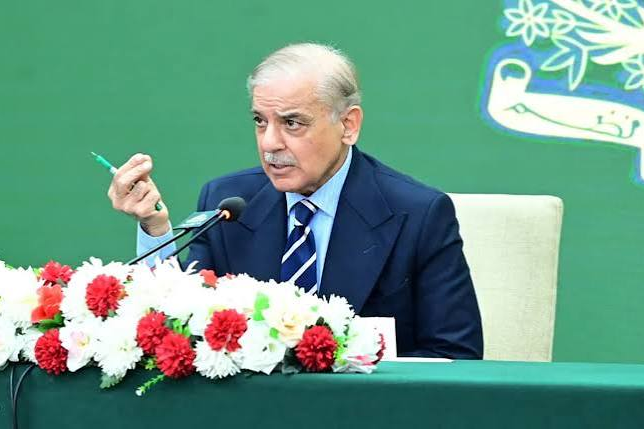
Prime Minister Shehbaz Sharif has called on political parties and all sections of society to work together to reduce Pakistan’s growing debt burden. Addressing the National Security Workshop in Islamabad on November 29, he said the country would need to make difficult economic decisions and introduce lasting reforms to move away from dependence on external borrowing.
The prime minister highlighted problems including tax evasion, subsidies, loss-making state-owned enterprises and weak agricultural performance. He also stressed that political cooperation, better governance and stronger economic activity would be essential to achieving financial independence.
Background: Pakistan’s Long-Standing Debt Challenges
Pakistan has struggled with financial pressure for decades, relying on domestic and international borrowing to meet government expenditure, support development projects and manage economic difficulties. Repayment obligations and interest costs have continued to put pressure on public finances.
Successive governments have introduced different economic programmes to improve revenue collection, control spending and strengthen the country’s financial position. However, implementing long-term reforms has remained difficult because of political disagreements, institutional weaknesses and changing economic conditions.
The current government has also been working with international financial institutions, particularly the International Monetary Fund (IMF), to maintain economic stability and improve financial management.
Against this background, Shehbaz Sharif’s latest remarks highlight the need for broader political agreement on economic policies that can continue beyond individual government terms.
Details: What Did PM Shehbaz Sharif Say?
Political Unity Needed for Economic Recovery
During his address, the prime minister argued that Pakistan could overcome its debt difficulties if political parties, government institutions and different sections of society worked towards shared economic objectives.
He acknowledged that the required measures would not always be popular or easy to implement. However, he maintained that difficult decisions were necessary to address problems that had accumulated over several decades.
Shehbaz also referred to the country’s long history of borrowing and questioned the continued dependence on financial assistance and subsidies. He said public resources should be used more effectively to strengthen the economy rather than maintain an inefficient financial structure.
His message placed political cooperation at the centre of the government’s broader economic reform agenda.
Subsidies and Government Spending Under Discussion
The prime minister also discussed the financial impact of subsidies, explaining that these payments ultimately come from public revenue collected through taxation.
He argued that poorly targeted subsidies could place additional pressure on government finances without necessarily creating sustainable economic benefits.
Shehbaz also raised concerns about the substantial amounts spent supporting loss-making state-owned enterprises. According to his remarks, these organisations have required significant financial support over the years.
He suggested that Pakistan needs stronger institutional management, better accountability and more effective use of public money to reduce unnecessary expenditure.
Government Defends Administrative Changes
The prime minister referred to the closure of the Pakistan Public Works Department (PWD), saying the decision had faced criticism but had helped eliminate corruption that he estimated at Rs100 billion.
He also defended the closure of the Utility Stores Corporation (USC), raising concerns about alleged corruption and the quality of essential commodities distributed through the organisation.
According to Shehbaz, the government has moved towards using digital wallets to deliver financial assistance directly to beneficiaries.
These examples formed part of his argument that institutional restructuring can help reduce waste and improve the delivery of public services. The financial savings and corruption figures cited in the address represent the government’s claims.
FBR Reforms and Tax Collection
Tax evasion was another major issue highlighted during the National Security Workshop.
The prime minister said the Federal Board of Revenue (FBR) had undergone structural changes over the previous two-and-a-half years. He particularly pointed to indirect taxation, including sales tax, as an area where substantial revenue losses occur.
Shehbaz claimed that the government had recovered Rs900 billion through enforcement measures, describing the figure as a major achievement in tax collection.
He also stressed that improving revenue collection was necessary to reduce dependence on borrowing and create more financial space for public development.
A broader and more effective taxation system could help the government collect revenue more consistently, provided that reforms also address fairness, transparency and compliance.
PM Sets a 6% GDP Growth Target
The prime minister discussed Pakistan’s economic growth outlook and said GDP growth had been projected at 3.5 per cent.
However, he stressed that the country should aim to achieve at least 6 per cent growth as early as possible.
He also mentioned an 8 per cent increase in exports, while arguing that the improvement was not sufficient to meet Pakistan’s wider economic requirements.
According to the prime minister, stronger exports, increased investment and improved productivity are essential for creating a more sustainable economic structure.
He further noted that economic progress would require greater attention to agriculture, manufacturing and other productive sectors.
Agriculture Needs Greater Government Attention
Shehbaz Sharif expressed concern that Pakistan had not made sufficient progress in agricultural development.
Agriculture remains important for employment, food security, rural incomes and industrial activity. Weak performance in this sector can affect food supplies, exports and the overall economic outlook.
The prime minister suggested that meaningful improvements could be achieved within six months if the necessary effort and commitment were applied.
However, lasting agricultural development will also depend on water management, modern farming techniques, access to finance, better seeds and effective support for farmers.
Important Statements from the Prime Minister
During the workshop, Shehbaz Sharif made several important remarks about Pakistan’s financial future and the need for collective action.
He said: “There are solutions to this, but we will have to take bitter decisions.”
He also called for cooperation among political parties and different sections of society, arguing that a united national effort could help the country overcome its mounting debt.
On tax enforcement, he highlighted the government’s claimed recovery of Rs900 billion through improved enforcement measures.
He also stressed that Pakistan should move beyond economic dependence and convert its diplomatic and strategic achievements into practical financial benefits.
The prime minister’s remarks reflected the government’s position that economic recovery requires more than short-term financial assistance. It also needs institutional improvements, productive investment and consistent policy implementation.