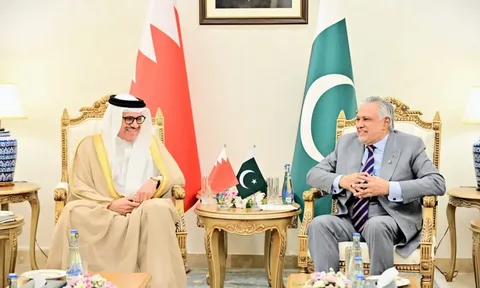
Pakistan is moving to partner with Saudi Arabia, Kuwait, and Qatar on a strategic oil storage scheme, after this year’s regional war exposed the country as the only major economy in the area without emergency petroleum reserves. The plan follows weeks of diplomatic talks aimed at protecting Pakistan from future supply shocks tied to instability near the Strait of Hormuz.
Background
Pakistan currently maintains only 20 to 30 days of petroleum reserves, far below the 90-day buffer generally considered the safe minimum for countries that import most of their oil. Roughly 80 to 85 percent of Pakistan’s crude oil and petroleum needs arrive through the Strait of Hormuz, meaning even a brief disruption there can quickly translate into fuel shortages and rising prices at home.
That vulnerability became impossible to ignore after the 2026 Iran war broke out in February, when US and Israeli strikes on Iran triggered retaliatory missile attacks across the Gulf, disrupting tanker traffic and pushing several regional producers to divert emergency fuel shipments. Pakistan maintained official neutrality throughout the conflict, though reports later emerged that Iranian military planes, including an Iranian Air Force RC-130, had been allowed to park at Pakistan’s Nur Khan Air Base near Rawalpindi following the ceasefire, a claim Pakistani officials pushed back against as misleading.
During the crisis, Kuwait helped keep Pakistan supplied by dispatching a vessel carrying roughly 45,000 tonnes of diesel and 10,000 tonnes of jet fuel, an episode that petroleum officials in Islamabad have since cited as proof of how exposed the country’s fuel supply chain really is.
Details
The Strategic Oil Storage Plan
Federal Minister for Petroleum Ali Pervaiz Malik has held talks with Kuwait’s ambassador to Pakistan, offering Kuwait the opportunity to build strategic oil reserves inside Pakistani territory. Industry executives have pushed the government to extend similar offers to Saudi Arabia and Qatar, both of which played key roles keeping fuel flowing to Pakistan during the earlier crisis.
Adil Khattak, chief executive of Attock Refinery Limited, has argued that joint-management arrangements with friendly oil-producing nations represent Pakistan’s only realistic path to building reserves, since the country lacks the capital to fund large-scale storage on its own. Under such an arrangement, Gulf producers would gain a storage and re-export hub, while Pakistan would secure guaranteed emergency access to fuel during future crises.
Reports suggest the proposed reserve structure could allocate around 10 million barrels of storage capacity to Saudi facilities and roughly 7 million barrels to Kuwaiti infrastructure, with Pakistan’s Gwadar coastline positioned as a potential energy hub outside the immediate reach of any future Strait of Hormuz blockade. The plan remains in the planning and technical consultation stage, and officials caution that nothing has been finalized.
Pakistan’s Current Oil and Gas Reserves
According to Pakistan’s Energy Year Book 2024-25, released by the Ministry of Energy, the country’s proven oil reserves declined by 1.39 percent to roughly 240 million barrels over the past fiscal year. Pakistan gas reserves moved in the opposite direction, surging 26 percent to 23.31 trillion cubic feet following new discoveries, even as crude oil production fell 11.44 percent to just over 62,000 barrels per day.
At current production rates, Pakistan has an estimated 12 years of proven oil reserves remaining, according to global energy data trackers. That figure is part of why officials are now looking abroad for emergency storage rather than relying solely on domestic output. Pakistan ranks around 54th in the world for oil production and consumes roughly six times more oil than it produces domestically.
Pakistan Oil Price Today
Pakistan’s petrol price stood at Rs. 328.56 per litre as of early August 2026, with high-speed diesel priced at Rs. 385.86 per litre, according to the latest ex-depot rates set by the Oil and Gas Regulatory Authority. Since Pakistan imports the vast majority of its fuel, pump prices remain highly sensitive to global crude prices, the strength of the Pakistani rupee, and taxes including the Petroleum Development Levy, which alone adds more than Rs. 60 per litre to the retail price.
Oil Reserves by Country: Where Pakistan Stands
Globally, oil reserves remain heavily concentrated in a small number of countries. Venezuela holds the world’s largest proven reserves at roughly 303 billion barrels, followed by Saudi Arabia with about 267 billion barrels, Iran with around 209 billion barrels, and Canada with 163 billion barrels. Together, these four countries control more than half of the world’s proven oil reserves.
Oil reserves in India, by comparison, stood at close to 5 billion barrels in 2025, placing it around 23rd globally, still dramatically larger than Pakistan’s 240 million barrel reserve, though India also depends heavily on imports to meet over 80 percent of its domestic oil demand. Pakistan’s relatively small reserves place it well outside the world’s top 25 oil-holding nations, reinforcing why storage partnerships with Gulf producers have become a policy priority rather than a long-term production strategy.
Quotes
Adil Khattak told Arab News that establishing strategic petroleum reserves in Pakistan under joint management with friendly oil-producing countries is, in his view, the only realistic option available to Islamabad given its limited capital resources for large-scale storage infrastructure.
A Pakistani petroleum ministry statement noted that discussions with Gulf partners remain ongoing, adding that both Saudi Arabia and Kuwait have expressed interest in building reserves inside Pakistan, though officials cautioned that no agreement has yet been finalized.
Saudi Arabia had separately pledged more than $10 billion in 2019 to build an oil refinery and strategic reserves in Gwadar, though the project stalled amid political disagreements with the government at the time, a history officials say makes swift, formal agreements this time around especially important.
Impact
For Pakistan, successfully building strategic reserves with Gulf partners could meaningfully reduce the country’s vulnerability to future regional conflicts, particularly given how directly this year’s Iran war exposed gaps in the country’s emergency fuel planning. A functioning reserve system would also strengthen Pakistan’s negotiating position with international lenders by reducing the risk of sudden, war-driven spikes in its import bill.
For Saudi Arabia and Kuwait, the arrangement offers a strategic foothold along Pakistan’s Gwadar coastline, positioned outside the immediate reach of Strait of Hormuz disruptions, while also deepening broader defense and economic ties that have grown closer since Pakistan signed formal defense pacts with both Gulf states following the 2026 conflict.
Regionally, the plan reflects a wider shift among Gulf oil producers toward diversifying export and storage routes, a trend also visible in Kuwait’s separate talks with Saudi Arabia and other Arab states about building a new pipeline designed to bypass the Strait of Hormuz entirely.
Conclusion
With technical consultations continuing and no formal agreement yet signed, the coming months will show whether Pakistan’s strategic oil reserve plan moves from proposal to reality. Given the country’s currently thin 20 to 30 day fuel buffer, officials appear determined to finalize partnerships with Saudi Arabia, Kuwait, and Qatar before the next major regional disruption tests Pakistan’s energy security again.
Frequently Asked Questions
Which country is No. 1 in oil?
Venezuela holds the largest proven oil reserves in the world, at approximately 303 billion barrels, accounting for roughly 17 percent of global reserves, according to OPEC’s Annual Statistical Bulletin. However, Venezuela ranks far lower in actual production, sitting around 21st globally due to years of sanctions, underinvestment, and the heavy, difficult-to-extract nature of its Orinoco Belt crude. In terms of daily production rather than reserves, the United States currently leads the world thanks to shale technology, producing more oil per day than any other country despite holding comparatively modest reserves.
How long do 400 million barrels of oil last?
The answer depends entirely on a country’s daily consumption rate. For context, Pakistan currently consumes close to 480,000 barrels of oil and petroleum products per day, meaning a hypothetical 400 million barrel reserve would last roughly 833 days, or a little over two years, if used exclusively to cover domestic consumption with no other supply. In practice, strategic reserves are rarely drawn down to zero and are instead used gradually to smooth out short-term supply disruptions, meaning such a reserve would realistically provide a much longer buffer against temporary shocks rather than being consumed continuously.
How much oil reserves are left in Pakistan?
According to Pakistan’s Energy Year Book 2024-25, the country’s proven oil reserves stood at approximately 240 million barrels, a decline of 1.39 percent from the previous year. At current production and consumption rates, this gives Pakistan an estimated 12 years of proven reserves if relying solely on domestic output, though the country’s heavy dependence on imports, covering roughly 85 percent of total petroleum needs, means actual fuel availability depends far more on international supply chains than on these limited domestic reserves.