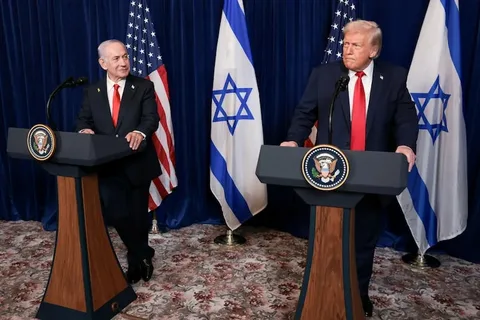
Israeli Prime Minister Benjamin Netanyahu has rejected US President Donald Trump’s Gaza plan, saying Israel will not withdraw its forces until Hamas is “genuinely” disarmed. The decision adds another obstacle to efforts aimed at advancing a ceasefire and establishing a new political framework for Gaza.
Netanyahu said Israel rejects the 15-point document that had been endorsed by Hamas in late July. He also indicated that discussions with Washington were continuing over parts of the proposal that Israel considers unacceptable.
Background: Trump’s Gaza Plan
The dispute centres on a US-backed Gaza proposal linked to a ceasefire process that has reduced, but not completely ended, Israeli military operations in the territory.
The plan envisages Hamas surrendering its weapons to an emerging Palestinian governing body. It also proposes an Israeli military withdrawal linked to the disarmament process.
However, Israel has objected to the idea of a withdrawal taking place before Hamas is completely disarmed. This disagreement has become one of the main challenges facing the implementation of the proposal.
Israel Rejects Trump’s 15-Point Plan for Gaza
When Israel rejects Trump’s 15-point plan for Gaza, the central issue is the timing and conditions of an Israeli withdrawal.
Netanyahu said the Israeli military would not withdraw until Hamas was genuinely disarmed. He argued that Israel must continue preventing threats against its troops and citizens while the security issue remains unresolved.
The Israeli prime minister also said that Israel was communicating with the United States about its concerns. According to Netanyahu, some ideas being discussed with Washington were acceptable, while others were not.
Netanyahu’s Position on Hamas Disarmament
Netanyahu has made Hamas disarmament a central condition for any meaningful Israeli military withdrawal.
He said Israel was seeking what he described as “real disarmament,” rather than an arrangement that would leave Hamas capable of retaining its weapons.
The position creates a significant challenge because members of Trump’s Board of Peace have reportedly viewed complete disarmament as difficult to achieve in practical terms.
Why the Withdrawal Dispute Matters
The question of an Israeli withdrawal is closely connected to the wider future of Gaza. A successful ceasefire framework would require agreement on security, governance, disarmament, and reconstruction.
The disagreement between the Israeli government and the US-backed proposal could therefore affect efforts to move from military confrontation toward a longer-term political arrangement.
For Palestinians in Gaza, continued uncertainty also means that questions about governance and reconstruction remain unresolved.
Netanyahu Faces Domestic Political Pressure
Netanyahu’s rejection comes as he faces political pressure from his right-wing allies. The Israeli prime minister is also seeking to maintain political support ahead of elections, according to the report.
His far-right partners have called for a new cabinet vote and have opposed aspects of the Gaza plan. This domestic pressure is an important factor in understanding why the Israeli government is taking a firm position on Hamas disarmament.
The political situation means Netanyahu must balance negotiations with Washington against demands from members of his governing coalition.
What Trump’s Plan Could Mean for Gaza
Trump’s proposal is intended to provide a framework for moving the Gaza conflict toward a different phase, including Hamas disarmament and a potential change in governance.
However, the disagreement over the sequence of events remains significant. The proposal links Israeli withdrawal with Hamas giving up its weapons, while Israel insists that disarmament must be completed before a withdrawal takes place.
This difference could make negotiations more complicated unless the parties find a mechanism that addresses Israel’s security demands while also creating a workable path toward a ceasefire and political transition.
The US-Israel Relationship
The dispute also highlights the difficulties Washington faces in trying to influence the next stage of the Gaza conflict.
Although Trump has promoted the plan, Netanyahu has made clear that Israel will not accept every element of the proposal. He said Israel would continue discussions with the United States but would maintain its position on issues it considers fundamental.
The outcome of these discussions could influence whether the plan develops into a broader agreement or faces further delays.
Humanitarian and Regional Impact
The continued uncertainty surrounding Gaza has wider humanitarian and regional implications. A lasting reduction in fighting could create better conditions for humanitarian assistance, reconstruction, and the restoration of basic services.
At the same time, disagreements over disarmament, Israeli military presence, and future governance could prolong instability if no compromise is reached.
Neighbouring countries and international organisations are also likely to watch the negotiations closely because developments in Gaza can have wider consequences for regional security and diplomacy.
What Happens Next?
The immediate focus is expected to remain on negotiations between Israel and the United States over the disputed elements of the proposal.
Netanyahu has not closed the door on discussions with Washington. Instead, he has made clear that Israel’s acceptance of any arrangement will depend heavily on what happens to Hamas’s weapons and the security of Israeli forces and citizens.
Hamas’s position and the response of other parties involved in the ceasefire process will also be important in determining whether the plan can move forward.
Conclusion
The decision that Netanyahu rejects Trump’s plan for Gaza has placed renewed attention on the difficult question of Hamas disarmament and Israeli military withdrawal.
While Trump’s proposal seeks to establish a framework for the next phase of the Gaza conflict, Israel’s demand for complete disarmament before withdrawal remains a major point of disagreement.
For now, negotiations between Washington and Jerusalem are continuing, but a lasting agreement will depend on whether the parties can bridge their differences over security, disarmament, withdrawal, and Gaza’s future governance.
FAQs
Did Netanyahu vote for the Gaza disengagement?
Netanyahu’s position on Gaza has changed over the years and should be understood in the context of different political and security circumstances. The current dispute is focused on Hamas’s disarmament, Israeli military withdrawal, and the implementation of the latest Gaza proposal rather than simply revisiting the earlier disengagement decision.
Did Israel accept the Gaza deal?
According to the report used for this article, Israel rejected the 15-point document and Netanyahu said Israeli forces would not withdraw until Hamas was genuinely disarmed. However, Netanyahu also said Israel was continuing discussions with the United States, indicating that negotiations over the proposal were still taking place.
What has Netanyahu done in Gaza?
Netanyahu’s government has directed Israel’s military campaign in Gaza and has maintained that Israel’s security requires Hamas to be disarmed. In the latest development, Netanyahu said Israel would not carry out a military withdrawal until Hamas was genuinely disarmed, while discussions with the United States continue over the proposed Gaza framework.