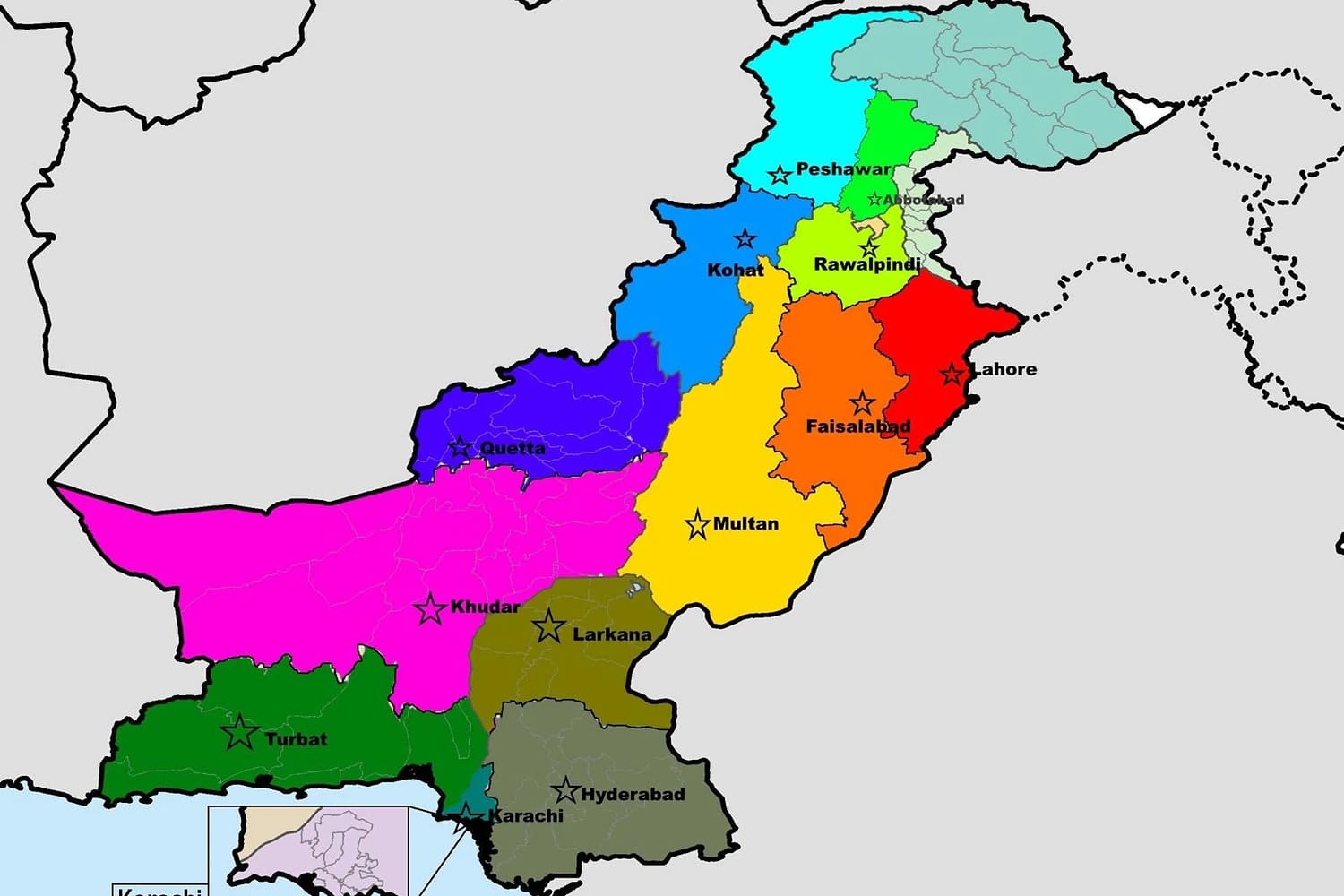
One widely discussed proposal seeks to expand Pakistan’s existing four provinces into 12 administrative units. Under this model, Punjab would be divided into four provinces, while Khyber Pakhtunkhwa and Balochistan would each be divided into three. Sindh would be reorganized into two administrative units.
Supporters argue that Pakistan’s population, estimated at approximately 260 million, has outgrown its existing administrative structure. Punjab alone has a population of around 128 million, making effective governance from a single provincial capital increasingly challenging.
Proponents also maintain that financial resources and administrative powers remain concentrated in Lahore, Karachi, Peshawar and Quetta, preventing remote and underdeveloped regions from receiving adequate attention.
Federal ministers supporting the proposal have emphasized that new provinces should be established strictly on administrative grounds rather than ethnic or linguistic considerations. The objective, they argue, should be improved governance, equitable resource distribution and easier access to public services.
Why Is the Proposal Controversial and Difficult to Implement?
Constitutional Requirements
Creating new provinces would require a constitutional amendment under Article 239 of Pakistan’s Constitution. The proposal must secure a two-thirds majority in both the National Assembly and Senate, as well as a two-thirds majority in the provincial assembly of the province whose boundaries are being altered.
Consequently, a nationwide referendum alone cannot replace the constitutionally prescribed parliamentary and provincial approval process.
Political and Coalition Opposition
The Pakistan Peoples Party (PPP), a major coalition partner in the federal government, strongly opposes dividing Sindh. The Sindh Assembly has already passed a resolution rejecting any proposed division of the province.
In contrast, Muttahida Qaumi Movement-Pakistan (MQM-P) supports creating a separate administrative status for Karachi, arguing that the country’s economic hub requires greater control over its resources and civic development.
These conflicting positions highlight the difficulty of securing the political consensus necessary for constitutional restructuring.
The Alternative: Empowering Local Governments
Critics and policy analysts argue that creating additional provinces would require expensive administrative infrastructure, including provincial assemblies, secretariats, bureaucracies and other government institutions.
They believe that empowering existing district and municipal governments could improve public service delivery more quickly and at a lower financial cost.
Under this alternative, local institutions would receive direct financial and administrative authority over sanitation, drinking water, healthcare, education, drainage and municipal infrastructure.
Editorial recommendation: These points strengthen your article’s central argument: Pakistan should prioritize meaningful local government empowerment under Article 140-A before undertaking the costly and politically challenging process of creating new provinces.