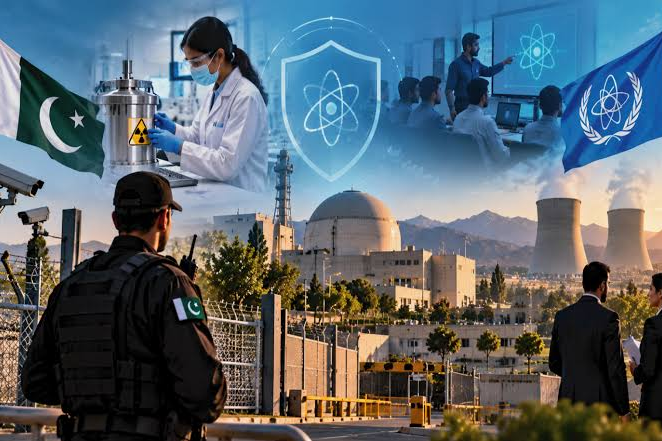
Pakistan has reaffirmed its commitment to strengthening international nuclear security by expanding cooperation with the International Atomic Energy Agency (IAEA). The announcement came after Islamabad hosted an important international meeting focused on nuclear security training, technical expertise and institutional development. The event highlighted Pakistan’s growing role in international efforts to promote responsible nuclear technology and improve global security standards.
The development marks another step in Pakistan’s long-standing engagement with the IAEA. It also reflects the country’s interest in sharing technical knowledge, developing local expertise and addressing emerging security challenges through international partnerships.
Background of Pakistan’s Nuclear Security Cooperation
Pakistan has maintained cooperation with the International Atomic Energy Agency for several years, particularly in areas related to nuclear security, technical training and institutional capacity building. This partnership has supported discussions on improving safety practices and strengthening professional expertise.
Nuclear security has become increasingly important as countries expand their use of nuclear technology for scientific research, healthcare, agriculture and energy production. Alongside these developments, governments must ensure that nuclear materials and facilities remain protected against potential security threats.
Pakistan has developed national institutions to oversee different aspects of its nuclear sector. The Pakistan Nuclear Regulatory Authority (PNRA) plays an important role in regulating nuclear and radiation safety, while other scientific institutions contribute to research, education and technical development.
The country’s broader nuclear history and strategic development are also discussed in Pakistan Chronicle’s coverage of Pakistan’s nuclear legacy and defence history.
Islamabad Hosts International Nuclear Security Meeting
Pakistan hosted the 15th annual meeting of the International Network for Nuclear Security Training and Support Centres from November 23 to 26, 2026, in collaboration with the IAEA.
The meeting brought together international delegates, technical specialists and representatives of relevant institutions. Participants discussed nuclear security education, professional training, institutional sustainability and opportunities to strengthen international cooperation.
The gathering provided an opportunity for participating countries to exchange experiences and discuss practical approaches to emerging security challenges. It also highlighted the importance of developing skilled professionals who can support national nuclear security programmes.
Pakistan previously hosted the network’s annual meeting in 2016. Its return to Islamabad after ten years demonstrates the country’s continued participation in international nuclear security initiatives.
Pakistan Highlights Indigenous Nuclear Technology
One of the important activities during the meeting was a special event at the headquarters of the Pakistan Nuclear Regulatory Authority. The event marked 20 years of Pakistan and IAEA cooperation in nuclear security.
An exhibition also presented locally developed nuclear security technologies created by Pakistan’s national industry. The display highlighted the contribution of domestic technical expertise to the country’s nuclear security capabilities.
International delegates also visited the Pakistan Institute of Engineering and Applied Sciences (PIEAS). They received briefings about the institution’s work in nuclear engineering, scientific research, education and professional training.
These activities demonstrated how national institutions can contribute to technical development while participating in international knowledge-sharing programmes.
Pakistan’s scientific and technological development is also connected to wider discussions about its energy cooperation with China, particularly the importance of technical investment and long-term planning.
Officials Emphasise Long-Term International Partnership
At the concluding session, the chairman of the Pakistan Atomic Energy Commission highlighted the importance of continued international cooperation in strengthening nuclear security.
The IAEA’s Unit Head of the Division of Nuclear Security also appreciated Pakistan’s role in hosting the annual meeting and described the gathering as an important milestone for international cooperation.
In a video address during the opening session, IAEA Director General Rafael Mariano Grossi thanked Pakistan for hosting the event. He also highlighted the importance of the international network in turning nuclear security principles into practical action.
Pakistan’s Foreign Office stated that the country looks forward to further deepening cooperation with the IAEA and international partners to support sustainable nuclear security.
These statements reflect a shared interest in strengthening technical capabilities, improving institutional coordination and promoting responsible nuclear practices.
Emerging Technologies Create New Nuclear Security Challenges
Modern technology is creating new opportunities for scientific development, but it is also introducing additional risks for national and international security.
Artificial intelligence, digital communication systems and advanced cyber technologies have created new challenges for sensitive infrastructure. Nuclear facilities and related communication networks require strong protection against unauthorised access, cyberattacks and potential technical failures.
Pakistan has also raised concerns about the growing role of artificial intelligence in nuclear decision-making.
During an open debate at the United Nations Security Council, Pakistan’s Permanent Representative to the UN, Ambassador Syed Haider Shah, called for maintaining human control over decisions involving nuclear weapons. He also cautioned against using AI systems to target nuclear command, control and communication systems.
He emphasised the need for appropriate safeguards, regulations and confidence-building measures to reduce the possibility of miscalculation and escalation.
The discussion reflects a wider international concern that emerging technologies should not weaken existing security arrangements or create additional risks during periods of geopolitical tension.
Regional and Global Impact of Stronger Nuclear Cooperation
Pakistan’s deeper engagement with the IAEA could contribute to international efforts aimed at improving nuclear security standards. Cooperation between countries allows experts to exchange knowledge, identify emerging risks and develop more effective technical responses.
For South Asia, stronger nuclear security practices are particularly significant because the region has a complex strategic environment. Responsible management, professional training and effective communication remain important elements of reducing misunderstandings and maintaining stability.
At the global level, international training networks can help countries strengthen their institutional capabilities. Sharing technical expertise also supports countries seeking to improve the peaceful use of nuclear science while maintaining appropriate security measures.
Pakistan’s engagement with international institutions also forms part of its wider diplomatic approach. Its participation in multilateral discussions reflects the importance of dialogue and cooperation in addressing international challenges. Related developments can be explored in Pakistan Chronicle’s reporting on Pakistan’s role in the United Nations Security Council.
What Happens Next?
The latest meeting has created opportunities for continued technical engagement between Pakistan and international partners. Future cooperation may focus on professional training, institutional development, research collaboration and addressing security concerns linked to emerging technologies.
However, the long-term value of these initiatives will depend on sustained participation, practical implementation and continued investment in national expertise.
Pakistan’s commitment to working with the IAEA also highlights the importance of maintaining transparent communication and effective international partnerships. Continued engagement could help strengthen institutional capabilities and support responsible nuclear technology development.
Conclusion
Pakistan’s decision to deepen cooperation with the International Atomic Energy Agency represents an important development in its international nuclear security engagement. Hosting the 15th annual NSSC Network meeting and marking two decades of cooperation with the IAEA demonstrate the country’s continued interest in technical collaboration and professional development.
As technological challenges evolve, international cooperation will remain essential for protecting sensitive infrastructure and reducing nuclear security risks. Pakistan’s future engagement with the IAEA could further strengthen its technical capabilities while contributing to wider international efforts for a safer and more secure nuclear environment.
Frequently Asked Questions
1. Why is Pakistan seeking stronger cooperation with the IAEA?
Pakistan wants to strengthen its nuclear security capabilities through international collaboration, technical training and knowledge sharing. Cooperation with the IAEA also provides opportunities to discuss emerging threats, improve institutional expertise and promote responsible practices in the nuclear sector.
2. What was the purpose of the 15th annual NSSC Network meeting in Islamabad?
The meeting brought together international experts and representatives to discuss nuclear security training, institutional development and technical cooperation. It provided a platform for participating countries to exchange experiences, identify future priorities and strengthen professional capabilities.
3. What is the role of the Pakistan Nuclear Regulatory Authority?
The Pakistan Nuclear Regulatory Authority oversees the regulation of nuclear and radiation safety within its legal responsibilities. It works to establish and enforce regulatory requirements, support safety practices and ensure that relevant nuclear activities meet applicable standards.
4. Why is artificial intelligence becoming a concern for nuclear security?
Artificial intelligence can introduce new cybersecurity and decision-making risks when connected to sensitive military or nuclear infrastructure. Potential threats include cyberattacks, manipulation of digital systems and the possibility of incorrect information influencing critical decisions. Maintaining appropriate human oversight and effective safeguards is therefore important.
5. How can stronger IAEA cooperation benefit Pakistan and the international community?
Stronger cooperation can support professional training, technical knowledge exchange and improvements in national security institutions. It can also help countries identify emerging risks and develop common approaches to nuclear security. These efforts contribute to international confidence and the responsible development of peaceful nuclear technology.