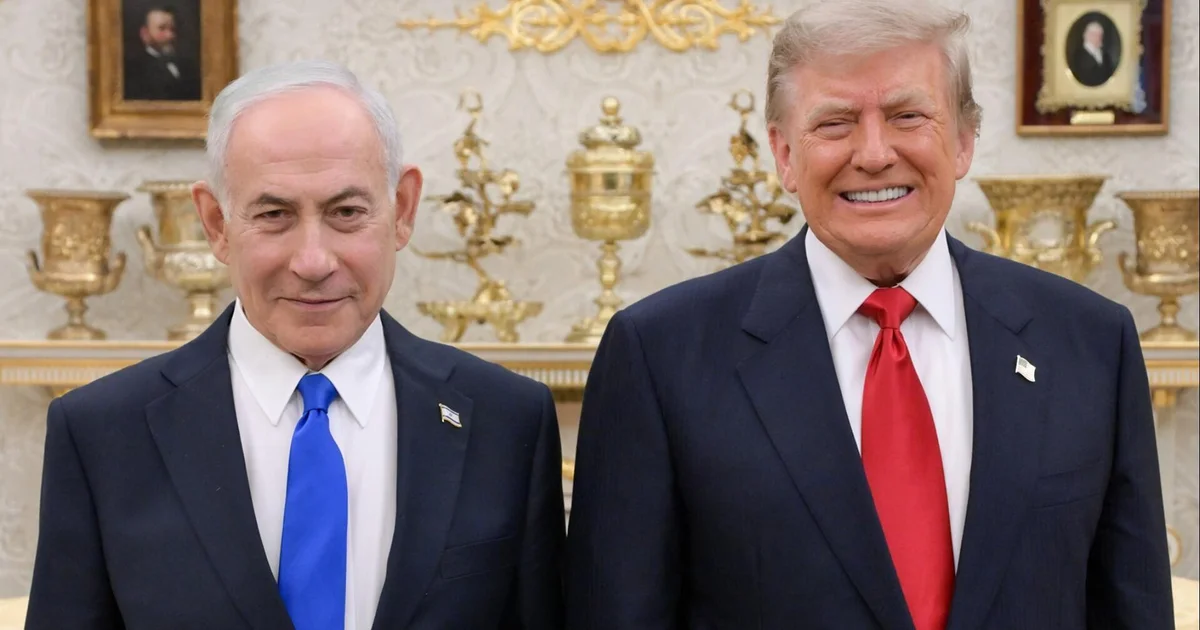
Israeli Prime Minister Benjamin Netanyahu has formally rejected US President Donald Trump’s 15-point plan for Gaza. Netanyahu told his Cabinet that Israeli forces will not withdraw from the territory until Hamas is fully disarmed. The announcement lands weeks before Israel’s national elections, scheduled for October, where Netanyahu is fighting for his political survival.
Background
Benjamin Netanyahu is Israel’s longest-serving prime minister, currently in his sixth term as head of the right-wing Likud party. He was born in Tel Aviv in 1949 and spent part of his teenage years in Pennsylvania, where his father taught history, before returning to Israel to serve in the Sayeret Matkal special forces unit.
Netanyahu news has centered for two years on the war in Gaza, which began after the October 7, 2023, Hamas attack on Israel. Since then, his government has also carried out a preemptive strike against Iran’s nuclear program. Trump has pushed a broader regional peace framework, but tensions between Washington and Jerusalem have grown over how far Israel should go in Gaza.
Details
Trump’s 15-point framework, developed through his “Board of Peace” initiative, called for a phased Israeli withdrawal tied to Hamas surrendering its weapons. Netanyahu said Sunday that Israel would not accept the document as written.
He told reporters the Israeli military would hold its ground in Gaza regardless of outside pressure. He also used the moment to restate a long-standing position on Palestinian statehood, ruling it out entirely for as long as he remains in office.
It’s not the first sign of friction between the two leaders this year. Netanyahu has pushed back on US-brokered proposals before, usually when they risk alienating the right-wing coalition partners he needs to stay in power, several of whom oppose any withdrawal from Gaza at all.
Who Is Benjamin Netanyahu
Netanyahu’s nickname, “Bibi,” is a childhood diminutive of Benjamin that stuck with him through his military service and into public life; it is now used so widely that most Israelis refer to him by it rather than his full name.
He is Jewish, and his family background is Ashkenazi Jewish with roots in Poland and Lithuania on different sides of the family. His father, historian Benzion Netanyahu, shaped much of his early worldview on Jewish nationalism.
- Benjamin Netanyahu’s wife is Sara Netanyahu, a psychologist by training who has become a prominent and sometimes controversial figure in Israeli politics in her own right, with critics and former aides describing her influence over staffing and policy decisions inside the Prime Minister’s Office.
The couple has two sons. Yair Netanyahu, the elder son, is a vocal, often combative presence on social media who frequently defends his father against domestic and international critics. His younger brother, Avner, has kept a lower public profile.
Benjamin Netanyahu’s brother, Yonatan “Yoni” Netanyahu, was an Israeli commando killed in 1976 during Operation Entebbe, the raid to free hostages from a hijacked plane in Uganda. His was the only Israeli fatality in that mission. Netanyahu has referenced his brother’s death publicly for decades, including naming a counterterrorism institute after him.
Quotes
Netanyahu was direct in dismissing suggestions that he had softened his position. “I want to clarify this: Israel rejects the 15-point document,” he told his Cabinet.He was equally firm on the question of Palestinian statehood, saying flatly that it would not happen while he holds office.
Impact
Trump has spent months presenting the Board of Peace plan as a finished diplomatic achievement. Netanyahu’s public rejection undercuts that, and it strains coordination between the two governments at a point where Washington has already put considerable political capital behind the framework.
There are real stakes for Gaza itself. Ceasefire talks, the fate of remaining hostages, and humanitarian access all run through whatever plan eventually holds. Hamas had reportedly signaled it would accept gradual disarmament, so Israel’s rejection sets mediators back to an earlier stage of the process.
At home, the calculation is simpler. A hard line on Gaza plays well with the coalition partners Netanyahu needs to survive the October vote, even if it costs him goodwill in Washington.
Conclusion
With Israeli elections set for October, Benjamin Netanyahu appears to be betting that a firm stance on Gaza will outweigh the diplomatic cost of publicly breaking with Trump. Whether that calculation holds may depend on how the war, the hostage situation, and coalition politics develop over the coming weeks. Further statements from both Jerusalem and Washington are expected as the election campaign intensifies.
FAQs
Does the right-wing support Israel?
Right-wing political movements in various countries, including the United States, have generally been strong supporters of Israel, often citing security cooperation, shared democratic values, and religious or historical ties. Support is not universal or uniform, however; positions vary by country, party, and specific policy, such as settlement expansion or the war in Gaza, where even right-leaning voices sometimes diverge from Netanyahu’s government.
What ideology is Benjamin Netanyahu?
Netanyahu is generally described as a right-wing nationalist and a proponent of free-market economic policy, and he leads the Likud party, which favors a strong security posture, skepticism toward Palestinian statehood, and continued Jewish settlement in the West Bank. He has also positioned himself as a hardliner on Iran throughout his career, treating its nuclear ambitions as an existential threat to Israel.
What political position does Netanyahu hold?
Benjamin Netanyahu currently serves as Prime Minister of Israel, a position he has held for a combined total that makes him the longest-serving prime minister in the country’s history. He also leads the Likud party in the Knesset, Israel’s parliament, and heads the governing coalition that sets national policy on security, the economy, and foreign affairs.