Summary
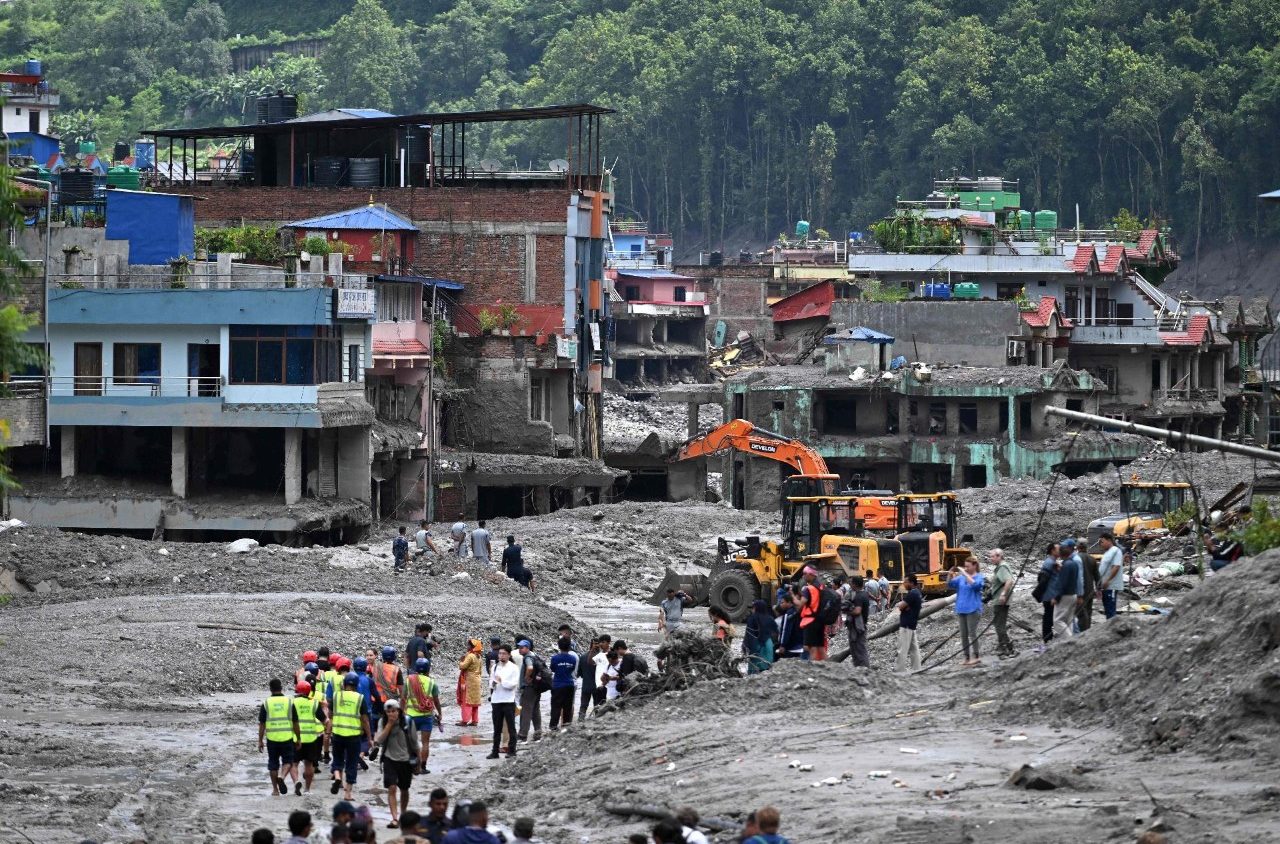
Rescue teams in Nepal and China spent Sunday combing through mud, rubble and swollen rivers as the Nepal flood missing count climbed past 3,000. A section of Himalayan glacier gave way earlier in the week, sending a wall of ice, rock and debris crashing through mountain valleys. The confirmed death toll has now reached 750, and officials warn that number is likely to rise further as access to remote areas slowly improves.
Background
The disaster began on Wednesday morning when part of a glacier near Langtang Lirung broke apart high above the Nepal-China border. Scientists believe the collapse combined with an existing landslide to unleash a torrent that tore through the Trishuli and Bhote Koshi river valleys within minutes.
The flood obliterated the Gyirong Port complex, a major crossing point that handled both trade and the popular pilgrimage route to Mount Kailash. Villages, market towns and hydropower infrastructure across Nepal’s Rasuwa, Nuwakot, Dhading and Chitwan districts were swept away almost without warning.
Experts studying satellite imagery say the initial ice-and-rock collapse was severe enough to register as a magnitude 5.2 tremor on seismometers around the world, underlining just how much material came down the mountainside in a matter of minutes.
Details
Officials in Chitwan and Beijing confirmed the death toll had climbed to 750 by Sunday morning, with the number of missing on both sides of the border now standing above 3,000. The Red Cross estimates that more than 90,000 people have been affected in some way by the disaster.
Search efforts have been complicated by unstable ground, continued rainfall, and the formation of new “barrier lakes” — pools of water trapped behind debris left by the initial collapse. One such lake burst its banks days after the flood, temporarily halting search operations and forcing rescue crews to retreat to higher ground.
China has mobilized more than 2,100 rescue personnel and pledged roughly 220 million yuan, around $32.7 million, toward relief efforts, including airdropped supplies for teams cut off by damaged roads. On the Nepali side, the army’s Trishuli barracks has become the operational hub for search-and-rescue missions, with helicopters running near-continuous flights since daybreak.
Among the missing are hundreds of foreign nationals, including tour groups that were travelling through the region at the time of the collapse, many of them on pilgrimage routes toward Tibet.
Quotes
Chinese Foreign Minister Wang Yi described the mudslide to his Nepalese counterpart as their most severe cross-border disaster in recent years, according to state broadcaster CCTV.
Jeffrey Kargel, a senior scientist at the Planetary Science Institute, called satellite footage of a newly formed lake in the flood zone “extremely concerning,” warning that rescue crews need to stay ready to move to higher ground at any moment.
Chinese state media linked the scale of the disaster directly to long-term glacier instability driven by global warming, describing it as an emerging pattern of hazards across the Tibetan plateau.
Impact
The scale of destruction stretches well beyond the immediate flood zone. Bodies have reportedly been carried more than 150 kilometers downstream into neighboring India, illustrating the sheer force of the water that surged through the valleys.
Regionally, the disaster has disrupted a major overland trade and pilgrimage corridor between Nepal and Tibet, with damaged roads and a destroyed port complex likely to affect commerce for months. Internationally, the presence of missing citizens from multiple countries, including the United States and Australia, has turned this into a diplomatic as well as humanitarian crisis, with foreign governments deploying crisis teams to the region.
Climate scientists are pointing to the event as a stark example of how thawing permafrost and glacier retreat are creating new categories of hazard in high-altitude regions, a trend they expect to intensify as global temperatures continue rising.
Conclusion
With rescue operations still underway and the risk of further barrier-lake collapses looming, officials caution that both the death toll and the missing count could shift significantly in the coming days. Nepal and China have signaled continued cooperation on search efforts, while international governments continue working to trace their citizens who were travelling through the region when disaster struck. Further updates are expected as access to the hardest-hit areas improves.
Frequently Asked Questions
How many people are still missing in Nepal?
As of Sunday, authorities reported more than 3,000 people missing across both the Nepali and Chinese sides of the border, with the confirmed death toll standing at 750. Officials have cautioned that these numbers are likely to change as rescue teams reach more remote villages and as communication is restored in areas that have been cut off since the flood struck. Because so many of the missing were travelers passing through the region rather than local residents, cross-checking identities against embassy and tour-operator records is adding extra time to the count.
What has happened in Nepal recently?
On Wednesday morning, a section of a Himalayan glacier near the Nepal-China border collapsed, combining with an existing landslide to trigger a massive flash flood and mudslide. The resulting wall of water, ice and debris tore through several districts along the Trishuli and Bhote Koshi rivers, destroying villages, roads and the Gyirong Port trade crossing. Rescue operations have continued for days since, hampered by unstable terrain, ongoing rain, and the formation of new debris-dammed lakes that threaten further flooding.
What is the main problem in Nepal?
Beyond the immediate rescue and recovery effort, Nepal is now facing a compounding set of challenges: newly formed barrier lakes that could burst and cause secondary flooding, damaged infrastructure that is slowing aid delivery to remote districts, and the difficult task of identifying thousands of missing people, many of whom were foreign tourists or pilgrims passing through at the time. Longer term, scientists are also flagging the disaster as evidence that Nepal’s high-altitude glaciers are becoming increasingly unstable as the climate warms, raising concerns about similar events in the future.