Summary
The Joint Awami Action Committee, usually shortened to JKJAAC or JAAC, has become the single most important political force behind the wave of unrest that has repeatedly gripped Azad Jammu and Kashmir since 2023. Understanding who they are — and the region they operate in — helps explain why these protests keep recurring rather than resolving after one round of talks.
Background
Azad Jammu and Kashmir, often shortened to AJK or called Azad Kashmir, is the Pakistan-administered portion of the wider, long-disputed Kashmir region. Unlike the provinces of Pakistan, it functions with its own president, prime minister, and Legislative Assembly under a semi-autonomous arrangement.
Looking at an Azad Kashmir map, the territory sits in the north of Pakistan, bordering Pakistan’s Punjab and Khyber Pakhtunkhwa provinces to the south and west, and running along the Line of Control that separates it from Indian-administered Jammu and Kashmir to the east. Its terrain is largely mountainous, and it’s divided into three main administrative divisions: Muzaffarabad, Mirpur, and Poonch.
On Azad Kashmir population, estimates place the region’s residents in the range of roughly four to four-and-a-half million people, spread across cities like Muzaffarabad, the regional capital, along with Mirpur, Rawalakot, Kotli, and Bagh, alongside a large Kashmiri diaspora abroad, particularly in the United Kingdom, that maintains close ties to the region.
Details
JKJAAC formed in 2023 as a coalition, not a single political party, drawing together traders, transporters, lawyers, students, and other civil society groups who felt existing political parties in AJK weren’t representing local economic and governance concerns.
Its first major campaign in May 2024 centered on subsidized wheat and lower electricity tariffs, a six-day protest wave that ended after the government agreed to grant funding and price relief. That early success established JKJAAC as a credible force capable of extracting concessions through sustained pressure.
A second, larger round followed in late 2025, when the group issued a detailed 38-point charter of demands and organized a region-wide strike. Negotiations eventually resolved most of those demands, though a handful were left unaddressed, setting the stage for the current, more serious 2026 unrest.
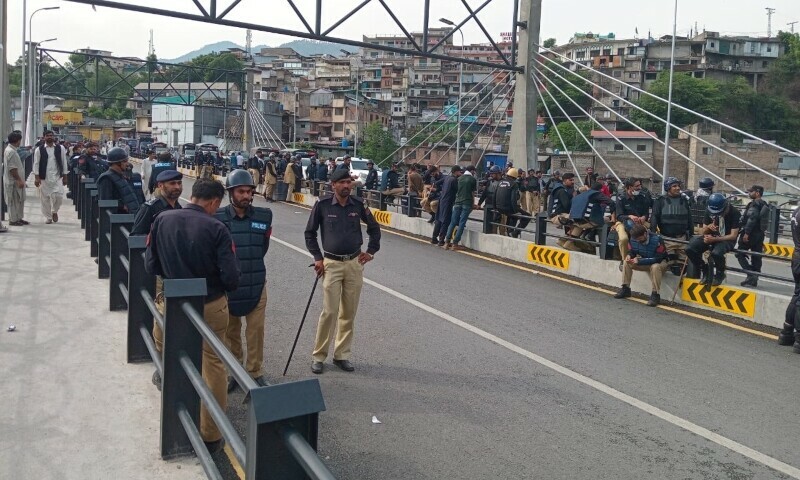
This year’s protests, ongoing since June, center heavily on JKJAAC’s opposition to 12 seats in the AJK Legislative Assembly reserved for Kashmiri refugees residing elsewhere in Pakistan. The group argues this arrangement lets outside political interests shape decisions in a territory they don’t actually live in, while diverting development resources intended for AJK’s own population.
Quotes
JKJAAC figures have consistently framed their movement as broad-based and non-sectarian, with leaders in the UK diaspora stressing at rallies that the campaign includes people from all backgrounds and is focused solely on securing rights for residents, not confrontation with state institutions.
Officials and commentators tracking the standoff have pointed to the AJK Supreme Court’s ruling upholding the reserved seats as a turning point, noting that it closed off the group’s main legal avenue and pushed the confrontation further into the streets.
Impact
JKJAAC’s rise reflects a broader shift in how governance grievances are being expressed in AJK — through sustained, organized civil society pressure rather than through the region’s established political parties. That shift has forced both the AJK government and Islamabad to negotiate directly with a coalition that holds no formal seats in the Legislative Assembly.
The recurring cycle of protest, internet shutdown, and negotiated settlement has also had a measurable economic cost, with repeated strikes disrupting trade, tourism, and daily commerce across a region already dependent on remittances and limited local industry.
Beyond AJK itself, the group’s activity has drawn attention from the Kashmiri diaspora internationally, turning what might otherwise be a regional dispute into a story followed well beyond Pakistan’s borders.
Conclusion
With JKJAAC continuing to organize fresh rounds of protest even after previous settlements, the group looks set to remain the central player in AJK’s politics for the foreseeable future. Whether the current standoff ends the way earlier rounds did — through negotiated concessions — or marks a more lasting shift in how the region is governed will likely become clearer in the weeks ahead.
Frequently Asked Questions
What is the Awami Action Committee in Azad Kashmir?
The Awami Action Committee, formally the Jammu Kashmir Joint Awami Action Committee, is a civil society coalition — not a registered political party — made up of traders, transporters, lawyers, students, and activists from across Azad Kashmir. Formed in 2023, it has organized the region’s largest protest movements in recent years, presenting detailed charters of demands covering economic relief, electoral reforms, and an end to privileges for government officials.
Why are people protesting in AJK?
At the core of the unrest is opposition to 12 legislative assembly seats reserved for Kashmiri refugees who live elsewhere in Pakistan, which protest organizers say allows outside political influence over decisions affecting AJK residents. Alongside this, the movement has grown to include demands over electricity pricing, hydroelectric royalties, healthcare and education funding, and — in the most recent phase — the release of detained activists and unrestricted access to essential supplies.
What kind of government does AJK have?
AJK is governed under a semi-autonomous structure, with its own president, prime minister, and elected Legislative Assembly, separate from Pakistan’s provincial system. Despite this local setup, ultimate authority over major policy and constitutional matters rests with the federal government in Islamabad, an arrangement protest organizers argue leaves local institutions accountable for problems they don’t have full power to solve.