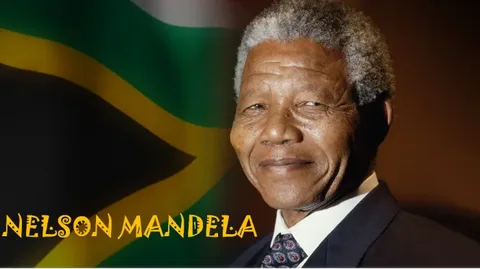
Nelson Mandela was not just a politician. He was a symbol of patience, courage, and the belief that no system of injustice lasts forever. Born into a world of racial division, he chose a path of resistance, sacrifice, and eventually, forgiveness. His legacy and achievements continue to shape how the world thinks about freedom, justice, and human dignity.
Today, on Nelson Mandela Day observed every year on July 18 his story is more relevant than ever.
Who Was Nelson Mandela? A Short Biography
Nelson Rolihlahla Mandela was born on July 18, 1918, in the small village of Mvezo in the Eastern Cape of South Africa. His father, the chief counselor to the Thembu regent, gave him a name that meant “pulling the branch of a tree” a hint, perhaps, at the disruption he would one day cause. A teacher later gave him the English name “Nelson,” as was the custom in colonial schools.
He was the first in his family to receive a formal education. He later studied law at the University of Fort Hare and the University of the Witwatersrand. In 1953, he co-founded South Africa’s first Black law firm Mandela and Tambo which took on cases involving human rights abuses and excessive use of force by authorities.
For kids learning about Nelson Mandela, this is where the story truly begins: a young man from a small village who used education as his first weapon against injustice.
Biography of Nelson Mandela in 150 Words
Nelson Mandela was born on July 18, 1918, in Mvezo, South Africa. He studied law and became one of the country’s first Black lawyers. He joined the African National Congress (ANC) and devoted his life to fighting apartheid South Africa’s brutal system of racial segregation. Arrested in 1962, he was sentenced to life in prison in 1964. He spent 27 years behind bars, mostly on Robben Island, yet never abandoned his principles. Released in 1990, he negotiated the end of apartheid and in 1994 became the first Black president of South Africa, forming a multiethnic government to guide the nation’s transition. He served until 1999, won the Nobel Peace Prize in 1993, and dedicated his final years to peace and social justice. Nelson Mandela died on December 5, 2013, at the age of 95. His legacy lives on across the world.
What Did Nelson Mandela Fight For?
Nelson Mandela fought for one core idea: that all people are equal, regardless of the color of their skin. But to understand that fight, you have to understand what he was fighting against.
Apartheid was a legal system of racial segregation that ruled South Africa for decades. It stripped Black South Africans of their basic rights they could not vote, could not live where they chose, could not use the same public spaces as white citizens. The word “apartheid” comes from Afrikaans, meaning “apartness,” and the system rigidly separated people by race at workplaces, schools, and places of leisure, while barring interracial marriage.
Mandela joined the African National Congress in the 1940s and rose through its ranks as an activist and organizer. He initially led peaceful protests and civil disobedience campaigns. When the government continued its crackdowns including the massacre of peaceful protesters at Sharpeville in 1960 Mandela helped establish the ANC’s armed wing, Umkhonto we Sizwe, meaning “Spear of the Nation.”
He never stopped fighting. Even from his prison cell on Robben Island, he was a symbol of resistance. World leaders, activists, and ordinary citizens demanded his release. His name became a rallying cry for justice everywhere.
Nelson Mandela’s Imprisonment: 27 Years Behind Bars
In 1962, Mandela was arrested and accused of incitement and illegal border crossing. Two years later, he was put on trial again in the famous Rivonia Trial, charged with conspiracy to overthrow the state. He was sentenced to life imprisonment and confined to a small cell without a bed or plumbing, forced to complete hard labor in a quarry for years.
He spent most of his imprisonment on Robben Island, off the coast of Cape Town. The conditions were harsh, but Mandela refused to be broken. He studied, taught fellow prisoners, and continued to strategize. He turned down conditional releases offered by the government because they came with conditions requiring him to renounce armed struggle conditions he rejected on principle.
His imprisonment actually amplified his cause. By the 1980s, “Free Nelson Mandela” was one of the most recognized political demands in the world. Concerts were held in his honor. Governments imposed sanctions on South Africa. The pressure on the apartheid government kept growing.
Nelson Mandela’s Release and Road to the Presidency
On February 11, 1990, after 27 years in prison, Nelson Mandela walked free. The world watched. The moment was broadcast live across the globe.
He worked with then-President F.W. de Klerk to negotiate the end of apartheid and establish a path toward democracy. The two men shared the Nobel Peace Prize in 1993 for their joint work in steering South Africa away from racial war and toward a peaceful transition.
In April 1994, South Africa held its first fully democratic election the first in which Black citizens could vote. The lines stretched for miles. People waited hours. And when the results came in, Nelson Mandela was elected President of South Africa, becoming the country’s first Black head of state.
He served as Nelson Mandela President from 1994 to 1999. During that time, he launched the Truth and Reconciliation Commission, drafted a new constitution, and worked to hold together a fractured nation. He chose not to seek a second term, stepping down voluntarily a gesture that itself sent a powerful message about democracy.
Nelson Mandela’s Key Achievements
Nelson Mandela’s achievements were not just political milestones. They were moments that changed the course of history.
End of Apartheid: His most defining achievement. Through a combination of resistance, negotiation, and sheer moral authority, Mandela helped dismantle an entire system of racial oppression that had defined South Africa for nearly half a century.
First Black President of South Africa: Serving from 1994 to 1999, he oversaw the country’s historic transition to multiracial democracy, guiding a deeply divided nation with remarkable grace and firmness.
Nobel Peace Prize (1993): Awarded jointly with F.W. de Klerk, this prize recognized the two leaders’ extraordinary efforts to achieve a peaceful end to apartheid without descending into civil war.
Truth and Reconciliation Commission: Rather than pursue revenge, Mandela created the Truth and Reconciliation Commission, which investigated human rights violations committed under apartheid and provided a framework to address those atrocities prioritizing healing over hatred.
Robben Island as a Symbol: He transformed a place of suffering into a site of education and memory, ensuring the world would never forget what was done there.
Nelson Mandela Day: In 2009, the United Nations declared July 18 Nelson Mandela International Day, honoring his contributions to democracy, freedom, peace, and human rights. Each year, people around the world spend 67 minutes in community service one minute for each year he devoted to public life.
Nelson Mandela Legacy: What He Left Behind
The Nelson Mandela legacy is not locked in the past. It lives in courtrooms, schools, protest movements, and in the quiet choices of ordinary people who decide to stand up for what is right.
He showed the world that it is possible to endure tremendous suffering and emerge not with bitterness, but with an even stronger commitment to justice. He showed that forgiveness is not weakness — it can be the most powerful political act of all. When he became president, he invited his former prison guards to his inauguration. That image said more than any speech could.
His name has come to represent not just South Africa’s first Black and democratically elected president, but the very promise made in the constitution he signed in 1996 a promise of equality, dignity, and freedom for all.
For those learning about the Nelson Mandela legacy for kids, the message is simple: one person, with enough courage and patience, can change the world.
Nelson Mandela Death: The World Mourns
Nelson Mandela died on December 5, 2013, in Johannesburg, at the age of 95. The cause of death was a recurring lung infection a condition likely worsened by the damp, harsh years he spent imprisoned on Robben Island.
After his death was announced, memorial services were held across South Africa and around the world. He was laid to rest on December 15 at Qunu, his ancestral home in the Eastern Cape province.
Former UN Secretary-General Ban Ki-moon spoke for millions when he said: “Nelson Mandela showed what is possible for our world and within each one of us if we believe, dream and work together.”
World leaders, celebrities, ordinary citizens all paid tribute. South Africa grieved, but also celebrated. He had lived a long, full life. He had seen his work completed. He died as he had lived: a free man, in the country he helped liberate.
Nelson Mandela Legacy for Kids: Simple Lessons from a Great Life
For children reading about Mandela for the first time, his life teaches lessons that go far beyond history class.
He proves that education matters. He was the first in his family to go to school, and he used every opportunity to learn. He believed, as he once famously said, that education is the most powerful weapon you can use to change the world.
He proves that patience is strength. He spent 27 years in prison without giving up his values. He waited. He endured. And he won.
He proves that forgiveness is possible. Even after everything that was done to him, he chose reconciliation over revenge. He sat down with his enemies and built a nation together.
Every year on July 18, Nelson Mandela Day, people around the world honor his legacy by helping their communities and working to make the world a better place continuing the work he started.
Quotes That Define Nelson Mandela
A few words from the man himself reveal the depth of his character:
“It always seems impossible until it’s done.”
“I learned that courage was not the absence of fear, but the triumph over it.”
“Education is the most powerful weapon which you can use to change the world.”
“If you talk to a man in a language he understands, that goes to his head. If you talk to him in his language, that goes to his heart.”
These are not just quotes. They are the principles he lived by, every single day, even in the darkest years of his life.
FAQs
What is Nelson Mandela most remembered for?
Nelson Mandela is most remembered for leading the peaceful dismantling of apartheid in South Africa the brutal system of racial segregation that denied Black citizens basic human rights for decades. He is remembered for spending 27 years in prison and walking out not with hatred, but with a spirit of reconciliation that astonished the world. He is remembered as the first Black President of South Africa, elected in the country’s first fully democratic election in 1994. Above all, he is remembered as a man who proved that one person’s moral courage can genuinely change history. His name has become a global symbol of dignity, freedom, and the belief that justice even when it takes a very long time is always possible.
How did Nelson Mandela change the world?
Nelson Mandela changed the world in ways that go far beyond South Africa’s borders. He helped dismantle one of the last major systems of institutionalized racial oppression in the modern era, showing that change was possible through negotiation, patience, and moral authority not only through armed conflict. He established the Truth and Reconciliation Commission, offering the world a new model for how societies can heal after mass injustice without tearing themselves apart through cycles of revenge. He inspired generations of activists, politicians, and ordinary people across every continent to believe that resistance to injustice is never futile. His legacy pushed international conversations about human rights, democracy, and racial equality forward in ways that continue to influence policy, law, and social movements around the world today.
How is Nelson Mandela remembered today?
Today, Nelson Mandela is remembered through Nelson Mandela Day on July 18 each year, when people across the globe spend 67 minutes volunteering in their communities one minute for each year he gave to public service. His face appears on South African currency. Statues of him stand in Johannesburg, London, Washington D.C., and dozens of other cities. Schools, hospitals, and public spaces across Africa and the world bear his name. His autobiography, Long Walk to Freedom, continues to be read by millions. The Nelson Mandela Foundation carries forward his vision through education and advocacy. In South Africa, his memory is complicated a reminder of both how far the country has come and how much still needs to change. But globally, he remains one of the most revered figures of the 20th century: proof that a single human life, lived with courage and purpose, can reshape the world.